Key takeaways
- Seat depth: Look for a seat that supports most of your thighs while leaving a small gap behind your knees. A seat that is too deep can encourage slouching and put pressure behind the legs.
- Cushion balance: Memory foam and pocket-spring designs can spread pressure, but excessively soft padding may allow your hips to sink and make standing harder. Aim for supportive cushioning rather than maximum plushness.
- Adjustability: Seat height, tilt, armrests, and lumbar support help you match the chair to your desk and body. In a small office, adjustable or flip-up arms are especially useful when the chair must tuck away.
- Width and weight capacity: A wider seat can reduce side pressure and make position changes easier. Check the manufacturer’s measurements, not just the advertised weight limit, before buying.
- Movement: A chair that swivels, rolls smoothly, and reclines encourages frequent posture changes. Pair it with short standing or walking breaks instead of relying on any chair for uninterrupted all-day sitting.
What's inside
Hip pain at a desk is rarely caused by one flaw. A seat that is too firm, a cushion that tilts the pelvis, narrow armrests, and hours of uninterrupted sitting can all add up to pressure and stiffness. In a compact home office, the challenge is finding a chair that supports comfortable posture without overwhelming the room.
This guide focuses on seat geometry, cushioning, adjustability, and practical fit rather than flashy features alone. It includes full-size ergonomic chairs and targeted seat cushions, so you can choose a complete workstation upgrade or improve the chair you already own. As always, use comfort as a guide and consult a qualified healthcare professional for persistent or severe pain.
As an Amazon Associate we earn from qualifying purchases.


How to Choose an Office Chair For Hip Pain (2026)
- Seat depth: Look for a seat that supports most of your thighs while leaving a small gap behind your knees. A seat that is too deep can encourage slouching and put pressure behind the legs.
- Cushion balance: Memory foam and pocket-spring designs can spread pressure, but excessively soft padding may allow your hips to sink and make standing harder. Aim for supportive cushioning rather than maximum plushness.
- Adjustability: Seat height, tilt, armrests, and lumbar support help you match the chair to your desk and body. In a small office, adjustable or flip-up arms are especially useful when the chair must tuck away.
- Width and weight capacity: A wider seat can reduce side pressure and make position changes easier. Check the manufacturer’s measurements, not just the advertised weight limit, before buying.
- Movement: A chair that swivels, rolls smoothly, and reclines encourages frequent posture changes. Pair it with short standing or walking breaks instead of relying on any chair for uninterrupted all-day sitting.
The Best Office Chair For Hip Pain (2026)s Reviewed
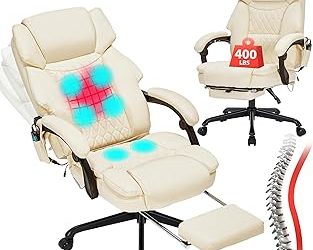
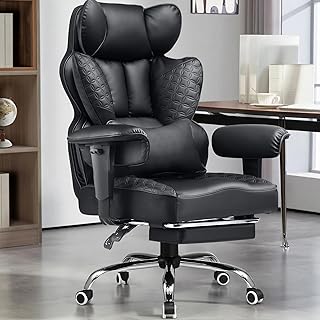
GTPLAYER Big and Tall Gaming Chair
The GTPLAYER Big and Tall Gaming Chair takes a spacious, supportive approach with a 400-pound capacity, a saddle-shaped seat, pocket-spring construction, and a footrest. Its broad high-back design may suit taller users or anyone who dislikes feeling confined, though the substantial footprint deserves a careful measurement in a compact office. The included lumbar support and reclining setup add flexibility for switching between focused work and short rest periods.
Lexeme Memory Foam Seat Cushion
The Lexeme X Large Memory Foam Seat Cushion is a practical choice when your existing chair has a hard, flat, or poorly shaped seat. Its larger format can help distribute pressure across the sitting surface, while the separate lumbar pillow gives you more control over lower-back support. It is also easy to move between an office chair, car seat, or wheelchair, making it a useful low-clutter solution for a small home.
CIOMAN 500lbs Big and Tall Office Chair
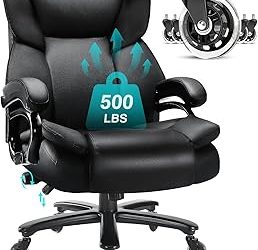
CIOMAN’s Big and Tall Office Chair emphasizes roominess and stability with a 500-pound capacity, wide cushion, rubber wheels, rocking function, and inflatable lumbar support. The adjustable air-filled support is particularly appealing for users who want to fine-tune the amount of lower-back pressure rather than accept a fixed contour. Because this is a large executive-style chair, confirm both its width and clearance before placing it near shelving or a narrow desk.
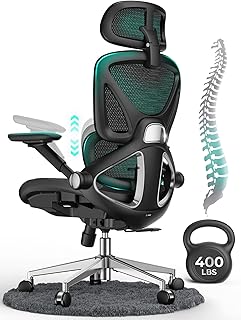
Ergonomic Office Chair with Virgin Foam Seat
This ergonomic office chair combines a virgin-foam seat with a 2D adjustable lumbar system, 3D headrest, and tilt-and-rock movement. It is a balanced option for users who want a conventional work chair with additional head and back support, without the visual bulk of a gaming chair. The white-and-gold finish is distinctive, but it may require more frequent cleaning than darker upholstery in a busy workspace.
Memory Foam Sitting Pillow
This memory foam sitting pillow is designed for office chairs, car seats, airplanes, and other firm surfaces, with a focus on relieving pressure around the hips, coccyx, and tailbone. It can be a sensible first step when your current chair is otherwise well-sized and adjustable. Measure the added height before buying: a thick cushion may raise your sitting position enough to affect desk alignment or armrest comfort.
Frequently Asked Questions
Is a firm or soft office chair better for hip pain?
Neither extreme is ideal for everyone. A supportive cushion with enough give to distribute pressure usually works better than a rigid seat or one that lets the pelvis sink deeply. Your hip position, body weight, and preferred posture all influence the right feel.
Can a seat cushion fix an uncomfortable office chair?
It can improve pressure distribution and alter the seat angle, but it cannot correct every problem. If the chair is too narrow, too deep, or unable to place your feet flat on the floor, replacing it may be more effective than adding layers of padding.
How high should my office chair be?
Set the height so your feet rest fully on the floor and your knees are roughly level with, or slightly lower than, your hips. Your elbows should remain near desk height without shrugging your shoulders. A footrest can help when the desk requires a higher chair setting.
Are gaming chairs good for hip pain?
Some are, particularly models with wide seats, substantial padding, and adjustable lumbar support. Others use fixed contours or raised side bolsters that restrict movement. Judge the actual seat dimensions and adjustment range rather than the gaming label.
Final Thoughts
For a spacious, heavily built setup, the GTPLAYER Big and Tall Gaming Chair is a strong contender; CIOMAN is compelling if adjustable lumbar inflation and a wide executive seat appeal to you. For a smaller room or an existing chair worth keeping, the Lexeme Memory Foam Seat Cushion offers a simpler, more flexible upgrade.