Key takeaways
- Seat depth: Look for a seat that supports most of your thighs without pressing behind your knees; extra width is useful, but front-to-back room is the taller-user priority.
- Backrest height: A high back should support your shoulders and upper back, while a headrest is most helpful when it adjusts high enough to meet your neck comfortably.
- Lumbar adjustment: Fixed lumbar pads can land too low on taller bodies, so prioritize adjustable support or a contoured back that can be positioned to fit your natural curve.
- Armrest range: Flip-up or multi-directional arms make it easier to pull close to a compact desk, clear the chair from a table, and keep your elbows level while typing.
- Base and footprint: A reinforced base, quiet casters, and a stable five-point design matter for larger users, but check the chair’s overall dimensions before committing limited floor space.
What's inside
Finding the best office chair for tall people is rarely just a matter of choosing a larger seat. A chair can advertise a generous weight capacity yet still leave taller users with a short seat pan, low backrest, or armrests that sit awkwardly below the desk. In a compact home office, those mismatches become even more noticeable because every inch of usable space—and every adjustment—matters.
This guide focuses on the features that make a big difference for taller users: seat depth, backrest height, lumbar positioning, armrest flexibility, stability, and practical footprint. The selections below cover mesh task chairs, cushioned executive models, and gaming-inspired designs, so you can match ergonomic support with the way your workspace actually functions.
As an Amazon Associate we earn from qualifying purchases.


How to Choose an Office Chair For Tall People (2026)
- Seat depth: Look for a seat that supports most of your thighs without pressing behind your knees; extra width is useful, but front-to-back room is the taller-user priority.
- Backrest height: A high back should support your shoulders and upper back, while a headrest is most helpful when it adjusts high enough to meet your neck comfortably.
- Lumbar adjustment: Fixed lumbar pads can land too low on taller bodies, so prioritize adjustable support or a contoured back that can be positioned to fit your natural curve.
- Armrest range: Flip-up or multi-directional arms make it easier to pull close to a compact desk, clear the chair from a table, and keep your elbows level while typing.
- Base and footprint: A reinforced base, quiet casters, and a stable five-point design matter for larger users, but check the chair’s overall dimensions before committing limited floor space.
The Best Office Chair For Tall People (2026)s Reviewed
Ergonomic High-Back Mesh Chair with Headrest
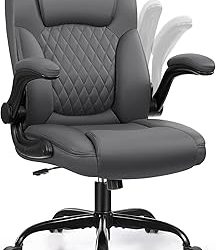
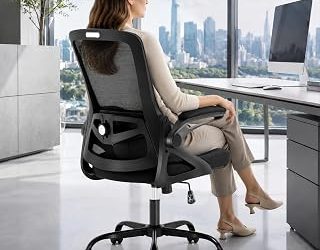
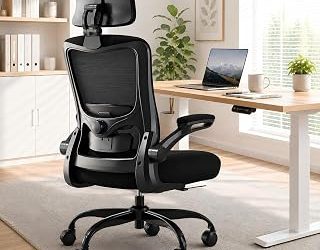
This high-back mesh chair is a sensible fit for a smaller home office that still needs generous support. Its wide cushion, flip-up arms, headrest, and 90–120-degree tilt range give taller users useful adjustment without the visual bulk of a traditional executive chair.
600-LB Heavy-Duty Chair with 5D Flip Arms
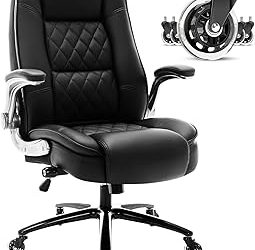
Built around a 600-pound capacity, this model is aimed at users who want a particularly substantial frame and cushion. The pocket-spring seat, high back, 5D arms, lumbar support, and dual rubber wheels make it a strong choice when stability and easy repositioning matter more than a slim silhouette.
500-LB Big and Tall Executive Chair
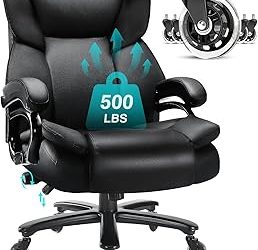
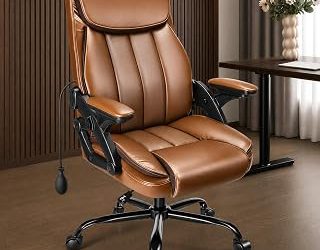
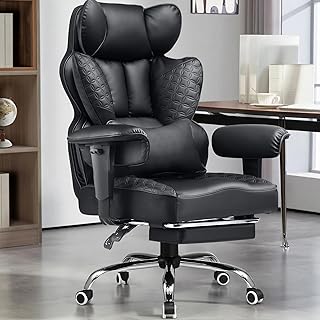
This executive-style chair combines a high back with a pocket-spring cushion and adjustable lumbar support, creating a more padded alternative to mesh. Its quiet rubber wheels are a useful touch for shared rooms or apartments where rolling noise can quickly become irritating.
X100 Ergonomic Mesh Chair with Footrest
The X100 is designed for users who want a task chair that can also support reclining breaks. Its 5D flip-up arms, adjustable 3D lumbar support, mesh construction, and footrest offer considerable flexibility, particularly in a multipurpose office where one chair must handle work, gaming, and downtime.
GTPLAYER Big and Tall Gaming Chair
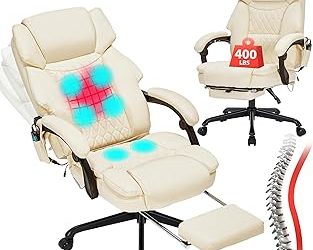
GTPLAYER’s 400-pound model takes a more cushioned, high-back approach, with a footrest, pocket-spring lumbar support, and 3D saddle-shaped seat. The matte-black finish suits a gaming setup, but the reclined posture and thicker padding can also work well for long computer sessions if your desk allows enough clearance.
Frequently Asked Questions
What seat height is best for a tall person?
A useful starting point is a seat height that lets your feet rest flat while your knees remain close to a right angle. Taller users often need a higher adjustment range, but desk height and foot placement matter just as much as the chair’s maximum setting.
Is a mesh or cushioned chair better for tall users?
Mesh usually provides better airflow and a visually lighter footprint, which can benefit compact offices. Cushioned chairs may offer more pressure relief and a deeper, more supportive seat, especially for users who prefer a softer surface.
Do tall people need a footrest?
Not necessarily. A footrest is useful when reclining, gaming, or using a desk that cannot be raised, but it should not force your knees upward during normal typing. Adjustable seating and a correctly positioned desk should come first.
How much weight capacity should an office chair have?
Choose a chair with a published capacity comfortably above your body weight rather than treating the limit as a target. A higher-rated frame can also provide reassuring stability, but construction quality, dimensions, and warranty support remain important.
Final Thoughts
For a balanced small-office setup, the Ergonomic High-Back Mesh Chair with Headrest is a practical starting point; the 600-LB Heavy-Duty Chair with 5D Flip Arms is the stronger stability-focused pick. If reclining comfort and a footrest are priorities, the X100 offers the most versatile feature set.