Key takeaways
- Footrest design: Look for a sturdy pull-out rest with smooth hardware and enough length to support your calves without forcing your knees upward.
- Recline and clearance: A chair that reclines to 135 degrees or more needs room behind the desk. Measure the wall clearance before buying, especially in a bedroom office or corner workspace.
- Adjustability: Prioritize adjustable lumbar support, seat height, armrests, and headrest position. More adjustment points help the chair fit your body rather than making you adapt to it.
- Seat and weight rating: Check seat width, cushion depth, and listed capacity together. A high weight rating is useful, but it does not guarantee a comfortable fit for every frame.
- Base and movement: A metal base and smooth casters can improve stability, while flip-up or compact armrests make it easier to slide the chair beneath a smaller desk.
What's inside
Choosing an office chair with a footrest sounds simple until you try fitting one into a compact home office. Many models are bulky when reclined, difficult to tuck beneath a desk, or padded generously while offering little meaningful back support. A footrest can also become an obstacle rather than a comfort feature if it extends too far into a walkway.
This guide focuses on the details that matter in real homes: recline range, lumbar adjustment, seat dimensions, armrest clearance, weight capacity, and how neatly each chair can live in a small workspace. The selections below suit different priorities, from occasional leg elevation to all-day ergonomic support and big-and-tall comfort.
As an Amazon Associate we earn from qualifying purchases.


How to Choose an Office Chair With Footrest (2026)
- Footrest design: Look for a sturdy pull-out rest with smooth hardware and enough length to support your calves without forcing your knees upward.
- Recline and clearance: A chair that reclines to 135 degrees or more needs room behind the desk. Measure the wall clearance before buying, especially in a bedroom office or corner workspace.
- Adjustability: Prioritize adjustable lumbar support, seat height, armrests, and headrest position. More adjustment points help the chair fit your body rather than making you adapt to it.
- Seat and weight rating: Check seat width, cushion depth, and listed capacity together. A high weight rating is useful, but it does not guarantee a comfortable fit for every frame.
- Base and movement: A metal base and smooth casters can improve stability, while flip-up or compact armrests make it easier to slide the chair beneath a smaller desk.
The Best Office Chair With Footrest (2026)s Reviewed
Best Overall: Ergonomic Reclining Office Chair With Footrest
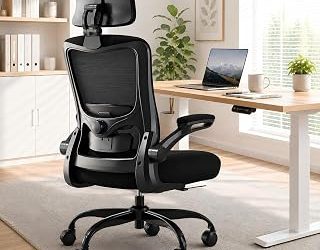
This high-back mesh chair offers a practical balance of comfort and flexibility, with a 90-to-145-degree recline, adjustable lumbar support, and a headrest. Its 350-pound capacity makes it a versatile choice for a shared home office, while the broad recline range supports both focused work and short breaks. In a tight room, remember to allow space for the backrest and footrest when extended.
Best Heavy-Duty Value: 135-Degree Reclining Mesh Chair
The second ergonomic model combines a 300-pound capacity with a large steel base, 3D armrests, a headrest, and adjustable lumbar support. Its 135-degree recline is more moderate than some competitors, which can be an advantage for small spaces: you get a useful resting position without requiring as much rear clearance.
Best for Maximum Adjustability: MALOL Ergonomic Office Chair
MALOL’s 400-pound high-back chair is built around extensive customization, including 6D armrests, a 3D headrest, seat-depth adjustment, adjustable lumbar support, and tilt lock. The metal base and PU wheels add a substantial feel, making this a strong option for larger users or anyone who spends long hours seated. It does not include a footrest, so choose it when posture support matters more than leg elevation.
Best Big-and-Tall Option: X100 Ergonomic Mesh Office Chair
The X100 pairs a footrest with a roomy big-and-tall profile, 5D flip-up arms, and adjustable 3D lumbar support. Flip-up arms are particularly useful in compact offices because they let the chair tuck beneath a desk or park closer to a wall. Its executive-and-gaming styling is more pronounced, but the configuration remains practical for daily computer work.
Best Cushioned Recliner: 400-Pound Ergonomic Office Chair With Footrest
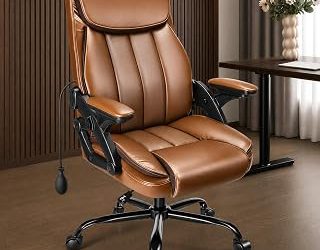
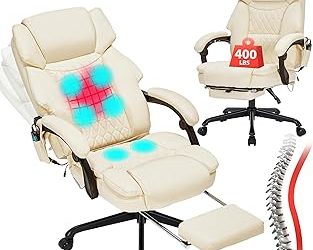
This model emphasizes a thicker seat cushion alongside a high mesh back, 4D armrests, headrest, adjustable back support, and a 135-degree recline. The 400-pound capacity and supportive seat make it appealing for extended sessions, while the built-in footrest adds a convenient way to change position. It is best suited to a workstation with enough depth for the reclining mechanism.
Frequently Asked Questions
Are office chairs with footrests good for working?
They can be, provided the footrest is treated as a secondary position rather than a permanent replacement for proper foot support. Keep both feet on the floor during focused typing when possible, then use the footrest for reading, calls, gaming, or short reclined breaks.
How much space does a reclining office chair need?
Plan for more than the chair’s upright footprint. Measure the distance from the front of the desk to the wall behind it, then add room for the backrest and footrest to open without striking furniture or blocking a doorway.
Is mesh or a cushioned seat better?
Mesh backs encourage airflow and can feel cooler in warm rooms, while a thick cushion may provide more comfort during long sessions. The best combination depends on your body, climate, and whether you tend to shift positions throughout the day.
What is the most important adjustment?
Lumbar support is a strong starting point, but seat height and depth are equally important. Your feet should rest comfortably on the floor, your knees should remain relaxed, and the seat should support your thighs without pressing behind your knees.
Final Thoughts
For most home offices, the first ergonomic reclining chair is the most balanced pick. Choose the X100 when compact storage and a big-and-tall fit matter most, or the MALOL chair when extensive adjustability and heavy-duty construction take priority over having an integrated footrest.