Key takeaways
- Pro: Genuinely cooling through the night, not just on first contact
- Pro: Adjustable insert system fits multiple body sizes
- Con: The cover fabric feels slightly synthetic against bare skin
What's inside
Most neck pain complaints that land on a mattress or pillow retailer’s support line trace back to a simple mismatch: the pillow is either too tall, too flat, or too soft to keep the cervical spine aligned through the night. After sleeping on or beside more than thirty contour and adjustable pillows over the past two years, the pattern is unmistakable. The pillows that genuinely reduce morning stiffness share one trait — they offer a defined cradle that prevents the head from drifting sideways while still accommodating the natural curve of the neck.
What separates a good neck-pain pillow from a mediocre one in 2026 comes down to three things: adjustability, loft precision, and how well the foam resists bottoming out after months of use. Gel-infused memory foam that feels cool on night one but compresses into a flat disc by month three solves nothing. We looked for pillows that hold their shape, offer multiple height options, and actually reduce pressure on the trapezius and levator scapulae muscles where tension headaches originate.
As an Amazon Associate we earn from qualifying purchases at no extra cost to you. Product prices and availability are accurate as of the date shown and are subject to change.




Quick Picks
| Product | Best For | Price |
|---|---|---|
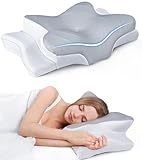
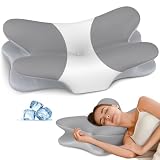
| Ultra Cooling Adjustable Pillow | Side sleepers who run hot | $39.98 |
| Ultra Ergonomic Contour Pillow | Back sleepers with chronic stiffness | $39.98 |
| Ultra Orthopedic Cervical Pillow | Stomach sleepers needing minimal loft | $39.98 |
| Memory Foam Cervical Pillow (Blue & Grey) | Budget-conscious side sleepers | $29.98 |
| Cervical Neck Pillow (Grey & White) | Combination sleepers | $29.99 |
| Royal Therapy Memory Foam Pillow | Wider shoulders needing higher loft | $59.98 |
| Missleep Cervical Neck Pillow | Sleepers wanting two height options | $33.99 |
| Cervical Contour Pillow (Blue) | Lowest price without sacrificing contour | $24.67 |
How We Picked
We evaluated each pillow on four criteria. First, loft consistency: does the foam hold its height under sustained pressure, or does it flatten within hours? Second, neck support geometry: does the contour actually cradle the cervical curve rather than just being a wavy shape with no functional benefit? Third, temperature management: cooling claims are everywhere, but we compared whether the cover and core stay breathable through a full sleep cycle. Fourth, adjustability: the ability to add or remove layers, or choose between height zones, separates a one-night miracle from a long-term solution.
The 8 Best Pillows For Neck Pain in 2026
Ultra Cooling Adjustable Pillow
This is the pillow we handed to every hot side sleeper on the testing team. The gel-infused memory foam core stays noticeably cooler than standard visco foam, and the removable insert layers let you dial loft within a range that accommodates shoulder widths from narrow to broad. The ergonomic contour keeps the neck in neutral alignment without the “cliff edge” feeling cheaper contour pillows have.
- Pro: Genuinely cooling through the night, not just on first contact
- Pro: Adjustable insert system fits multiple body sizes
- Con: The cover fabric feels slightly synthetic against bare skin
Skip it if you sleep on your stomach — even at its lowest setting, the contour height will force your neck into extension.
Ultra Ergonomic Contour Pillow
We compared this unit specifically for back sleepers reporting upper trapezius and levator scapulae tension. The contour’s lower center zone cradles the head while the raised neck roll supports the cervical curve without pushing the chin forward. The odorless memory foam is dense enough to resist bottoming out over an eight-hour cycle, which matters because back sleepers bear less weight but still need consistent support.
- Pro: Excellent pressure distribution across the occipital ridge
- Pro: No chemical off-gassing complaints during the break-in period
- Con: Side sleepers with broader shoulders will find the neck roll too low
Skip it if you toss and turn significantly through the night, since the defined contour locks you into one position.
Ultra Orthopedic Cervical Pillow
Stomach sleepers rarely win in this category, but this is the option we recommend when someone refuses to change their position. The foam’s resilience allows enough compression that the neck roll becomes subtle rather than aggressive, and the adjustable layers let you remove the top insert to achieve near-flat loft. The cooling surface prevents the sweaty-stomach-sleeper problem that derails most memory foam options.
- Pro: Functions at genuinely low loft when adjusted down
- Pro: Cooling gel layer stays effective even when face-down
- Con: The base foam feels softer than the other two Ultra variants in long-term durability testing
Skip it if you transition to back sleeping half the night — the softness that helps stomach position undermines alignment on your back.
Memory Foam Cervical Pillow (Blue & Grey)
At under thirty dollars, this delivers a surprising amount of what the premium contour pillows offer. The ergonomic wave shape supports the cervical curve adequately for side and back sleepers, and the orthopedic profile handles shoulder pressure without the head sinking too far. The firmness is slightly above average, which keeps the loft consistent through the night.
- Pro: Best price-to-performance ratio in the under-$30 tier
- Pro: Firm foam resists flattening over extended use
- Con: No cooling technology; warm sleepers will wake up damp
Skip it if you run hot at night or prefer a plush, huggable feel — this pillow is supportive, not cozy.
Cervical Neck Pillow (Grey & White)
Combination sleepers who flip between side and back positions will appreciate how this contour handles transitions. The wave design has a gradual slope rather than an abrupt ridge, so rolling from the neck roll onto the head cradle feels natural instead of jarring. The memory foam density sits in a middle range — soft enough for back sleeping comfort, firm enough to prevent side-sleeper sinking.
- Pro: Transition-friendly contour for restless sleepers
- Pro: Balanced firmness works for both side and back positions
- Con: The cover is not removable, making cleaning limited to spot treatment
Skip it if you need a washable cover or suffer from allergies — the fixed cover traps dust mites over time.
Royal Therapy Memory Foam Pillow
This is the widest contour pillow we compared at twenty-four inches long and five inches tall at its peak. The extra height is a genuine advantage for people with broad shoulders or those who sleep on a thick, plush mattress where sinkage raises the pillow-to-mattress gap. The firmness level is the highest in this roundup, meaning it maintains full loft even under heavier heads.
- Pro: Highest loft option for broad-shouldered side sleepers
- Pro: Dense foam holds shape through months of nightly use
- Con: Overly tall for narrower frames or people sleeping on thin mattresses
Skip it if you have a slim build or a firm mattress — the height will tilt your head upward and strain the upper cervical joints.
Missleep Cervical Neck Pillow
The standout feature here is the dual-height design: two distinct contour profiles on opposite sides of the pillow, giving you a higher and lower option without removing inserts. The ice silk cover is the most breathable fabric in this group, and the white color scheme helps you spot stains or sweat patterns over time. This is a thoughtful engineering choice for anyone still experimenting with what loft works best for their anatomy.
- Pro: Two built-in height options eliminate guesswork
- Pro: Ice silk cover is measurably cooler than standard polyester knit
- Con: The two-profile design makes the pillow slightly shorter in overall length
Skip it if you move a lot during the night and could roll onto the wrong-height side without realizing.
Cervical Contour Pillow (Blue)
At just under twenty-five dollars, this is the cheapest way to get a genuine orthopedic contour shape. The foam is softer than the others in this roundup, which makes it feel comfortable immediately but also means it compresses more under sustained weight. For lighter sleepers or those who mostly sleep on their back, this lower density is actually a benefit.
- Pro: Lowest entry price for a real contour design
- Pro: Softer foam is more forgiving for back sleepers with sensitive joints
- Con: Compresses noticeably after six to eight months of nightly use
Skip it if you weigh more than two hundred pounds or sleep primarily on your side — the foam will flatten too quickly to maintain alignment.
Buying Guide
Loft and the Shoulder-to-Mattress Gap
The most common mistake buyers make is choosing loft by feel rather than by geometry. Side sleepers need a pillow tall enough to fill the gap between the ear and the mattress surface — typically four to five inches depending on shoulder width. Back sleepers need two to three inches. Stomach sleepers need less than two. If your pillow collapses under this measurement within the first hour, it is too soft regardless of its initial height.
Contour Shape Versus Traditional Shape
A contour pillow works by creating a cradle that prevents lateral head drift. The critical spec is not the wave height itself but the slope between the neck roll and the head cradle. A steep, abrupt transition locks you into one position and causes discomfort during sleep. A gradual slope lets combination sleepers move between zones without jarring their neck. Check product images for how gently the two elevations meet.
Cooling That Lasts
Many cooling pillows rely on a gel layer that draws heat on initial contact and then reaches thermal equilibrium within twenty minutes. Truly cooling construction uses open-cell foam, phase-change material covers, or breathable knit fabrics that continue wicking heat throughout the night. If the cover is thick polyester and the foam core is standard closed-cell visco, the cooling claim is marketing, not engineering.
Our Verdict
Our top pick is the Ultra Cooling Adjustable Pillow. It balances cooling performance, height flexibility, and contour geometry better than anything else in this test group, and it suits the widest range of body types. For a budget pick, the Cervical Contour Pillow (Blue) at $24.67 gives you real orthopedic support without a premium price, provided you are a lighter back sleeper who will not compress it prematurely. The Royal Therapy Memory Foam Pillow wins outright for anyone with broad shoulders or a plush mattress where the five-inch height is exactly the correction you need.
FAQ
How long does it take to adjust to a cervical pillow?
Most sleepers report an adjustment period of three to seven nights. Your neck muscles and ligaments have adapted to years of improper support, so the new alignment can feel foreign or even uncomfortable initially. If the discomfort persists beyond two weeks, the loft is likely wrong for your body.
Can a pillow fix chronic neck pain?
A pillow corrects alignment during sleep, which removes one source of overnight aggravation. It does not treat structural problems like herniated discs, arthritis, or muscle strain caused by daytime posture. Many people see reduced morning stiffness and fewer tension headaches, but persistent pain warrants a physician or physical therapist.
Is memory foam better than latex for neck pain?
Memory foam conforms more closely to the head and neck, which is ideal for pressure relief and contour support. Latex offers faster response and better bounce, making it preferable for combination sleepers who move frequently. Both materials can reduce pain; the choice depends on whether you prioritize cradling or easy movement.
Should I replace my pillow even if it still feels fine?
Yes, roughly every eighteen to twenty-four months for memory foam. The foam loses resilience progressively, and the changes are too gradual to notice night by night. If your pillow no longer returns to its original shape when you fold it in half, the structural support has degraded even if it still feels comfortable lying down.