Key takeaways
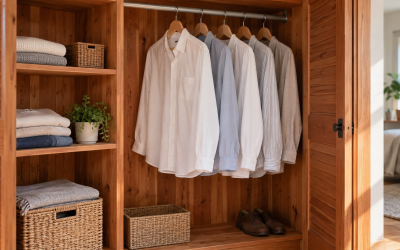
- Double-Hang Sections: Upper and lower steel rods providing 60 to 72 inches of combined vertical hanging room.
- Integrated Wooden Drawers: Central storage towers featuring 4 to 6 wooden drawers (rated for 20 to 35 lbs per drawer), eliminating the need for a separate bedroom dresser.
- Adjustable Shelving: Open side shelves designed to hold stacked knits, shoes, or storage bins, supporting 30 to 50 lbs per shelf.
What's inside
The Short Answer
It depends: You need a built-in closet organizer system if your closet relies on a single rod and wire shelf, has at least 4 feet of horizontal wall space, and you plan to remain in your home for at least two years. If your closet is under 3 feet wide, under 14 inches deep, or you are in a short-term rental where drilling into wall studs is prohibited, a true built-in system is an unnecessary investment.
What You Actually Get
Standard builder-grade closets offer a single wood or wire rod suspended beneath a single top shelf. This layout wastes roughly 50% to 60% of usable vertical volume because short items—like folded shirts, folded pants, and blouses—only require 30 to 40 inches of vertical hang space, leaving open air underneath.
As an Amazon Associate we earn from qualifying purchases at no extra cost to you. Product prices and availability are accurate as of the date shown and are subject to change.


A modular built-in closet organizer system replaces this single-rod setup with a structured framework anchored directly to your wall studs. Modern self-install systems feature telescoping hang rods, central drawer towers, and adjustable side shelving. These kits typically fit closet spans ranging from 4 to 9 feet wide, with depths between 14 and 16 inches and overall heights between 70 and 84 inches.
By upgrading, you transition from unstructured open air to distinct organizational zones:
- Double-Hang Sections: Upper and lower steel rods providing 60 to 72 inches of combined vertical hanging room.
- Integrated Wooden Drawers: Central storage towers featuring 4 to 6 wooden drawers (rated for 20 to 35 lbs per drawer), eliminating the need for a separate bedroom dresser.
- Adjustable Shelving: Open side shelves designed to hold stacked knits, shoes, or storage bins, supporting 30 to 50 lbs per shelf.
Cost-wise, entry-to-mid-tier modular wooden kits—such as a 4-to-9-foot system with four wooden drawers—run around $169.99. Multi-tower double systems featuring six drawers and expanded shelving sit near $299.99. Custom, contractor-installed hardwood systems start around $1,200 and can exceed $5,000.
Pros
- Doubles Usable Vertical Capacity: By stacking top and bottom hanging rails across a 6-foot closet section, you gain up to 144 linear inches of hanging storage compared to the standard 72 inches provided by a single builder rod.
- Reclaims Bedroom Floor Space: Systems equipped with built-in wooden drawers allow you to move socks, undergarments, and tees out of the main bedroom area. Eliminating a traditional 5-drawer dresser frees up 10 to 15 square feet of floor space in your bedroom.
- High Weight Capacities: Built-in systems anchor straight into wall studs using heavy-duty steel brackets, supporting total load capacities between 200 and 450 lbs. This prevents the sagging and collapse common to freestanding plastic or wire racks.
- Elevated Aesthetic and Resale Appeal: In 2026, home buyers view structured, built-in storage as an essential feature rather than a luxury upgrade. Laminate wood and engineered timber designs create a seamless, custom-built appearance that elevates master suites and reach-in closets alike.
- Modular Flexibility: Most modern wood systems allow you to raise or lower shelves and reposition hang bars as your wardrobe changes throughout different seasons.
Cons
- Installation Labor and Tool Requirements: Installing a built-in organizer is not a simple 10-minute job. It requires a stud finder, level, drill, and tape measure. Assembly and wall anchoring typically take 2 to 5 hours for a single person.
- Permanent Wall Alteration: Securing vertical towers and hanging tracks requires drilling multiple 1/4-inch anchor holes into drywall and studs. If you remove the system later, you must patch, sand, and repaint the wall surface.
- Fixed Depth Footprint: Built-in towers generally require at least 14 to 16 inches of interior closet depth. In shallow reach-in closets under 20 inches total depth, bulky hangers or drawer fronts may extend past the frame, preventing bi-fold or sliding closet doors from closing smoothly.
- Higher Upfront Expense: While basic tension rods cost $20, reliable engineered-wood modular systems cost between $150 and $300, making them a significant commitment for budget-conscious homeowners.
Who Should Buy It
You should buy a built-in closet system if:
- You have a reach-in closet between 4 and 9 feet wide: This width range is optimal for adding a central drawer tower flanked by dual hanging rods.
- You want to eliminate freestanding bedroom furniture: Selecting a system with integrated wooden drawers allows you to clear space in smaller master bedrooms or guest rooms.
- You own your home or have a long-term lease: The drill holes required for mounting mean built-ins make the most sense when you plan to enjoy the system for several years or boost your property’s resale value.
- You share a closet with a partner: Built-in systems create hard boundaries and clear zones, preventing clothing overlap and daily storage disputes.
Who Should Skip It
You should skip a built-in closet system if:
- Your closet depth is under 18 inches: Standard 14-inch deep towers combined with protruding coat hangers (which need 20 to 22 inches of clearance) will prevent closet doors from shutting.
- You are in a short-term rental: Landlords often penalize tenants for mounting heavy multi-tower systems into wall studs due to the drywall repair required upon move-out.
- Your total closet width is under 36 inches: Small closets lack the lateral width needed for central shelves alongside hanging clothing; a simple two-tier hanging rod is far more efficient here.
- You frequently change your bedroom layout: Built-ins are stationary. If you like reconfiguring your storage every few months, modular freestanding racks are a better fit.
Cheaper Alternatives
If a dedicated wooden built-in system exceeds your budget or installation limits, several lower-cost alternatives can optimize your closet space without permanent wall modifications.
| Option | Cost | Trade-off |
|---|---|---|
| Freestanding Garment Racks | $40 – $90 | Takes up floor space outside or inside the closet; lower overall weight limit (50–100 lbs); visible clutter. |
| Adjustable Wire Closet Kits | $60 – $120 | Industrial aesthetic; wire shelves leave ridges on folded knits; lower structural rigidity than solid wood/MDF. |
| Hanging Fabric Shelves & Tension Rods | $15 – $35 | No tools required; low weight capacity (15–25 lbs max); fabric shelves sag over time under heavy sweaters. |
| Over-the-Door Organizers | $15 – $30 | Great for shoes and small accessories; adds no hanging bar space or deep drawer capacity. |
FAQ
Does a built-in closet system increase home value?
Yes. While a built-in closet organizer system rarely yields a direct dollar-for-dollar valuation increase on an appraisal, real estate professional surveys consistently show that updated, functional closets serve as a strong selling point that can speed up a sale and justify a top-of-market listing price.
Can I install a closet organizer system myself?
Most modular kit systems are designed for straightforward DIY installation. If you can locate wall studs with an electronic stud finder, level a steel track, and operate a cordless drill, you can complete the installation in 2 to 4 hours. Having a second person to assist in lifting vertical panels makes the process significantly easier.
How deep does a closet need to be for a built-in system?
Your closet should have an interior depth of at least 22 inches for standard clothing hangers to hang perpendicular to the wall without brushing against the closet doors. The organizer system itself usually measures 14 to 16 inches deep, leaving necessary clearance for adult-sized hangers and folded garments.
Are wood closet systems better than wire systems?
Wood and engineered-wood (MDF/laminate) systems offer superior aesthetic finish, prevent wire-rack creasing on knit clothing, and support integrated slide-out drawers. Wire systems are generally less expensive and perform better in high-humidity areas like basements, but they lack the structural weight capacity and furniture-grade appearance of wooden systems.