Key takeaways
- Mesh lets more air pass through an office chair, while upholstered fabric over padding can feel more cushioned. Neither surface guarantees better support or durability. When choosing a mesh or fabric office chair, compare the actual seat construction, how it…
Mesh lets more air pass through an office chair, while upholstered fabric over padding can feel more cushioned. Neither surface guarantees better support or durability. When choosing a mesh or fabric office chair, compare the actual seat construction, how it fits your body, and the care instructions rather than deciding by material name alone.
As an Amazon Associate we earn from qualifying purchases.
By KK Home Furnishings Editorial Team
Mesh or Fabric Office Chair: Key Material Differences
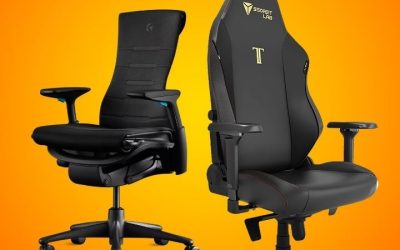
For a warm office, a well-ventilated suspended mesh seat may be appealing. For someone who prefers a padded sitting surface, fabric upholstery over supportive foam may be easier to settle into. However, breathable woven upholstery exists, and mesh varies in weave, tension and frame design. The comparison should start with the material touching your body, not just the backrest photograph.
| Decision Factor | Mesh Seat or Back | Fabric-Upholstered Seat or Back | What to Check |
|---|---|---|---|
| Heat and airflow | Open suspension can move air through the sitting surface | Breathability depends on textile and underlying foam | Openings through the seat, not only the back |
| Initial seat feel | Tensioned support with less conventional padding | Foam and upholstery provide a cushioned interface | Pressure at seat edges during a real sitting trial |
| Support and posture | Depends on contour, tension and adjustments | Depends on foam, contour and adjustments | Seat depth, lower-back contact and foot support |
| Surface wear | Check weave damage, stretch and edge attachments | Check seam wear, pilling and foam compression | Warranty wording and replaceable components |
| Routine cleaning | Dust can lodge in openings; cleaning must be gentle | Spills can enter upholstery and padding | Exact manufacturer care code and instructions |
| Room appearance | Often visually open, with visible frame and suspension | Often softer looking, with more covering and colors | Chair dimensions and how it looks from behind |
| Hybrid construction | A mesh back may be paired with a padded fabric seat | A fabric seat does not prove the back is upholstered | Separate material descriptions for seat and back |
Airflow Depends on the Seat as Much as the Back
A fully suspended mesh seat leaves more of its sitting surface exposed to moving air than a solid foam cushion typically does. Herman Miller describes the 8Z Pellicle material on the Aeron as breathable suspension used on both seat and back [Herman Miller, accessed October 2026]. That specific construction illustrates the mechanism; it does not establish the airflow of every mesh chair.
Many listings show an open mesh back while the seat remains thickly padded and fabric covered. That hybrid may ventilate your back yet feel similar to a fabric chair at the thighs. Check product photos from underneath and behind the chair. CCOHS recommends breathable seating materials to help manage heat and moisture, while recognizing that individual working conditions differ [CCOHS, accessed October 2026].
Cushioning and Ergonomic Fit Are Separate Questions
A tensioned mesh seat supports weight through a flexible suspended surface, whereas a fabric-upholstered seat commonly uses foam over a shaped base. One can feel springier; the other can feel softer at first contact. Neither description tells you whether the seat front presses into the thighs or whether the backrest meets your lower back in a usable position.
OSHA recommends trying an office chair for comfort and fit and checking a supportive backrest, rounded seat front and suitable seat dimensions [OSHA, accessed October 2026]. Test the actual configuration with feet supported and arms at your desk. If you feel a hard perimeter on mesh or bottom out on thin foam, the material’s advertised benefits do not compensate for poor fit.
Construction and Care Determine Real-World Longevity
Mesh can stretch, snag or separate near its frame; fabric can pill, abrade or hide compressed foam beneath an intact cover. Those are possible wear modes, not a ranking of which category always lasts longer. Compare upholstery specifications, the manufacturer’s material warranty and whether the seat or back panel can be replaced without discarding the entire chair.
Steelcase lists both a 3D Microknit Back and an Air Back for its Series 1 family, with a fabric-upholstered seat among its surface options [Steelcase, accessed October 2026]. This illustrates why construction must be checked by configuration. Manufacturer cleaning instructions also differ: Herman Miller’s Aeron guide calls for gentle vacuuming of Pellicle, not rotary brushing [Herman Miller, care guide].
Choose Your Seat Material for Six Everyday Situations
Choosing a mesh or fabric office chair becomes easier when the room, work pattern and expected maintenance are specific. These six scenarios are decisions about seat construction, not a list of products. A well-fitted hybrid can sometimes resolve a trade-off better than an all-mesh or fully upholstered design, provided its seat and back materials are described accurately.
For a Hot Home Office With Limited Cooling
Lean toward a well-ventilated mesh seat and back if airflow is the main problem and you prefer a suspended sitting surface. An open back alone may not change how warm a padded seat feels. Look closely at the underside of the seat, the density of the weave and any foam or covering that blocks ventilation where your thighs actually contact the chair.
Test the surface long enough to notice pressure near the seat’s perimeter rather than judging only the first minute. A frame edge that feels intrusive may outweigh the cooling advantage for you. Curtains, airflow and room temperature also change the experience, so the material should be one part of your comfort plan rather than a promise that you will never feel warm.
For Long Keyboard Sessions and Focused Desk Work
Choose whichever construction maintains comfortable contact and steady support while you type. Fabric over resilient cushioning may appeal to someone who dislikes concentrated pressure from a taut mesh seat; another user may prefer the mesh suspension’s response. Seat height, seat depth, arm positioning and back support remain more important than whether the surface looks padded.
OSHA advises that a chair permit suitable support and varied seated positions rather than forcing a single posture [OSHA, accessed October 2026]. Try normal typing, moving the mouse and leaning back briefly, then check whether you can return to the desk without sliding forward. Do not infer that a softer cushion prevents back pain or that a firmer mesh surface is automatically healthier.
For a Shared Workstation With Different Users
Prioritize adjustments that two people can reset quickly. A fabric seat may be familiar to more users, but familiarity does not guarantee fit; a mesh seat may suit both if its shape, edge and suspension work for each person. The decisive factors are usable seat-height and depth ranges, accessible lumbar adjustments, stable foot contact and whether the seat feels supportive to both.
Ask each person to perform the same desk task and record which settings need changing. If one user notices the mesh border under their thighs while the other finds a padded seat too deep, neither fabric family provides a universal solution. CCOHS stresses adjustable chairs that accommodate different people rather than relying on an imagined average user [CCOHS, accessed October 2026].
For a Home With Pets, Dust and Frequent Crumbs
Base the choice on the actual surface and cleaning instructions, not the assumption that visible openings make mesh self-cleaning. Fine debris can collect around a mesh frame, while woven upholstery may trap hair and absorb spills. A tight textile with a documented cleaning method may be more practical than a delicate open weave in a household where claws often contact the chair.
Before buying, read the precise cleaning sheet for the chosen color and material. Steelcase recommends regular vacuuming of its fabric upholstery and directs owners to appropriate procedures for spills [Steelcase, accessed October 2026]. Herman Miller’s Aeron care guide warns against rotating vacuum brushes on Pellicle [Herman Miller, care guide]. Do not apply either brand’s instructions to an unrelated chair.
For Someone Sensitive to Surface Texture or Seat Edges
A padded fabric seat may be worth trying first if an exposed mesh perimeter or a coarse woven texture quickly feels distracting. However, fabrics also vary in roughness, and thick padding can create its own fit problems. Smooth clothing can slide on some covers; grippy textiles may catch on others. Sample the actual upholstery while sitting and moving rather than relying on close-up photographs.
Pay special attention to the first few inches behind the knee and the outer edges beneath the thighs. The preferred surface should allow easy position changes without forcing you to perch at the front. If a seat needs an extra cushion just to hide an uncomfortable frame, that cushion may change the intended seat depth and your reach to the backrest.
For a Chair You Plan to Maintain for Many Years
Choose the construction with the clearest parts and upholstery support, even if it is not your initial material preference. Find out whether a damaged fabric seat, stretched mesh panel or cracked seat frame is serviced as a replaceable assembly. A long frame warranty is not automatically the same as long coverage for upholstery, foam or cosmetic wear.
Compare the full warranty text for the exact chair and market, including exclusions and who pays service costs. Herman Miller publishes a multi-year warranty for its Aeron line, while Steelcase provides distinct materials and configuration information for Series 1 [manufacturer pages, accessed October 2026]. Neither detail proves one upholstery category outlasts the other; serviceability is the useful shopping test.
Frequently Asked Questions
Material labels can hide construction details that become important after delivery. The questions below address hybrid designs, extra cushions, safety claims and environmental assumptions. These issues are worth checking on the precise product page and manual rather than extrapolating from a generic statement about mesh or woven upholstery.
Can an Office Chair Have a Mesh Back and a Fabric Seat?
Yes. Hybrid office chairs commonly combine a ventilated back with a padded, fabric-covered seat. Steelcase’s Series 1 is one documented example of differing back options alongside an upholstered seat [Steelcase, accessed October 2026]. A product described as a mesh chair therefore may not use suspended mesh under the sitting area.
Look for separate specifications for the seat and back, especially when comparing photos or ordering different variants of the same model. Confirm whether the back is flexible fabric mesh, an engineered plastic structure or a textile over padding. These choices can feel different even when an online catalog groups them under the same material label.
Should You Put a Seat Cushion on a Mesh Office Chair?
Only if the chair maker permits it and the added cushion does not interfere with stable seating or backrest fit. A cushion can change your effective sitting height, reduce ventilation through the mesh and move your body forward relative to the lumbar contour. It may also conceal a poor match between your body and the seat frame rather than solving the fit issue.
If you already own the chair, check the manufacturer’s accessory guidance and test your workstation alignment after adding anything to the seat. If you are still shopping, compare a fabric-padded model or a hybrid first. A chair that fits comfortably without improvised layers is generally a simpler purchase to adjust and maintain.
Does a BIFMA-Compliant Chair Guarantee That Mesh Will Not Sag?
No. A claim about compliance with a seating standard must be tied to the exact standard, tested configuration and product. BIFMA describes ANSI/BIFMA X5.1 as addressing general-purpose office seating safety and durability [BIFMA, accessed October 2026]. That does not by itself provide a model-specific promise that any mesh panel will retain identical tension indefinitely.
Ask for the warranty terms covering upholstery and suspension materials, and check whether wear, accidental snags or visible deformation are excluded. The manufacturer’s stated user-weight rating must also be verified separately for the exact model. A recognized seating standard is useful evidence about a particular test scope, not a replacement for material-specific documentation.
Is Fabric or Mesh the More Sustainable Chair Material?
Neither category is automatically more sustainable. Environmental impact depends on fiber chemistry, recycled content, production, parts replacement and the useful life of the entire chair. A thin open weave is not proof of lower resource use, just as a removable fabric cover is not proof that a whole product can be repaired or recycled locally.
Look for a product-specific materials disclosure, applicable environmental certification and a realistic repair route in your market. Ask whether replacement upholstery can be purchased after the initial warranty period. A chair that stays usable through replaceable components may be more sensible for long ownership than choosing a fabric label without supporting product information.
Final Thoughts
If you are still undecided about a mesh or fabric office chair, make one final request before ordering: obtain a side and underside photograph of the exact seat configuration. It can reveal whether the surface is suspended mesh, covered foam or a hybrid. Match that evidence to the care sheet and material warranty, then judge the fit for your own desk rather than a category promise.