
Key takeaways
- A mesh chair is an office or task chair that uses an open-weave textile on its backrest, seat, or both. The material may stretch across a supporting frame or sit over another structure. If you are wondering what is a…
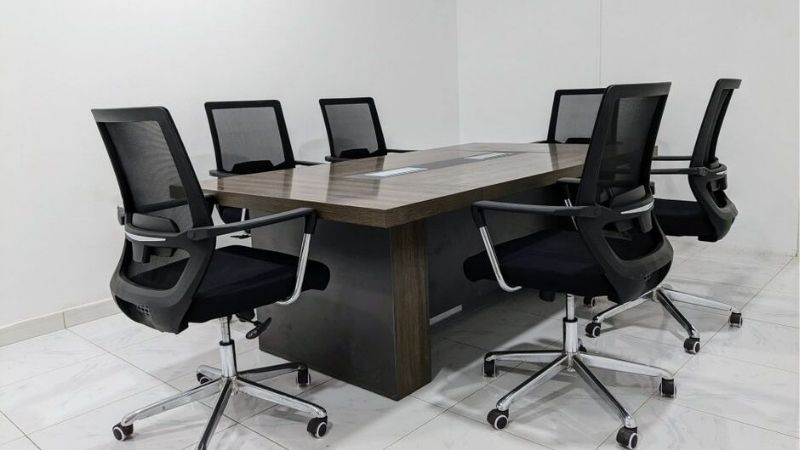
A mesh chair is an office or task chair that uses an open-weave textile on its backrest, seat, or both. The material may stretch across a supporting frame or sit over another structure. If you are wondering what is a mesh chair, the defining feature is the woven seating surface, not a particular brand, price, reclining mechanism, or promise of better posture.
As an Amazon Associate we earn from qualifying purchases.
By KK Home Furnishings Editorial Team
What Is a Mesh Chair and How Is It Constructed?
Start with the parts you can identify on a product photograph or in a specification sheet: the textile, the way it is attached, the seat beneath you, and the adjustable chair frame. The term mesh covers several constructions, so two chairs carrying that label may support the sitter in different ways. The table separates visible features from assumptions shoppers should avoid.
| Chair Component | What It Does | What to Verify |
|---|---|---|
| Open-weave back textile | Forms a ventilated backrest surface | True open weave or fabric applied over padding |
| Suspension seat, if present | Supports sitting load through a tensioned surface | Mesh seat versus upholstered cushion |
| Supporting perimeter | Anchors the textile and sets seat or back shape | Hard edge, flexible rim, or other frame design |
| Backrest contour | Shapes the contact area behind the torso | Fixed contour and any separate lumbar adjustment |
| Seat-height and depth controls | Help position the chair relative to body and desk | Actual adjustment range for the model |
| Tilt or recline mechanism | Allows or resists backward movement | Manual settings, automatic response, or fixed back |
The Mesh Is a Woven Surface, Not an Ergonomic Certification
In furniture descriptions, mesh usually means yarns or filaments arranged with openings between them. Some office chairs use polymer-based yarns or elastomeric suspension textiles; others use proprietary performance fabrics. The weave may be relatively open, dense, flexible, or firm. The manufacturer’s material specification is the reliable place to learn what a particular chair uses; the word mesh alone does not reveal fiber content or load-bearing capacity.
On a suspended mesh surface, the textile is held under tension by a surrounding structure and carries the seated load without the same thick foam stack found in many conventional padded chairs. A mesh-covered foam back is different: its textile acts mainly as an outer covering while the underlying pad and shell provide much of the feel and support. Product photography can obscure that distinction, so look for seat-section diagrams or manufacturer descriptions.
The Backrest and Seat Do Not Have to Use the Same Material
A mesh-back chair often combines a woven back panel with a separate upholstered seat cushion. An all-mesh chair uses suspended textile on both main contact surfaces, although other parts of the chair remain solid. Hybrid designs may add cushioning within a suspension assembly. All three can reasonably appear in retail search results for mesh office chairs, and none should be assumed to have identical support or ventilation.
Humanscale’s Diffrient World product page, for example, lists configurations with both mesh and upholstered seats while retaining its mesh backrest [Humanscale, World U.S. product page, accessed October 2026]. This illustrates a choice offered for that model, not a rule governing the category. Before ordering, read the exact configuration name: a photographed mesh back does not prove that the delivered chair will also have a mesh seat.
The Frame and Controls Remain Ordinary Chair Components
Mesh is a description of the contact surface, not the mechanism underneath it. A mesh chair can have a five-star caster base, adjustable height, arms, seat-depth controls, and a tilt assembly much like an upholstered task chair. Conversely, a simple mesh-backed visitor chair may have few controls. The upholstery does not determine which adjustment features come with the model.
OSHA evaluates computer-workstation chairs through backrest support, seat fit, armrests, and the base, and recommends trying chairs before buying [OSHA, Computer Workstations: Chairs, accessed October 2026]. That is useful context for mesh designs: the weave is one component of an assembled chair. Compare desk compatibility and usable adjustments separately rather than treating the material name as a substitute for specifications.
Six Common Mesh Chair Designs and How to Recognize Them
The following categories describe constructions rather than six products to rank. They help identify what a listing actually sells and what you should examine in person. A model can belong to more than one category, such as a mesh-backed chair with an automatic recline mechanism or a hybrid seat with an unusually flexible edge.
Mesh Back With a Separate Cushioned Seat
This familiar task-chair format places the open-weave panel behind the sitter and keeps a fabric-covered foam cushion under the thighs. In listings, look for terms such as mesh back, upholstered seat, or padded seat. The seat may still have adjustable depth or a waterfall-style front edge, but its cushioning is separate from the textile back. A picture showing the rear of a chair cannot establish the seat construction.
This layout is straightforward to identify and works in many conventional desk environments. It is not necessarily lower-grade or more ergonomic than full mesh. Focus on whether the back is tensioned or merely covered, whether the upholstery description names the seat separately, and whether the seat pan fits your work surface. Detailed comfort and durability judgments belong to their own questions rather than the definition of this chair type.
Full Mesh With Suspended Seat and Backrest
In a full-mesh design, woven suspension material is part of both the seat and the backrest. The seat and back usually attach to molded or otherwise engineered support structures that maintain their shapes. The term does not imply that the chair is made entirely of textile; the frame, base, controls, and arms still use other materials. Buyers should inspect the exact seat perimeter because that edge is a structural component.
Herman Miller describes the Aeron chair as using 8Z Pellicle suspension and explains that the chair incorporates its own back-support and tilt systems [Herman Miller, Aeron Chair U.S. product page, accessed October 2026]. The example shows how a woven surface can be integrated into a complete task-chair design. It should not be taken to mean all full-mesh chairs use the same material, tension zones, adjustments, or engineering.
Hybrid Suspension With Integrated Cushioning
Hybrid designs blur a simplistic mesh-versus-foam distinction. A manufacturer may suspend a technical weave while incorporating some cushioning, creating a seat assembly that does not fit neatly into either a naked membrane or a conventional thick upholstered pad. The useful shopping question is which material actually supports the seat and how the materials are arranged, not whether marketing calls the fabric advanced or proprietary.
Steelcase states that the Karman uses a hybrid suspension seat with integrated cushioning and a flexible frame edge [Steelcase, Karman U.S. product page, accessed October 2026]. That is a specific manufacturer’s construction claim, not proof that all products labeled hybrid share the same design. If a seller uses the term, ask for a cross-section or clear technical description before inferring that the chair combines foam and mesh in a particular way.
Contoured or Multi-Panel Mesh Backrest
Some backs are one stretched panel, while others use distinct zones or seams to shape the support surface. A shaped back may be paired with a separate lumbar component, but the presence of contours does not tell you whether that support is adjustable. Inspect the actual back outline, the attachment points, and whether the product description attributes the shape to frame geometry, textile tension, or additional support hardware.
Humanscale describes the Diffrient World’s Form Sensing Mesh as a three-panel backrest [Humanscale, World U.S. product page, accessed October 2026]. Herman Miller, by contrast, identifies tension zones in Aeron’s Pellicle system [Herman Miller, Aeron Chair U.S. product page, accessed October 2026]. These are two manufacturer-specific approaches, not interchangeable technical standards. Either design still needs to be evaluated as a complete chair with suitable dimensions.
Fixed-Function Mesh Seating Versus Adjustable Task Chairs
A mesh guest chair or basic desk chair may have a fixed seat and back angle. An office task chair can add a pneumatic seat-height lift, recline resistance, arm adjustment, or seat-depth control. Both may be marketed as mesh chairs because the fabric description says little about the chassis. To identify which one you are viewing, check the mechanical feature list rather than relying on a generic ergonomic keyword in the title.
For a computer workstation, OSHA advises considering seat height and depth, back support, arm placement, and a stable base together [OSHA, Computer Workstations: Chairs, accessed October 2026]. This does not turn every checklist dimension into a universal requirement; individual sizing and working conditions matter. If a listing never specifies adjustments, do not assume the chair has them merely because its back appears breathable or technical.
Manually Controlled Versus Weight-Responsive Mesh Chairs
Some task chairs offer separate knobs or levers for recline tension and back locking. Others let the mechanism respond to body weight with fewer manual settings. These differences describe the chair’s mechanical behavior, not whether its fabric is mesh. An adjustable design may also offer optional parts, so the supplied configuration should list the controls rather than leaving buyers to infer them from a demonstration video.
Humanscale describes the Diffrient World as employing a body-weight-responsive recline mechanism [Humanscale, World U.S. product page, accessed October 2026]. Steelcase similarly describes a weight-activated system for the Karman [Steelcase, Karman U.S. product page, accessed October 2026]. Neither example proves that automated adjustment suits every user. Look for a manufacturer’s control diagram and available chair settings; that is more useful than assuming mesh automatically means self-adjusting.
Frequently Asked Questions
These questions address common label and specification ambiguities that can remain even after you identify the chair’s general construction. The answers are about product classification and checking listings, not promises about an individual’s comfort or health.
Is a Mesh Chair the Same Thing as an Ergonomic Chair?
No. Mesh refers to an upholstery or suspension material, while ergonomic describes how a chair is designed to fit people and support their tasks. A chair may use mesh but have limited adjustment, or it may use conventional upholstery while offering extensive controls. The words describe different aspects of a product and should not be used as synonyms.
To assess the second claim, inspect the chair’s actual dimensions, backrest support, movement, and adjustment features. OSHA’s workstation guidance treats those as part of overall chair fit [OSHA, Computer Workstations: Chairs, accessed October 2026]. A manufacturer may call a chair ergonomic, but the term alone is not a substitute for seeing whether the particular model suits its intended user.
Does Mesh Mean Every Part of the Chair Is Breathable?
No. A mesh label may refer only to the back, and even an all-mesh model can have solid frame components, upholstery layers, pads, or accessories. Some product photos show a visible woven pattern without showing what is behind it. The seat and back should be checked independently in the specification sheet.
When a listing calls a design breathable, treat that as a feature description unless it supplies a test method and comparable measurements. A mesh surface can have openings that allow air through, but a claim about actual cooling of a person depends on the full construction and conditions. Do not translate a visible weave into a predictable temperature or health outcome.
Can a Mesh Chair Have a Headrest or Separate Lumbar Support?
Yes. Mesh describes the upholstered contact surface and does not prohibit a headrest or a separate lumbar-support piece. Those may be built into the design, adjustable, optional, or absent. The same product family may offer versions with different back heights and attachments, which makes the configuration important when purchasing.
Check whether the accessory is included in the exact SKU, whether it is height or angle adjustable, and whether it changes the usable backrest space. If the product page displays a premium configuration, the base model might not contain every shown part. A headrest or pronounced lumbar pad does not automatically mean the chair will fit every body type.
How Can You Identify a Real Mesh Seat From a Product Listing?
Read the seat material field rather than the headline alone. Descriptions such as suspension seat, mesh seat, or woven load-bearing textile provide more useful clues than breathable design. Look for a side view or underside photograph showing the way the textile attaches to the frame. If the listing only says mesh chair, you may be looking at a padded seat with a mesh back.
If the available images and specifications conflict, ask the seller for the exact model’s seat construction or assembly manual. Confirm whether the advertised version is full mesh, a mesh-backed padded chair, or a hybrid. That single check prevents a basic category mistake before you move on to comparing fit, warranty terms, or the other features that matter for your workstation.
Final Thoughts
What is a mesh chair? It is a chair identified by an open-weave textile on the backrest, seat, or both, not by one universal comfort rating or control system. First distinguish mesh-back, full-mesh, and hybrid construction. Then verify the seat, frame, controls, and exact configuration so you understand the product you are comparing. For a desk chair, material is only one part of overall fit.









