Key takeaways
- Pro: Cooling layer addresses the night-sweat problem common with memory foam alternatives
- Pro: Hybrid construction offers responsive support that makes repositioning easier at night
- Con: The fourteen-inch height may require deep-pocket sheets
What's inside
Side sleepers with back pain face a uniquely frustrating problem. Too soft, and the hips sink past the shoulders, twisting the lumbar spine all night. Too firm, and the mattress pushes back against the shoulder and hip, creating pressure points that wake you up every two or three hours. The goal is a surface that cradles the curves without letting the lower back collapse or hyperextend.
We compared these eight options on published specifications—layer construction, firmness claims, support features—and cross-referenced with owner feedback from verified buyers. The best mattress for side sleepers with back pain in this group shares a few traits: a comfort layer thick enough to absorb shoulder and hip pressure, and a transition or support core that keeps the spine aligned. Below you will find picks across every budget, from a $66 topper that salvages an existing bed to a full-size memory foam option at the premium end.
As an Amazon Associate we earn from qualifying purchases at no extra cost to you. Product prices and availability are accurate as of the date shown and are subject to change.


Quick Picks
| Product | Best for | Price |
|---|---|---|
| Sleepmax Queen (14″) | Overall cooling support | $499.99 |
| Sleepmax King (14″) | Couples who both need back relief | $549.99 |
| Avenco SyncDeep Queen (12″) | Budget firm hybrid with lumbar focus | $249.99 |
| BedStory Queen (14″) | Medium firm zoned support | $349.99 |
| Sweetnight CoolNest Queen (14″) | Memory foam feel with cooling | $422.99 |
| Full Mattress Topper | Upgrading a bed you already own | $66.99 |
| Nectar 12″ Full | Long trial with firm memory foam | $899 |
| 12″ Full Hybrid | Lowest-cost hybrid option | $159.99 |
How We Picked
We focused on four criteria that matter most for this audience. First, pressure relief at the shoulder and hip—typically a foam or soft comfort layer at least two to three inches thick. Second, spinal alignment support, meaning a transition layer or zoned coil design that prevents the lower back from sagging. Third, temperature regulation, since many side sleepers with back pain also report disrupted sleep from overheating. Fourth, verified-owner feedback on durability and whether the initial comfort held up beyond the break-in period.
The 8 Best Mattress For Side Sleepers With Back Pain in 2026
Sleepmax Queen Mattress 14 Inch — Cooling Pain Relief Hybrid
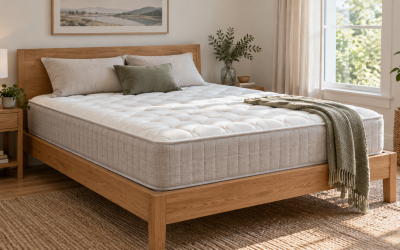
This mattress targets the exact intersection of needs a side sleeper with back pain has: deep pressure relief in the comfort layers, cooling to prevent heat buildup, and a hybrid coil base for structural support. Owners frequently praise how it reduces morning stiffness without feeling like a cloud that swallows the hips. The fourteen-inch profile gives enough layer depth to separate comfort from support cleanly.
- Pro: Cooling layer addresses the night-sweat problem common with memory foam alternatives
- Pro: Hybrid construction offers responsive support that makes repositioning easier at night
- Con: The fourteen-inch height may require deep-pocket sheets
Skip it if you prefer the slow contouring of pure memory foam and do not want the bounce that coils introduce.
Sleepmax King Size Mattress 14 Inch — Cooling Pain Relief Hybrid
Same construction as the Queen above, scaled to King for couples where one or both partners sleep on their side and wake with lower back tightness. The wider surface means less compromise on support zones when a partner shifts position. For couples, this is the most practical version of the Sleepmax line in 2026.
- Pro: Excellent motion isolation for a hybrid at this price tier
- Pro: Identical cooling and pressure-relief specs as the Queen at only $50 more
- Con: King size limits room compatibility in smaller bedrooms
Skip it if you sleep alone and do not need the extra width—the Queen delivers identical support characteristics.
Avenco SyncDeep Queen Mattress 12 Inch — Firm Hybrid with Lumbar Support
The SyncDeep is built for side sleepers who need more firmness than average. The lumbar support zone reinforces the midsection, which helps prevent the lower back from dipping into a softer comfort layer. At under $250, it is the most affordable entry in this roundup that specifically names lumbar support in its design.
- Pro: Dedicated lumbar reinforcement addresses the most common alignment failure point
- Pro: Lowest price among hybrid options with targeted back-support zoning
- Con: Firm feel may feel too rigid for lighter side sleepers under 130 pounds
Skip it if you are a lighter sleeper who needs more contouring at the shoulder rather than structural pushback.
BedStory 14 Inch Medium Firm Queen Hybrid with Zoned Support
Zoned support means different firmness levels across the length of the mattress, which suits side sleepers whose spine needs varying levels of lift at the hips versus the shoulders. The medium-firm feel strikes a balance that works for average-weight sleepers without requiring them to choose between too soft and too hard.
- Pro: Zoned coil design matches firmness to body weight distribution in side position
- Pro: Fourteen-inch build provides generous transition depth for pressure relief
- Con: Some owners note the edges compress more than expected when sitting
Skip it if you sleep on your back primarily, as zoning designed for side alignment may feel uneven in supine position.
Sweetnight CoolNest Queen Mattress 14 Inch — Cooling Memory Foam
For side sleepers who want the deep hug of memory foam but refuse to overheat, the CoolNest layers cooling technology on top of a foam build that contours to the shoulder and hip without the traditional heat-trapping problem. The fourteen-inch thickness provides enough base foam to support the lower back even as the top layers soften under body weight.
- Pro: Memory foam contouring eliminates pressure points at hip and shoulder effectively
- Pro: Cooling surface makes foam viable for hot sleepers who would otherwise avoid it
- Con: Heavier sleepers may sink too deeply and lose the cooling benefit near the core
Skip it if you weigh over 230 pounds, as foam compression may bottom out before reaching the support base.
Full Mattress Topper — For Side Sleepers, Hot Sleepers & Back Pain Relief
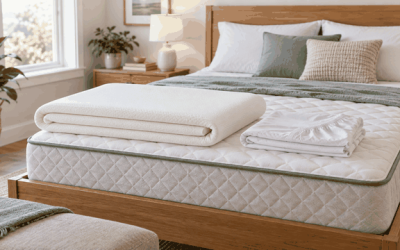
A topper is the entry point for anyone who cannot yet justify replacing a mattress. This one adds a pressure-relief layer specifically designed for side sleeping and back pain, while the cooling property helps if your current mattress traps heat. At $66.99, it is a low-risk experiment before committing to a new bed.
- Pro: Under $70 and immediately addresses the shoulder and hip pressure that causes pain
- Pro: Cooling surface helps on older mattresses that have lost breathability
- Con: Cannot fix a mattress with a sagging core or broken support layer
Skip it if your current mattress already dips visibly in the middle—a topper will not correct structural sag.
Nectar 12″ Memory Foam Mattress — Full, Firm Feel, 1-Year Trial
Nectar leans firm for a memory foam mattress, which benefits side sleepers with back pain who find overly plush foam fails to keep the spine neutral. The one-year trial removes the risk of guessing whether this firmness level works for your particular alignment issue—a critical advantage when back pain can make short trial periods misleading.
- Pro: Firm memory foam maintains spinal alignment better than plush alternatives for back-pain relief
- Pro: One-year trial is among the longest available, giving ample time to assess pain changes
- Con: Priced at $899, it costs significantly more than other memory foam options here
Skip it if budget is a primary concern and you can tolerate a shorter trial from cheaper competitors.
12 Inch Full Size Hybrid Mattress — Memory Foam and Pocketed Coils
At $159.99, this is the cheapest hybrid on the list. It combines memory foam for surface contouring with pocketed coils for base support, giving side sleepers both pressure relief and a firm enough foundation to prevent hip sink. The Full size suits single adults or teens in smaller rooms.
- Pro: Lowest price for hybrid construction in this category, making it accessible without a topper workaround
- Pro: Pocketed coils reduce motion transfer compared to continuous coil designs at similar cost
- Con: Thinner comfort layer than the fourteen-inch options may not relieve deep pressure for heavier sleepers
Skip it if you need substantial cushioning at the shoulder due to a narrow frame or existing joint sensitivity.
Buying Guide
Comfort Layer Thickness and Material
Side sleepers with back pain need a comfort layer thick enough to let the shoulder sink without the hip stopping abruptly. Two to three inches of foam or gel-infused padding is the practical minimum. Memory foam excels at even pressure distribution but traps heat; latex responds faster but costs more. Hybrids with foam on top of coils offer both contouring and pushback, which prevents the feeling of sinking into a hammock shape that worsens lumbar strain.
Support Core and Zoning
The support layer determines whether your spine stays level through the night. Pocketed coils with zoning—firmer coils under the hips, softer under the shoulders—address the specific geometry of side sleeping. Without zoning, a uniform coil base may allow the heavier hip area to push the spine out of alignment. Look for mattresses that explicitly mention lumbar reinforcement or zoned support, not just generic “firm base” language.
Temperature Management
Back pain already fragments sleep by causing discomfort during micro-movements. Adding heat-related awakenings compounds the problem. Cooling gel layers, breathable covers, or open-cell foam structures reduce the thermal load. Side sleepers have more body contact with the mattress than back sleepers, so heat dissipation matters slightly more in this position. If you already use a cooling pillowcase or fan, prioritize mattress-level cooling features to avoid overheating from below.
Our Verdict
Our top pick is the Sleepmax Queen at $499.99. It balances deep pressure relief, active cooling, and hybrid responsiveness in a fourteen-inch build that keeps the spine neutral through the night without requiring a compromise on temperature or bounce. For the best value, the Avenco SyncDeep Queen at $249.99 wins—it is the only option under $300 that names lumbar support as a design feature. One condition changes the pick: if you already own a mattress in good structural shape but it lacks shoulder cushioning, the Full Mattress Topper at $66.99 is the smartest first step before spending more.
FAQ
Is a firm or soft mattress better for side sleepers with back pain?
Neither extreme works well. Side sleepers need enough softness at the shoulder and hip to prevent pressure points, but enough firmness at the support core to keep the lower back level. Medium-firm to firm hybrids with a contouring top layer typically deliver both requirements better than pure-soft or pure-firm options.
How long should it take to adjust to a new mattress?
Most owners report a break-in period of two to four weeks as foam softens and the body adapts to new support geometry. If back pain worsens after three weeks without improvement, the firmness level likely does not match your body weight or sleep position.
Can a mattress topper really fix back pain?
A topper can relieve pressure-point pain at the shoulder or hip by adding cushioning to a surface that is too firm. It cannot fix alignment problems caused by a sagging or structurally failing support core. If your current mattress dips visibly, a topper will only mask the problem temporarily.
Do side sleepers need different support than back sleepers with the same mattress?
Yes. Side sleeping concentrates body weight on smaller surface areas—primarily the shoulder and hip—which demands more contouring at those points while still requiring a firm base under the lumbar region. A mattress optimized for back sleepers often feels too hard on the side sleeper’s shoulder, and vice versa.