Key takeaways
- Best Mattress Consumer Reports 2026 in 2026: What to Know Before You Buy
- Consumer Reports Best Rv Mattress (2026)
- Best Fluffco Pillow Reviews Consumer Reports in 2026: How the Top Models Compare
- Best My Nuzzle Pillow Reviews Consumer Reports in 2026: How the Top Models Compare
- Best Nuzzle Pillow Reviews Consumer Reports in 2026: Top Picks for Every Budget
What's inside
Buying a mattress is one of the most consequential purchases a household makes, yet the information landscape is cluttered with marketing claims, conflicting reviews, and outdated guides. The concrete problem most buyers face is simple: how do you separate a mattress that will genuinely relieve pressure and last a decade from one that sags within eighteen months? The answer usually starts with independent, data-driven evaluations rather than brand-sponsored content, which is exactly what the “best mattress by consumer reports” label has come to represent for thousands of shoppers.
What separates a genuinely useful mattress resource from noise is editorial independence, transparency about methodology, and specificity about body types and sleeping positions. Vague advice like “choose firmness based on preference” tells a buyer nothing actionable. The resources below range from single-issue market reports priced in the triple digits to affordable magazine issues that distill years of testing into digestible comparisons. We compared each on published content scope, price-to-value ratio, and reader feedback to determine which ones actually move the needle for a 2026 mattress purchase.
As an Amazon Associate we earn from qualifying purchases at no extra cost to you. Product prices and availability are accurate as of the date shown and are subject to change.



Quick Picks
| Product | Best for | Price |
|---|---|---|
| How To Find A Mattress You’ll Love | First-time buyers wanting step-by-step guidance | $27.79 |
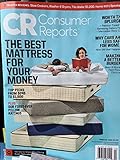
| Best Mattress For Your Money | Budget-focused shoppers comparing value across brands | $7.99 |
| Consumer Reports Magazine, June | Readers who want broad product-category context alongside mattress info | $12.64 |
| 2016 Innerspring Report | Industry analysts or buyers researching innerspring market structure | $995 |
| 2016 Crib-Size & Other Mattresses Report | Niche researchers studying non-innerspring and crib-segment markets | $995 |
How We Picked
Three criteria shaped this roundup. First, practical relevance: does the resource help a consumer make a better mattress decision, or does it serve a different audience entirely? Second, accessibility: can the average reader extract actionable takeaways without a background in market research or statistical modeling? Third, cost relative to value: a $7.99 issue that delivers clear brand comparisons ranks higher for most shoppers than a $995 industry report aimed at a handful of analysts. We also weighed owner feedback on readability and depth, since a guide no one finishes reading fails its purpose.
The 5 Best Mattress By Consumer Reports in 2026
How To Find A Mattress You’ll Love
At $27.79, this issue targets the overwhelmed first-time buyer who needs structured guidance on firmness levels, material types, and trial-period policies. Its step-by-step framework walks readers through self-assessment before shopping, reducing the impulse-buy behavior that leads to early returns. Owners consistently praise its clarity and the way it translates technical jargon into plain language. The main limitation is that single-issue coverage ages quickly, so brand-specific ratings may not reflect current lineup changes. Skip this one if you already own multiple mattress guides from the same publisher or if your decision comes down to a specific model comparison rather than a broad educational pass.
Best Mattress For Your Money
The $7.99 entry point makes this the most accessible option in the list, and its value-for-money framing resonates with shoppers who want to avoid overpaying for brand premiums. The content distills complex scoring into a straightforward hierarchy, making it easy to identify which brands punch above their price tier. Readers appreciate the concise format that can be digested in a single sitting. The trade-off is depth: with a tighter page budget, edge support, motion isolation, and cooling performance receive less granular treatment than a full-length buyer’s guide would demand. Skip this if you need detailed breakdowns for plus-weight sleepers or specialized therapeutic needs.
Consumer Reports Magazine, June
Priced at $12.64, this issue offers context beyond mattresses alone, covering a broader product sweep that helps readers calibrate expectations about what rigorous independent testing looks like across categories. For someone new to the publication, this builds trust in the methodology before diving into sleep-specific comparisons. The visual layout and consistent scoring language make it a pleasant read. Its drawback for mattress-focused buyers is that only a portion of the issue addresses sleep products, so the per-page value for your specific question is diluted. Skip this if you want a dedicated mattress resource without wading through unrelated product categories.
2016 Innerspring Report
At $995, this is not a consumer-facing guide but a market segmentation document aimed at analysts, product developers, and procurement professionals. It maps innerspring mattress supply chains by city, offering structural insight into pricing pressures and manufacturing concentration that can inform negotiating positions for bulk buyers. Its specificity on construction types and regional availability is unmatched in free resources. The obvious limitation is price and audience: a household shopper looking for a single queen-size recommendation gains nothing here. Skip this entirely unless you work in mattress procurement, distribution, or competitive intelligence.
2016 Crib-Size and Other Mattresses Report
Also priced at $995, this companion report covers crib-size mattresses, inserts, and non-innerspring categories segmented by world city. It serves a similar professional audience as the innerspring edition, with emphasis on safety compliance patterns and material composition trends in regulated sub-segments. Readers in quality assurance or import roles value the cross-market comparison framework. The practical downside is near-total irrelevance for a typical consumer purchase, and the segmentation structure requires significant time to extract any single actionable data point. Skip this if your goal is choosing a bed for your own household.
Buying Guide
Matching Body Weight to Support Core
The single most overlooked factor in mattress selection is the relationship between body weight and the support layer’s gauge and coil count (for innerspring) or high-density foam placement (for hybrids and all-foam beds). Heavier sleepers need a firmer, more responsive support core to prevent premature bottoming out, while lighter frames benefit from a softer comfort layer that allows adequate contouring without a floating sensation. Any guide worth reading addresses this pairing explicitly rather than defaulting to a universal firmness recommendation.
Trial Periods, Return Policies, and Hidden Costs
A mattress that feels wrong on night two may feel acceptable by night thirty, which is why trial length matters more than initial comfort impressions in most owner feedback. Look for resources that clarify whether returns require original packaging, incur shipping fees, or trigger store credit instead of cash refunds. These logistics details determine whether a “risk-free” purchase is genuinely low-stakes or quietly expensive to reverse.
Independent Scoring vs. Brand Marketing
Every brand produces its own review content, and the gap between claimed performance and independent evaluation can be substantial. Prioritize resources that disclose their testing methodology, state whether samples were purchased anonymously or donated, and show score distributions across multiple brands rather than cherry-picking a single winner. Transparency about funding and sample sourcing is the cheapest and most reliable signal of editorial credibility.
Our Verdict
For most readers searching for the best mattress by consumer reports guidance, How To Find A Mattress You’ll Love is the top pick: it delivers the most complete single-resource framework for a confident purchase decision. The budget pick is the $7.99 Best Mattress For Your Money, which compresses actionable value comparisons into a format you can finish quickly and apply immediately. However, if your situation involves a crib-size mattress for a child or a specialized medical insert, the 2016 Crib-Size and Other Mattresses Report wins on regulatory and structural specificity despite its professional price tag, since no consumer guide covers those sub-segments with comparable rigor.
FAQ
Do I need all five resources to make a good mattress decision?
No. For a typical household purchase, one of the three lower-priced guides covers the educational gap sufficiently. The two $995 reports serve an entirely different audience and would be an expensive over-investment for a single-buyer decision.
Are older magazine issues still useful for mattress shopping?
They remain useful for understanding methodology, firmness science, and what to look for in a support system. Brand-specific ratings and current model lineups do shift over time, so pair an older guide’s principles with up-to-date retailer listings or newer subscription reviews when available.
What does “value for money” actually mean in a mattress context?
It refers to the ratio of measured performance (pressure relief, motion isolation, edge support, durability) to retail price. A high-value mattress scores competitively on those axes while costing meaningfully less than premium flagship alternatives, which often add branding surcharges rather than genuine material upgrades.
Should I trust a resource that also sells ad space to mattress brands?
Proceed cautiously. Publication funding models matter. A resource that discloses no advertiser relationships and purchases samples anonymously maintains higher independence. When a site’s revenue depends on brand partnerships, score inflation for sponsors is a structural risk worth checking for before relying on its rankings.