
Key takeaways
- Light wood coordinates with linen, white paint, and pale flooring.
- A documented 15 3/4-inch-deep example shows one compact footprint.
- Low styling leaves the television as the wall’s sole dark focal point.
The best bedroom tv stand ideas start with the view from your pillows, then make room for drawers, doors, and the path around the bed. A shallow console, a closed credenza, or a tailored storage wall can each work beautifully. Choose a design that supports your exact television safely without making the bedroom feel like a second living room.
As an Amazon Associate we earn from qualifying purchases.
By KK Home Furnishings Editorial Team
Space-Saving Bedroom TV Stand Ideas
Start with designs that improve the room without rebuilding a wall. A slim oak-look console keeps the floor visually open, a closed cabinet hides equipment, and a properly secured angled stand serves off-center beds. Compare each from your usual viewing position; test whether doors open without hitting the bed.
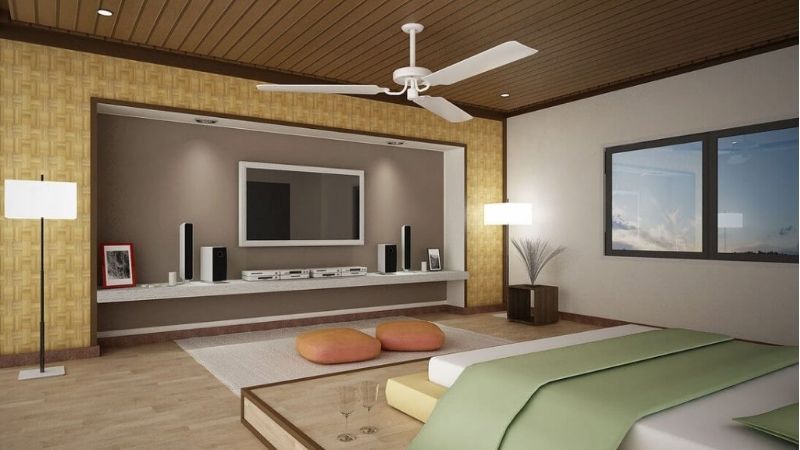
| Idea | Space or Size Needed | Cost Tier | Effort and Time |
|---|---|---|---|
| Shallow light-oak console | Clear wall opposite the bed and enough depth for the TV feet | Low to medium | Furniture assembly, anchoring, and cable routing |
| Closed-door media credenza | Wall space plus clearance to open cabinet doors | Medium | Assembly and hardware adjustment; plan ventilation |
| Angled stand near a corner | Usable side wall and an unobstructed bed-to-screen sightline | Medium | Placement trials, secure installation, and cable management |
| Low cabinet at the foot of bed | Generous circulation space beyond the bed’s footboard | Medium | Layout measurement and furniture installation |
| Media niche within wardrobe wall | Wardrobe span with a properly supported open TV recess | Medium to high | Carpentry, electrical access, and planned ventilation |
| Built-in drawers and media wall | Full wall with suitable structure and service access | High | Custom design, installation, and finishing |
Shallow Light-Oak Console – Best for Compact Bedrooms
Best For: Small bedrooms where the bed faces a clear wall but bulky furniture would block normal circulation.
A pale wood finish makes a narrow TV console feel more like bedroom furniture than a home theater component. Pair it with warm-white walls, linen bedding, and one low ceramic object rather than a cluster of accessories. The strength of this idea is its visual lightness; the compromise is less capacity for consoles, books, or spare bedding.
For a concrete size reference, IKEA’s U.S. BESTA TV unit in white-stained oak effect is listed at 70 7/8 inches wide, 15 3/4 inches deep, and 15 inches high, with a 66-pound maximum TV weight [IKEA, accessed 2026]. Those are specifications for that particular unit, not ideal dimensions or ratings for every shallow stand.
Before choosing a finish, map the actual TV feet on the cabinet top and verify the manufacturer’s weight limit. Leave space to pass the dresser and reach the closet. IKEA says its floor-standing BESTA unit must be secured to the wall; a neutral room palette does not eliminate tip-over risk [IKEA, accessed 2026].
Pros:
- Light wood coordinates with linen, white paint, and pale flooring.
- A documented 15 3/4-inch-deep example shows one compact footprint.
- Low styling leaves the television as the wall’s sole dark focal point.
Cons:
- Shallow tops may not fit widely spaced TV feet or deep accessories.
- Low cabinet capacity limits concealed storage for larger streaming setups.
Who Should Skip It: Choose the closed-door credenza instead when chargers, remotes, and electronics require a dedicated place out of sight.
Closed-Door Media Credenza – Best for Visually Calm Rooms
Best For: Bedrooms where visible routers, streaming boxes, game controllers, and charging cables make otherwise restful surfaces feel cluttered.
A low credenza with quiet, flat-front doors removes the visual noise of open shelving. Try a muted sage, warm gray, or light walnut finish that repeats one tone in the bedding. This concept suits bedrooms used for reading and sleeping as well as streaming, since the storage visually recedes when the television is switched off.
A U.S. BESTA bench with doors is an example of a TV-specific cabinet rather than a repurposed dresser. One 70 7/8-inch-wide configuration lists a 66-pound TV limit and a 44-pound maximum per shelf [IKEA, accessed 2026]. Those separate limits matter: a television on top and devices inside use different rated surfaces.
Measure the swing of every door against the bed frame and any nearby hamper before buying. Vent openings and rear cable access need to remain usable for the devices you plan to enclose. With hinge-heavy cabinets, periodic adjustment and access to sockets are more useful than a door style that conceals everything but traps heat.
Pros:
- Closed fronts conceal multiple accessories when cable exits remain accessible.
- One manufacturer documents separate top and shelf loads for its cabinet.
- Flat fronts echo dresser drawers without copying living-room media styling.
Cons:
- Solid doors can obstruct remote signals or device ventilation when closed.
- Door arcs can interfere with narrow paths beside the bed.
Who Should Skip It: Pick the shallow console if floor depth is tight or you prefer instantly accessible open storage.
Angled TV Stand – Best for Beds Off the Centerline
Best For: Rooms with an offset bed, door, or window that makes a straight-ahead television position impractical.
An angled stand can rescue a bedroom with no perfectly centered TV wall. Keep the cabinet finish close to the surrounding paint so its outline does not exaggerate an awkward corner. A modest swivel or carefully oriented TV surface is useful when you watch from one side of a queen bed, but furniture stability matters more than articulation.
Check the exact TV stand design, foot width, turn radius, and load rating before assuming a swivel is compatible. For a different approach, SANUS describes how viewing angles change when watching from a bed rather than upright seating [SANUS, 2017]. That guidance supports testing the sightline; it does not certify a particular swivel stand.
Make a cardboard outline of the screen and try viewing it while lying in your usual position. Open the closet and bedroom door during the test to see whether the screen obstructs movement. Secure the furniture and television as instructed; CPSC’s Anchor It campaign advises TV-rated furniture and proper TV anchoring [CPSC, accessed 2026].
Pros:
- Angled placement can use wall space unavailable to centered furniture.
- A pillow-level sightline test helps expose uncomfortable screen positions early.
- Neutral cabinet finishes soften asymmetry beside windows and doors.
Cons:
- Cornered furniture may leave difficult-to-clean gaps behind the cabinet.
- Swiveling hardware creates compatibility and tip-over checks beyond fixed stands.
Who Should Skip It: Choose an opposite-bed console when your wall is clear and you do not need angled viewing.
Tailored Bedroom TV Stand Ideas for More Storage
Larger bedrooms can integrate the screen with clothing storage, but more cabinetry adds installation decisions. An end-of-bed unit changes the walking route, a wardrobe niche uses existing wall space, and a custom wall adds drawers. Plan television support and service access before deciding on decorative finishes.
Low End-of-Bed Cabinet – Best for Long Bedrooms
Best For: Long rectangular bedrooms with ample free floor beyond the footboard and a clear path to closets.
A low media cabinet positioned beyond the bed creates a relaxed hotel-suite effect without asking the TV to dominate a far wall. A textured oak front or painted cabinet can echo the bed frame, making the placement intentional. This works only when circulation remains generous after accounting for the cabinet’s full depth and the TV base.
Unlike a bedroom bench, a media cabinet must be expressly rated to support the television and match the actual foot pattern. Record the footprint with painter’s tape, then open drawers and closet doors while standing where you would usually walk. Check the viewing height from your own pillows rather than borrowing a living-room eye-level rule.
At the foot of a bed, power cords are easier to cross accidentally and furniture can intrude into a nighttime route. Route cables away from walking areas using a safe, suitable method; do not run loose cords across carpet. If the floor layout cannot accommodate anchors and stable positioning, use a wall-based plan instead.
Pros:
- Places the screen close to the bed without enlarging the headboard wall.
- Low cabinet silhouettes pair well with upholstered or wood bed frames.
- Floor tape exposes the true circulation impact before furniture arrives.
Cons:
- Blocking the foot-of-bed route becomes a serious daily inconvenience.
- Electrical cables need special attention where people walk at night.
Who Should Skip It: Use a wardrobe niche instead if the room is short or the footboard already narrows the passage.
Wardrobe Media Niche – Best for Shared Storage Walls
Best For: Bedrooms where clothing storage already occupies the most useful wall and another cabinet would crowd the floor.
A TV niche integrated into a wardrobe can make one wall handle clothing, charging accessories, and entertainment without three competing furniture silhouettes. A warm matte finish with a shallow contrasting recess gives the screen a deliberate home. This is an architectural layout idea, not permission to balance a TV on an ordinary closet shelf.
Plan an open recess with a dedicated, properly supported TV surface or an approved mount. The TV manufacturer’s ventilation rules, cable route, and access to electrical outlets determine the usable niche. Do not assume a closed wardrobe door can conceal powered equipment safely; closed compartments can restrict airflow.
Draw the wardrobe doors at their widest swing before signing off on the design. Leave access to the TV connections and make future replacement practical so a different screen will not force a full cabinet rebuild. Taller wardrobe components also need the anti-tip hardware prescribed by their manufacturer [CPSC, accessed 2026].
Pros:
- Combines clothing and media storage along one previously occupied wall.
- Contrasting recess finishes organize the TV visually without extra decorations.
- A planned cable route prevents wiring from crossing wardrobe drawers.
Cons:
- Custom recess dimensions can limit future TV size or mount replacement.
- Enclosed devices require ventilation and service access before installation.
Who Should Skip It: Choose a freestanding credenza if you expect frequent furniture moves or cannot modify the wardrobe.
Built-In Media Wall With Drawers – Best for Primary Suites
Best For: Homeowners planning a bedroom renovation who need coordinated drawer storage, display space, and concealed power access.
A wall of shallow lower drawers with an open TV zone above can look more composed than separate dressers and television furniture. Use the same face finish across drawers, then introduce one muted accent color around the screen. The benefit is a coordinated room, not simply more cabinets; this approach also demands the largest commitment.
Ask the cabinetmaker for a scaled elevation showing the television, mounting pattern, access panels, and approved supports. TV weight limits belong to the support system, not the appearance of the millwork. Follow the TV maker’s vent instructions and applicable electrical requirements.
Plan for hardware wear at the drawer slides, access to cords after installation, and the possibility of replacing the television. A smooth sample drawer is more useful than judging durability from a rendering. Custom cabinet cost is usually driven by material, finish, installation conditions, and hardware choices; obtain a defined local quote.
Pros:
- One coordinated installation can align lower drawers with the TV zone.
- Access panels may allow replacement of components without damaging finished trim.
- Matching cabinet fronts tie media storage into a primary suite.
Cons:
- Permanent millwork requires the largest planning and installation commitment.
- Changing TV dimensions later may require modifying the surrounding cabinet.
Who Should Skip It: Select a low console if you rent, anticipate moving, or cannot fund custom installation.
Frequently Asked Questions
The right layout depends on your bed, TV, and furniture, not one universal screen height or fashionable finish. These questions cover checks that can make or break an appealing design. Follow manufacturer instructions whenever the decision involves TV weight, wall support, or equipment ventilation.
How wide should a bedroom TV stand be?
It should provide stable support for the television’s full foot span and stay within the maker’s stated top-load limit. A TV’s diagonal screen size does not tell you how far apart its feet sit. Measure the installed feet and compare them with the usable top surface, not only the advertised cabinet width.
IKEA advises choosing a TV bench a little wider than the screen in its product guidance, but actual compatibility still depends on the model and its rated load [IKEA, accessed 2026]. A narrow bedroom cabinet should also leave an uninterrupted route to the closet, bathroom, and room door.
Is it better to place the bedroom TV opposite the bed or in a corner?
Directly opposite the bed is often simpler if the wall is clear and the television remains comfortable to view from your usual sleeping position. A corner is useful when an off-center bed or a window prevents that arrangement. Neither location is automatically correct for all bedrooms.
Test the screen outline while reclined before mounting or buying furniture. An angled stand can make the picture easier to see from one side, but extra swivel mechanisms create new stability checks. SANUS discusses bedroom-specific viewing angles without assigning one universal mounting height [SANUS, 2017].
Can a regular dresser be used as a TV stand in a bedroom?
Do not assume so. CPSC advises placing televisions only on furniture designed to hold them, such as rated TV stands or media centers [CPSC, accessed 2026]. A dresser may lack an adequate top-load rating or may become unstable when drawers are opened, particularly if its mass shifts forward.
Anchoring a dresser is important, but anchoring alone does not prove its top can safely hold a particular TV. Use a media cabinet with published capacity or an approved independent wall mount. Keep remote controls and tempting objects out of spots that encourage children to climb.
What is the easiest bedroom TV stand update for renters on a budget?
Restyling an existing, properly rated TV cabinet is often a lower-effort project than replacing an entire wall of furniture. Change nearby paint or removable decor where allowed, use a matching storage tray for loose accessories, and reduce the number of visible devices. Avoid cosmetic changes that block vents.
Renter-friendly does not mean anchor-free. CPSC recommends securing both TVs and furniture, and many TV bench manufacturers require wall attachment [CPSC and IKEA, accessed 2026]. Ask your landlord about approved fixing methods instead of substituting adhesive strips or unsecured wheeled furniture for a tested anchor.
Final Thoughts
The most effective bedroom tv stand ideas protect the room’s walking route as carefully as its visual calm. Before purchasing, tape out the cabinet’s full footprint and simulate drawer opening with the bed in place. If that test fails, a slimmer rated cabinet is more useful than a dramatic built-in, even when the latter looks better in photographs.
