
Key takeaways
- The best portable dumbbells are the ones you can move, assemble if necessary and store according to their instructions while retaining the loads you...
What's inside
The best portable dumbbells are the ones you can move, assemble if necessary and store according to their instructions while retaining the loads you need. Start by deciding whether you mean occasional relocation, room-to-room use or travel. Those tasks place different demands on a set and should not be treated as the same purchase.
This guide provides practical selection and use considerations. It does not report hands-on product testing.
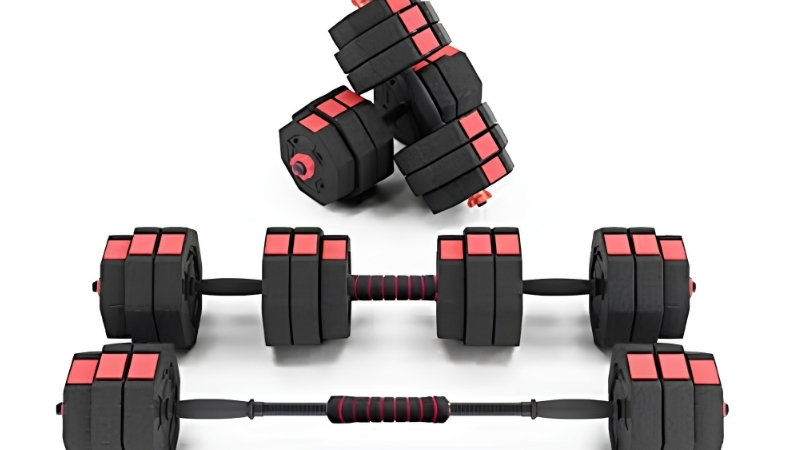
Compare what must be carried, not just the advertised maximum weight. A pair may involve handles, plates, collars and bases. The complete arrangement can be quite different from the single object pictured prominently in a listing. Count the parts and plan their destination before deciding a set is convenient.
Separate moving the set from using it
Check the weight and dimensions of each component you expect to handle. Read how the maker says to lift, move and store the equipment. A storage tray may not be intended to carry a loaded set, and a handle may need a specific configuration before it is moved.
Then check the equipment at the destination. Does the shape suit the intended exercises? Are the required loads available? Can adjustment happen without scattering parts? Portability should not be purchased by sacrificing the essential features that make the weights useful once you arrive.
Choose a parts strategy
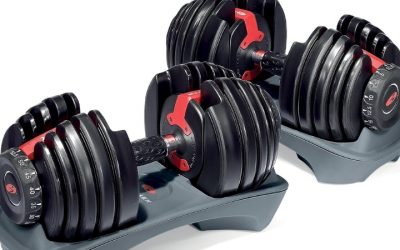
A fixed pair has fewer separate components, but supplies only its particular load. An adjustable set can offer several settings while requiring more attention to selection and storage. A plate-loaded design can be separated into parts, though those parts still need suitable containment and correct reassembly.
Match the arrangement to your routine. If you need frequent changes, inspect the actual adjustment sequence. If you use one load regularly, a simpler option may be practical. Do not assume that a conversion attachment is useful merely because it increases the number of configurations shown in the product description.
Product listings to compare
As an Amazon Associate we earn from qualifying purchases at no extra cost to you. Product prices and availability are accurate as of the date shown and are subject to change. Compare the selected variant and its current description with the requirements above.
As an Amazon Associate we earn from qualifying purchases at no extra cost to you. Product prices and availability are accurate as of the date shown and are subject to change.


Give small components a secure home
Keep collars and other loose parts in a suitable designated location. Heavy plates need support intended for their weight, not just a container large enough to hold them. Check the load limits of storage furniture and the way the equipment rests on it.
Avoid leaving parts on a chair or leaning them against a cupboard during setup. Opening furniture or moving through the room can disturb them. A consistent arrangement for both stored and partly assembled equipment makes it easier to notice a missing component before use.
Plan repeated room-to-room handling
Walk the route with doors and furniture in their normal positions. Check for narrow turns, floor changes and places where you would be tempted to put something down temporarily. Choose a retrieval point that does not require reaching around other heavy objects.
If movement will be frequent, consider whether keeping the set near its exercise area would be simpler. Portable equipment does not have to move every session. A suitable permanent storage position can reduce handling while leaving the room’s main function intact.
Transport needs its own checklist
For travel, establish the transport provider’s current rules and the equipment’s packing requirements for the actual journey. Do not assume that an item accepted on one trip will be accepted on another. Consider total packed weight and how components will remain contained.
Check the destination as well: space for use, suitable surfaces and somewhere secure to store the equipment. Bringing weights is useful only when they can be handled and used appropriately there. Sometimes the better decision is to arrange suitable equipment at the destination instead of transporting your own.
What should be checked after moving?
Inspect for damage and confirm assembly or selection as directed before use. Keep instructions accessible, especially with equipment that has been disassembled. If something no longer operates as described, resolve the problem through the appropriate support channel rather than forcing a component into place.
How should two portable sets be compared?
Use the same journey and routine for both. Compare every part that must move, the useful load settings, the handling sequence and the proposed storage. Include any necessary carrying or storage equipment in the cost. The practical winner is the set that serves your activities with a manageable process from retrieval to putting it away.
Additional product links
- Start 30-Day Prime Free Trial →
- See Today’s Amazon Deals
- ▸ Try Amazon Prime — free 30-day trial
- ▸ Start an Audible Premium Plus free trial
- ▸ Read free with Kindle Unlimited
Related reading
- Best portable dumbbells
- Chris Parker
- Best Ab Workouts with Dumbbells: 6 Support Picks Compared
- Best Budget Adjustable Dumbbell: 6 Picks and Trade-Offs
- Best Abs Exercise with Dumbbells: 6 Picks by Coating Type
- Best Abs Workout with Dumbbells: 6 Picks for Fast Circuits
- Best at Home Dumbbells: 6 Picks for Sharing a Household
- Hot yoga mat best
- Best dumbbells exercises
- Best workout dumbbells
- Best back exercises using dumbbells
- Best exercise upright bike
- Best exercise stationary bike
- Best Home Gym Dumbbells: 6 Sets Ranked by Space and Steps
- Best Exercises Using Dumbbells: 6 Sets That Cover It All
- Best Bicep Exercises Dumbbells: 6 Sets for Curl Progress





Write Your Review
No reviews yet. Be the first to share your experience!