Key takeaways
- Table of Contents 5 sections 10 min read 1 Quick Verdict 2 Finish Options Compared 3 How to Choose 3.1 Decide what the bench actually does 3.2 Cured versus non-drying is the real dividing line 3.3 Mind the cure time…
A butcher block workbench is not a cutting board and it is not a kitchen counter, so the finish that is right for those two jobs is often wrong here. A bench gets dragged tools, dropped hardware, glue squeeze-out, mineral spirits, sweat from your forearms, and the occasional cup of coffee. What it almost never gets is a knife working directly on it or raw chicken. That changes the priority list: you want abrasion tolerance, easy spot repair, and a surface that glue will not weld itself to permanently.
Broadly there are three families to choose from. Non-drying oils such as food-grade mineral oil, usually blended with beeswax, which never cure and must be reapplied. Drying oils such as pure tung oil, which polymerize into the wood and build modest water and abrasion resistance over several thin coats. And film finishes such as oil-modified polyurethane or a wiping varnish, which sit on top and resist everything until they chip, at which point repair means sanding a whole panel. Each is genuinely correct for a different kind of bench.

Howard Products Butcher Block Conditioner and Food Grade Mineral Oil for Wood Cutting Boards, 12 Fl Oz - Enhanced Wood Care
Selected for "best oil for a butcher block workbench": this listing is a general product (Howard Products Butcher Block Conditioner and Food Grade Mineral Oil for Wood Cu), matching the product category this article compares.
View on Amazon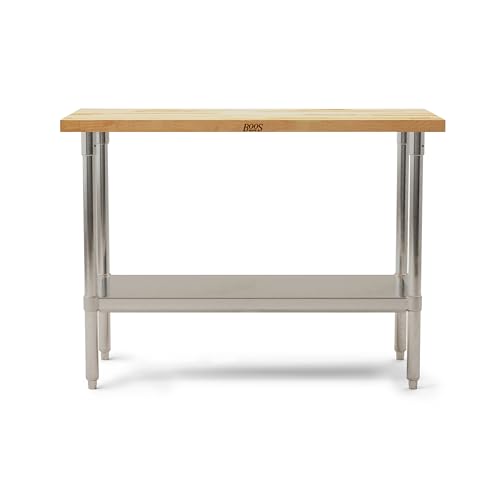
John Boos Maple Wood Top Work Table, 48”x24”x36”, 1.5” Thick Tabletop
Selected for "best oil for a butcher block workbench": this listing is a general product (John Boos Maple Wood Top Work Table, 48”x24”x36”, 1.5” Thick Tabletop), matching the product category this article compares.
View on Amazon
John Boos JNS10 Maple Top Work Table, 1-1/2" Thick, Galvanized Steel Legs and Lower Shelf, 35" Height x 30" Width x 60" Length
Selected for "best oil for a butcher block workbench": this listing is a general product (John Boos JNS10 Maple Top Work Table, 1-1/2" Thick, Galvanized Steel Legs and Lo), matching the product category this article compares.
View on Amazon
HOWARD Butcher Block Conditioner and Cutting Board Oil, Food Grade Conditioner and Oil, Great for Wooden Bowls and Utensils, Re hydrate your Cutting Blocks, 12 Fl Oz (Pack of 1)
Selected for "best oil for a butcher block workbench": this listing is a general product (HOWARD Butcher Block Conditioner and Cutting Board Oil, Food Grade Conditioner a), matching the product category this article compares.
View on AmazonQuick Verdict
For a general-purpose shop bench that you want protected this weekend and want to be able to repair with a rag five minutes at a time, buy Howard Butcher Block Conditioner at $9.18 for a 12 oz bottle. It is mineral oil with wax, it cannot go wrong, it never chips, and a scratch disappears with a re-oil. The trade-off is honest: it does not cure, so it wipes off over time and you will reapply every one to three months on a bench in heavy use.
For a bench you want to actually seal – an assembly table, a finishing bench, a garage workbench that sees water and solvent – buy Hope’s 100% Pure Tung Oil at $17.99 for 16 oz, or $29.99 for 32 oz if the top is larger than about 4 feet. Thin it for the first coats, expect three to five coats, and expect a full cure to take weeks rather than days. In exchange you get a finish that lives inside the wood, resists water far better than mineral oil, and can still be spot-repaired without stripping.
For a bench that doubles as a laundry counter, desk, or anything where you want a wipeable surface and do not care about repairability, use a film finish such as Minwax Fast Drying Polyurethane, Warm Satin, 1 quart at $15.97, or the water-based Varathane Ultimate Satin Polyurethane at $13.49 if you want no amber shift on light woods. Do not use polyurethane on a bench where you will be doing glue-ups; dried glue bonds to the film and pulls it up when you chisel it off.
Finish Options Compared
| Product | Price | Type | Cure | Repairability | Best for |
|---|---|---|---|---|---|
| Howard Butcher Block Conditioner, 12 oz | $9.18 | Mineral oil + wax | Never cures | Excellent – rub on | General shop bench, fastest result |
| Howard Food Grade Mineral Oil, 12 oz | $9.97 | Plain mineral oil | Never cures | Excellent | First saturation coats on new wood |
| Thirteen Chefs Mineral Oil, 8 oz | $9.99 | Plain mineral oil | Never cures | Excellent | Small tops and maintenance |
| NSF Certified Food Grade Mineral Oil, gallon | $29.99 | Plain mineral oil | Never cures | Excellent | Large benches, lowest cost per ounce |
| John Boos Board Cream, 5 oz | $13.95 | Beeswax + mineral oil | Never cures | Excellent | Wax topcoat over oiled tops |
| John Boos 2-Piece Care Set | $25.95 | Oil + cream kit | Never cures | Excellent | One-purchase complete kit |
| Hope’s 100% Pure Tung Oil, 16 oz | $17.99 | Drying oil | Days to weeks | Good – scuff and recoat | Best all-round sealed bench |
| Hope’s 100% Pure Tung Oil, 32 oz | $29.99 | Drying oil | Days to weeks | Good | Benches over ~4 ft |
| Walrus Oil 100% Pure Tung Oil, 16 oz | $16.99 | Drying oil | Days to weeks | Good | Same job, slightly cheaper |
| Watco Butcher Block Oil & Finish | $18.54 | Oil/varnish blend | Overnight per coat | Good | Middle ground, faster than tung |
| Waterlox Original Sealer & Finish, 1 qt | $49.95 | Tung-oil varnish | 24 h per coat | Moderate | Maximum durability, wiping varnish |
| Minwax Fast Drying Polyurethane, 1 qt | $15.97 | Film finish | Hours per coat | Poor – sand the panel | Counters and desks, not glue-ups |
| Varathane Water-Based Satin Poly | $13.49 | Film finish | Hours per coat | Poor | No amber shift on light wood |
How to Choose
Decide what the bench actually does
If you cut, chop, or prep food on it, stay in the food-safe camp: mineral oil, beeswax cream, or fully cured 100% tung oil. If you assemble furniture on it, prioritize glue release and repairability, which points at oil and wax. If it is a workbench in name only and really a laundry or utility counter, a film finish is the practical answer and the food-safety question becomes irrelevant.
Cured versus non-drying is the real dividing line
Mineral oil does not polymerize. It soaks in, keeps the wood from drying and checking, and slows water absorption – but it stays liquid inside the wood, migrates, and evaporates or wipes away. That is why it needs reapplication. Tung oil and varnishes cross-link into a solid. Once cured they stop moving. There is no product that gives you both instant results and permanent protection, and any listing that implies otherwise is overstating.
Mind the cure time on pure tung oil
Pure tung oil is slow. Thin coats, wiped back hard after 20 to 40 minutes, and days between coats. A thick coat that is not wiped back will stay tacky for a very long time. If you need the bench back in service by Monday, either use the Watco oil-and-finish blend at $18.54, which cures overnight per coat, or start with mineral oil and switch finishes later – mineral oil can be cleaned off and a drying finish applied afterwards, though it requires solvent and patience.
Buy by surface area, not by habit
A 4 ft by 25 in bench top is roughly 7 square feet, and both faces plus edges should be treated so the slab absorbs and releases moisture evenly. New, thirsty end-grain and unfinished hevea or acacia can drink a surprising amount on the first coat. A 12 oz bottle covers a small top for its initial saturation; for anything 6 feet or longer, the gallon of NSF-certified mineral oil at $29.99 is dramatically cheaper per ounce than repeat 8 oz bottles at $9.99.
Wax is a topcoat, not a finish
Beeswax creams such as the John Boos Board Cream at $13.95 add water beading and a pleasant hand-feel over an oiled surface. They do not add meaningful abrasion resistance and they will make a surface slick enough that small parts slide. Apply wax to the top only, not to the face of a bench where you clamp work.
Do not put polyurethane on a glue bench
This is the mistake people regret. Yellow glue bonds tenaciously to a cured polyurethane film. Chiseling off squeeze-out lifts flakes of finish with it, and within a year the top is a patchwork. Oil and wax let dried glue pop off cleanly, which is precisely why traditional woodworking benches are oiled rather than varnished.
The Picks in Detail
Howard Butcher Block Conditioner, 12 oz – $9.18. The default. Mineral oil with wax in one bottle, food grade, and about as close to foolproof as wood finishing gets. Flood it on, let it sit fifteen to twenty minutes, wipe the excess. Repeat until the wood stops absorbing. Re-oil whenever the surface looks dry or feels chalky. At nine dollars there is no reason to overthink a first treatment.
Howard Food Grade Mineral Oil, 12 oz – $9.97, and Thirteen Chefs Mineral Oil, 8 oz – $9.99. Plain oil with no wax. Use these for the initial saturation coats on a brand-new slab, where you want maximum penetration and wax would only slow absorption. Follow with a wax cream later.
NSF Certified Food Grade Mineral Oil, gallon – $29.99. The cost-per-ounce winner and the right buy for a long bench, multiple tops, or a shop that maintains several wood surfaces. NSF certification is a meaningful third-party mark for food-contact use.
Hope’s 100% Pure Tung Oil, 16 oz – $17.99 / 32 oz – $29.99. The best balance of durability, repairability, and food safety once fully cured. Thin the first two coats with an appropriate solvent to drive penetration, wipe back thoroughly, and give it real time. A tung-oiled bench shrugs off spills that would darken a mineral-oiled top, and when it eventually wears you scuff-sand and recoat that area only. Walrus Oil at $16.99 for 16 oz is the same class of product for a dollar less.
Watco Butcher Block Oil & Finish – $18.54. An oil and varnish blend. It builds faster than pure tung, cures overnight between coats, and gives more sheen and water resistance than mineral oil. The compromise is that it is neither as repairable as pure oil nor as bulletproof as a full film.
Waterlox Original Sealer & Finish, 1 quart – $49.95. The premium choice. A tung-oil-based wiping varnish that builds a genuinely tough surface while still wiping on with a rag. Expensive per quart, but it is the finish to pick if the bench is also furniture and you want it to look good for a decade.
Minwax Fast Drying Polyurethane, 1 qt – $15.97 / Varathane Water-Based Satin – $13.49. Film finishes for utility counters. The Minwax oil-based version ambers over time, which flatters hevea and acacia. The water-based Varathane stays clear, which matters on maple or a light stain. Three thin coats with a light scuff between them. Accept that repair means sanding the whole surface.
Related guides: does aromatic cedar stain clothes, hevea vs acacia wood for a workbench, best bed frame that does not squeak, mattress topper thickness guide, memory foam vs hybrid mattress topper
FAQ
Can I use olive oil or vegetable oil instead?
No. Cooking oils are not drying oils in the finishing sense; they oxidize and go rancid, leaving a sticky, sour surface. Mineral oil is chemically inert and does not spoil, which is the entire reason it is the traditional choice. The few dollars saved are not worth a bench that smells.
How often do I need to reapply?
With mineral oil and wax, expect every one to three months on a bench in weekly use, and more often on a new slab in its first year. With tung oil, expect a maintenance coat once or twice a year. With a polyurethane film, nothing until it fails, at which point you sand and refinish. The honest test is water: if a drop soaks in and darkens the wood within a minute, it is time.
Is tung oil safe if I chop food on the bench?
100% pure tung oil is generally accepted as food safe once fully cured, which is the important qualifier – full cure is weeks, not days. Note also that tung oil is derived from a tree nut, which matters for anyone with a severe nut allergy in the household. Products labeled “tung oil finish” are often varnish blends containing no tung oil at all; read the can.
My bench top has dark water rings. Will oiling fix them?
Oil will darken and blend minor marks but it will not remove them. Rings that have penetrated need sanding back, and black stains from prolonged moisture and iron contact usually need oxalic acid treatment before refinishing. Oil hides shallow damage; it does not reverse deep damage.
Should I finish the underside too?
Yes. A slab finished on one face only absorbs and releases moisture unevenly and is far more likely to cup. Treat the top, the underside, and all four edges, and pay particular attention to end grain, which absorbs several times faster than face grain.