Our Top Picks
Pros & cons
- Bamboo rayon cover feels soft against sensitive skin
- Stretchy deep pocket fits mattresses up to 20 inches deep
- Machine washable cover simplifies regular cleaning
- Sized only for queen mattresses with no other options
- Listing does not specify the topper's thickness or loft
Choose mattress topper thickness together with material, firmness and the mattress underneath. There is no single thickness that is best for everyone. First decide what you want to change about the surface, then check the construction and the added height against your bedding.
This is a sizing and buying guide, not a clinical recommendation or a set of measured product rankings. The retailer references below are options to check; confirm the selected size, thickness, current price and return terms before ordering.

Linenspa Memory Foam Mattress Topper, Twin XL Size - 2 Inch Gel Infused Memory Foam - Plush Feel - Cooling and Pressure Relieving - CertiPUR Certified - Dorm Room Essentials
Chosen because it carries CertiPUR-US certified foam, adds cooling or gel-infused layers and is memory foam.
View on Amazon
Niagara Sleep Solution Queen Ultra Soft Mattress Topper — Back Pain Relief | Rayon Derived from Bamboo, 20" Deep Pocket, Breathable Pillow Top Mattress Pad, Perfect for Hot Sleepers, Green
Chosen because it targets pressure relief / back pain.
View on Amazon
Niagara Sleep Solution King Ultra Soft Mattress Topper — Back Pain Relief
Chosen because it targets pressure relief / back pain.
View on Amazon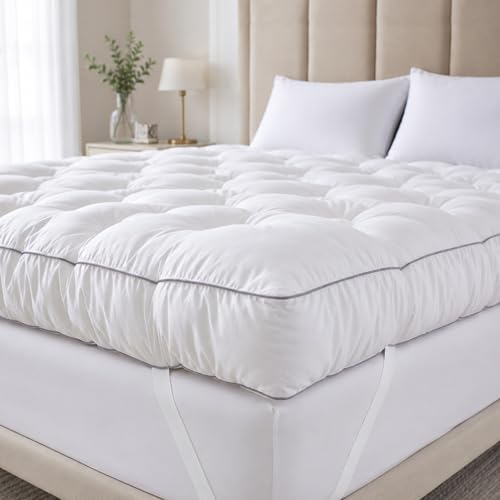
SHOUREN 5 Inch Memory Foam Mattress Topper Queen for Back Pain Relief | 5 Inch Extra Thick Gel Memory Foam Topper with Pressure Relief, Body Contouring Support, 4-Way Straps and Plush Comfort
Chosen because it is memory foam, lists an explicit depth/thickness and targets pressure relief / back pain.
View on Amazon
SHOUREN 5 Inch Memory Foam Mattress Topper Full for Back Pain Relief
Chosen because it is memory foam, lists an explicit depth/thickness and targets pressure relief / back pain.
View on AmazonQuick Answer: 2, 3 or 4 Inches?
A 2-inch topper makes a small change to how a mattress feels, a 3-inch topper is the most common middle choice, and a 4-inch topper makes the largest change and is usually aimed at side sleepers, heavier sleepers and very firm mattresses. Most published topper guides put the best fit for most people between 2 and 3 inches. Treat the table below as a starting point, then adjust for the material and firmness of the specific topper.
Thickness Decision Table
| Goal or situation | 2 inch | 3 inch | 4 inch |
|---|---|---|---|
| Change in feel | Small; the mattress underneath still dominates | Moderate; clear change in surface feel | Large; the bed can feel like a different mattress |
| Pressure relief at shoulders and hips | Light | Good for most side and combination sleepers | Deepest cushioning; aimed at side sleepers on firm beds |
| Heat | Least added material over the mattress | Moderate; material matters more than thickness | Most material to sink into; dense foam can feel warmer |
| Body weight starting point | Often suggested under about 130 lb | Often suggested about 130 to 230 lb | Often suggested over about 230 lb, to avoid sinking through |
| Sleep position | Stomach sleepers; back sleepers wanting a light change | Back and combination sleepers | Side sleepers |
| Mattress condition | Newer mattress that is slightly firm | Firm mattress you otherwise like | Very firm mattress; not a fix for sagging |
| Sheets | Usually fits existing fitted sheets | May need deeper pockets | Often needs deep-pocket sheets |
Two cautions apply to every row. A thicker topper is not automatically softer, because density and firmness rating decide how far you sink. And no topper thickness repairs a mattress that sags; a soft topper on a sagging bed tends to follow the dip.
What 1, 2 or 3 inches means in a specific range
For its own latex range, Sleep On Latex describes 1 inch as a subtle adjustment, 2 inches as a moderate change and 3 inches as a larger change to mattress feel. Those descriptions belong to that product range; they are not universal thresholds for memory foam, quilted pads or layered toppers.
Linenspa’s memory foam topper page describes thicker options as plusher. Compare the exact version and its construction instead of assuming that another brand’s equally thick topper will feel the same.
A practical thickness checklist
- Small change wanted: Review the maker’s thinner options and stated firmness. Confirm that the product is intended to provide the type of surface adjustment you want.
- Larger change wanted: Compare a thicker option within the same range, but check the resulting bed height and return terms before committing.
- Layered product: Record each layer separately. A 4-inch combination made from two different layers is not the same construction as a single 4-inch foam core.
- Unsatisfactory support underneath: Inspect the mattress and foundation using their manufacturers’ instructions before purchasing another layer. Thickness is not evidence of a structural repair.
Measure mattress, topper and sheet depth
- Measure the mattress height without existing pads or bedding.
- Add the selected topper’s stated thickness. A 12-inch mattress and a 3-inch topper give a nominal 15-inch stack before compression.
- Check the fitted sheet’s stated capacity against that total, allowing for any other layers according to the sheet maker’s guidance.
- Check the mattress width and length against the selected topper dimensions.
- Consider the finished bed height beside your bed frame and nightstand, and whether it remains comfortable to access.
“Standard” and “deep pocket” are labels, not a reliable measurement shared by every sheet brand. Do not assume that a particular pocket depth follows automatically from those words.
How Material Changes What a Given Thickness Does
The same thickness behaves differently depending on the material, so pick the material first and the thickness second.
Memory foam
Memory foam softens with body heat and lets you sink in slowly, so thickness has a strong effect on how deep you go. A 2-inch layer adds light contouring. A 3-inch layer gives most side and back sleepers noticeable pressure relief. A 4-inch layer gives a deep, hugging feel, which suits side sleepers on a hard mattress but can leave back and stomach sleepers feeling stuck or let the hips sink too far. Density matters as much as thickness: a denser foam usually holds its shape longer, while a low-density foam can compress quickly, making a thick topper feel thinner within months. Thick memory foam is also the combination most often linked to sleeping warm, which is why many thicker foam toppers add gel, open-cell structures or perforations.
Latex
Latex is dense and springy, pushing back rather than letting you sink slowly. Because of that, a 2 to 3 inch latex topper can feel as supportive as a thicker foam layer, and a 3-inch firm latex topper can feel more supportive than a 4-inch plush memory foam topper. Latex toppers are usually sold in soft, medium and firm options, and that firmness label decides more than the thickness does. Latex also tends to sleep cooler and resist body impressions better than low-density foam, but thick latex toppers are heavy and harder to lift and fit.
Fiber, down alternative and wool
Fiberfill, down-alternative and feather toppers are measured with loft, not compressed height. A 3- or 4-inch fiber topper flattens a lot under body weight, so it adds softness rather than structured support. Wool also compresses more than foam: about 2 inches gives light cushioning and about 3 inches feels plush. These toppers suit people who want a softer surface feel or a pillow-top effect. They need regular shaking and fluffing, and they do little for a mattress that is too soft or uneven.
Layered or hybrid toppers
Some toppers combine a foam core with a quilted fiber cover, or stack two foams. Add up only the core layers when comparing with a single-material topper, since a fiber layer will compress far more than its listed height.
Firmness and thickness are separate choices
A thicker topper is not automatically firmer, more durable or better value. Compare firmness choices within the same product line where possible. If two listings differ in both material and thickness, changing both variables makes it harder to predict which difference you will prefer.
A fixed body-weight cutoff cannot determine the right topper from thickness alone. Start with the manufacturer’s product guidance and your existing mattress, then consider whether you can return the selected option if the feel is unsuitable.
Sheets, Deep Pockets and Edge Height
A thicker topper raises the whole sleeping surface, so it affects sheets, the mattress edge and how easy the bed is to get in and out of.
- Fitted sheets: As a rule of thumb, standard sheets usually work with toppers under about 3 inches, while 3- and 4-inch toppers often need deep-pocket sheets. Pocket depths vary by brand, so compare the stated pocket depth with your measured mattress plus topper height and leave a little extra so the elastic can tuck under the mattress.
- Sliding and bunching: Thick toppers are more likely to shift. Toppers with corner straps, a non-slip base or a fitted skirt stay in place better, and a mattress protector over the topper helps hold both layers together.
- Edge height and sitting: A soft 3- or 4-inch topper compresses where you sit, so the bed edge can feel sloped and less stable when getting up. People who sit on the edge to dress, or who have limited mobility, may prefer a thinner or firmer topper.
- Total bed height: Every inch adds to the climb into bed. Check that the finished height still lines up comfortably with nightstands and that your feet reach the floor when you sit on the edge.
How to Work Out the Thickness You Need
Start with the problem you want to fix, then narrow the thickness with these steps.
- 1. Name the problem. Is the mattress too firm, too warm, slightly worn, or uncomfortable at the shoulders or hips? A topper is best at softening a firm mattress. It is weak at fixing sagging or a mattress that is already too soft.
- 2. Check for dips. Lay a straight edge or broom handle across the mattress and look for gaps. A dip of more than about an inch usually needs attention to the mattress or foundation first, not a thicker topper.
- 3. Note your main sleep position. Side sleepers usually start at 3 inches and consider 4; back sleepers 2 to 3 inches; stomach sleepers 2 inches or less; combination sleepers 3 inches.
- 4. Factor in body weight. Heavier sleepers compress a topper more, so a thin soft layer can bottom out. Lighter sleepers may not sink far enough into a thick firm layer to feel any difference.
- 5. Measure heights. Measure the bare mattress, add the topper’s stated thickness and compare the total with your fitted sheet’s pocket depth and your bed frame layout.
- 6. Choose the material, then the thickness. Pick memory foam, latex or fiber for the feel you want, then choose within that range.
If you are torn between two sizes, the thinner one is usually easier to live with: it is lighter, fits more sheets and changes alignment less. Choose the thicker size when the main goal is pressure relief on a firm mattress and the return terms allow a change.
Before checkout
- Confirm whether the advertised height includes a cover, fiberfill or multiple layers.
- Read separate cleaning instructions for the cover and core.
- Use the selected model’s unpacking instructions for expansion time; do not substitute a generic waiting period.
- Check opened-product returns, packaging requirements and return shipping costs.
- Compare prices for the same size and construction, including any additional bedding required.
Common Thickness Questions
Is a 2-inch or 3-inch mattress topper better?
A 3-inch topper suits most people who want a clear change in feel, especially side and combination sleepers. A 2-inch topper is better if you mostly like your mattress, sleep on your stomach, or want to keep using standard sheets.
Is a 4-inch topper too thick?
Not for side sleepers on a firm mattress or heavier sleepers who sink through thin layers. It can be too much for back and stomach sleepers, because a deep soft layer may let the hips sink and bend the lower back. Many guides treat 4 inches as the practical upper limit for a topper.
What thickness is best for side sleepers?
Side sleepers usually do best with 3 to 4 inches, which gives the shoulders and hips enough room to sink so the spine stays level. A firm latex topper at 3 inches can offer similar support to a thicker soft foam topper.
Can a topper fix a sagging mattress?
No. A topper can soften a firm surface, but it follows the shape of what is underneath. On a mattress with a noticeable dip, a thick soft topper often sinks into that dip too.
Will I need new sheets with a 3- or 4-inch topper?
Often, yes. Measure the bare mattress, add the topper thickness, and compare the total with the fitted sheet’s stated pocket depth. Deep-pocket sheets are the usual fix for thicker toppers.
Quick questions
Should everyone choose 3 inches?
No. It is an available option in many ranges, but suitability depends on the complete construction and the change you want.
Does a 4-inch topper contain 4 inches of foam?
Not necessarily. Read the layer breakdown; the total may include a quilted pad or another material.
Can a thicker topper guarantee a cooler bed?
No cooling comparison is established here. Thickness and product names do not provide a measured temperature result.
Can this guide choose a topper for a medical condition?
No. It explains product dimensions and buying criteria, not medical treatment or a prescribed sleeping surface.
Related guides: best bed frame that does not squeak, memory foam vs hybrid mattress topper, novilla mattress models explained, best oil for a butcher block workbench, does aromatic cedar stain clothes