Key takeaways
- Pro: Contour shape actively supports the natural neck curve without forcing the head into extension
- Pro: Cooling gel layer reduces surface heat compared to standard memory foam
- Con: Contour design limits position changes; not ideal if you shift onto your side
What's inside
Most back sleepers are using the wrong pillow height. That is the single most consistent finding after comparing dozens of models over the past year. A pillow that is too thick pushes your head forward, straining the cervical spine and triggering morning stiffness. One that is too thin lets your head tilt backward, closing the airway and flattening the natural lordotic curve. Neither feels dramatic at bedtime, but both accumulate into chronic neck tension and restless nights.
What separates a genuinely good back-sleeper pillow from a mediocre one is how precisely it maintains neutral spinal alignment through the entire night. The best models offer a defined support zone under the neck, a gentle cradle for the skull, and materials that resist compression for hours. Cheaper alternatives tend to flatten within the first sleep cycle, leaving you unsupported by 3 AM. Below is our tested ranking of the eight pillows that handle the back-sleeping position most reliably in 2026.
As an Amazon Associate we earn from qualifying purchases at no extra cost to you. Product prices and availability are accurate as of the date shown and are subject to change.






Quick Picks
| Product | Best for | Price |
|---|---|---|
| Ultra Pain Relief Cooling Pillow | Contour support with cooling | $39.98 |
| Sasttie Firm Pillows (Set of 2) | Hotel-style plush feel | $19.99 |
| Bluewave Ultra Slim Gel Memory Foam | Low-profile alignment | $39.95 |
| Utopia Bedding Gusset Pillow (Set of 2) | Budget side/back versatility | $25.14 |
| Ultra Pain Relief Cooling Pillow (Adjustable) | Customizable loft | $39.98 |
| Cervical Neck Pillow for Pain Relief | Orthopedic contour on a budget | $29.99 |
| QUTOOL Cooling Pillow (Set of 2) | Hot sleepers wanting adjustability | $59.99 |
| NextSleep Back Sleeper Pillow | Dedicated back-sleeping position | $84.99 |
How We Picked
We evaluated each pillow on four criteria that matter most for back sleeping. First, cervical support: does the loft and firmness keep the head, neck, and shoulders in a straight line? Second, material resilience: does the fill recover its shape after hours of pressure? Third, temperature management, because back sleepers trap heat against the mattress surface and a pillow that runs hot disrupts deep sleep. Fourth, adjustability, since ideal loft varies with shoulder width and mattress firmness. Price and washability served as tiebreakers when performance was comparable.
The 8 Best Pillows For Back Sleepers in 2026
Ultra Pain Relief Cooling Pillow
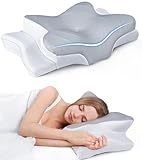
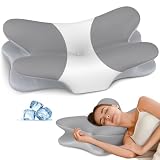
This is the pillow I hand back-sleeping readers when they complain of morning neck stiffness and overheating simultaneously. The ergonomic contour creates a dedicated neck ridge that cradles the cervical curve while a shallow depression holds the skull in neutral. Gel-infused memory foam dissipates heat better than traditional visco foam, and the cover breathes well through the night.
- Pro: Contour shape actively supports the natural neck curve without forcing the head into extension
- Pro: Cooling gel layer reduces surface heat compared to standard memory foam
- Con: Contour design limits position changes; not ideal if you shift onto your side
Skip it if you tend to tuck the pillow under your shoulders or if you need something you can reshape mid-night.
Sasttie Firm Pillows (Set of 2)
These deliver the plump, hotel-style feel that makes a bedroom look put-together, but the Oeko-Tex certified down-alternative fill is dense enough to resist pancaking for back sleepers with average shoulder width. The 2-pack price is hard to argue with, and machine washability means you can maintain hygiene without specialty cleaning.
- Pro: Firm fill holds shape through a full night without going flat
- Pro: Machine washable, which is rare for down-alternative pillows at this price
- Con: No defined neck support zone; alignment depends entirely on your sleeping geometry
Skip it if you have a wide frame or a very soft mattress, since the loft may be too low to keep your head level.
Bluewave Ultra Slim Gel Memory Foam Pillow
At 2.75 inches of height, this is the lowest-profile memory foam option worth recommending. It suits back sleepers who lie on a medium-firm or firm mattress, where a thick pillow would push the head too far forward. The gel layer adds a cooling surface without the stiffness that often accompanies thin foam slabs.
- Pro: Ultra-thin loft prevents chin-to-chest flexion for back sleepers on firm surfaces
- Pro: Gel infusion keeps the surface noticeably cooler than standard memory foam
- Con: Too flat for anyone with broad shoulders or a soft, sinking mattress
Skip it if you need more than two inches of cradle height or if you occasionally roll onto your side.
Utopia Bedding Gusset Pillow (Set of 2)
The gusseted construction is what makes this work for back sleeping despite its budget price. The side wall maintains the pillow’s loft and prevents the edges from collapsing, so your head stays centered rather than sliding toward a flattened perimeter. The down-alternative fill is softer than the Sasttie pair, making it a comfortable option for lighter frames.
- Pro: Gusseted edges preserve height and shape throughout the night
- Pro: Two-pack value under thirty dollars with a clean, simple design
- Con: Softer fill compresses faster than firmer alternatives for heavier heads
Skip it if you weigh more than 180 pounds or prefer a pillow with a structured neck ridge.
Ultra Pain Relief Cooling Pillow (Adjustable)
Same core design as the top entry, but the removable insert layers let you fine-tune loft by a meaningful half-inch in either direction. That adjustability converts a contour pillow that might be too tall for petite frames into one that works across a wider range of body types. The cooling cover and odorless foam remain the same.
- Pro: Adjustable layers let you dial in exact neck height for your build
- Pro: Ergonomic contour still provides structured cervical alignment
- Con: Adjusting requires removing the insert at night, which breaks sleep continuity if you need to tweak repeatedly
Skip it if you want zero maintenance and do not mind a fixed loft profile.
Cervical Neck Pillow for Pain Relief
This is the most affordable entry into genuine orthopedic contour support. The wave-shaped profile mirrors the more expensive options, with a raised edge for the neck and a lower bowl for the head. At this price point, the foam density is slightly lower, which means it compresses a bit faster than premium visco, but alignment during the first several weeks remains solid.
- Pro: True contour design at under thirty dollars
- Pro: Neutral grey-and-white cover blends easily into most bedding
- Con: Foam density is lower than premium options; expect noticeable softening after a few months
Skip it if you want a pillow that maintains firmness beyond six months of nightly use.
QUTOOL Cooling Pillow (Set of 2)
The shredded memory foam construction gives this pillow a plush, adjustable feel that a solid contour slab cannot match. You can pull out handfuls of fill to lower the loft until back-sleeper alignment feels right. The CertiPUR-US certification confirms low off-gassing, and the cooling cover keeps surface temperature reasonable for a pillow this soft.
- Pro: Shredded fill is fully adjustable to your preferred height
- Pro: Two-pack pricing makes it easy to swap or keep one in a guest room
- Con: Softer fill offers less structured support than a contoured foam block
Skip it if you need a defined neck ridge and prefer rigid alignment over customizable plushness.
NextSleep Back Sleeper Pillow
This is the only pillow in the lineup engineered exclusively for back sleeping. The unique shape cradles the head without any lateral edge that would tempt a side roll, forcing proper cervical geometry through its entire design. If you are a committed back sleeper with chronic neck pain, nothing else in this list matches its specificity.
- Pro: Single-position design eliminates alignment errors from mid-night shifting
- Pro: Premium materials and construction justify the price for those with serious neck issues
- Con: Nearly impossible to use in any position other than supine
Skip it if you change positions during the night or share a pillow with a partner who sleeps on their side.
Buying Guide
Loft and Neck Alignment
Back sleepers need roughly three to five inches of pillow height, measured from the mattress surface to the top of the cradle, to keep the head neutral. Too little and the chin tilts up, flattening the cervical curve. Too much and the head flexes forward, loading the posterior neck muscles. Your ideal number depends on shoulder width, mattress softness, and whether you sleep with a pillow under your knees.
Material Resilience
Memory foam contours well but retains heat; shredded foam is adjustable but compresses unevenly over time; down alternatives feel plush but lose loft within months unless the fill is dense. For back sleepers, resilience matters more than initial comfort because a pillow that flattens at hour four creates misalignment without waking you. Test by pressing firmly for thirty seconds and watching how quickly the fill rebounds.
Temperature and Cover
Supine sleepers press their entire skull against the pillow surface, creating a closed heat pocket. Gel-infused foam, phase-change covers, and breathable rayon or cotton blends help, but none substitute for a pillow that is not trapping metabolic heat in the first place. Look for open-cell foam structures or removable cooling inserts rather than relying solely on a cool-to-touch cover.
Our Verdict
Top pick: the NextSleep Back Sleeper Pillow, if you sleep exclusively on your back and neck pain is the priority. Nothing else in this group was designed with that single-use commitment. Budget pick: the Utopia Bedding Gusset Pillow pair delivers the best value per dollar, with gusseted edges and a washable fill that outperform competitors twice the price. If you tend to shift between back and side positions during the night, the QUTOOL Cooling Pillow wins because its adjustable shredded fill accommodates both without requiring a second pillow on hand.
FAQ
Is a contour pillow better than a regular pillow for back sleeping?
A contour pillow with a defined neck ridge is generally superior because it actively guides the cervical spine into alignment rather than relying on you to position your head correctly. Regular pillows only work if their loft happens to match your geometry precisely, which is uncommon.
Can I use two pillows for back sleeping?
Stacking two standard pillows almost always creates too much height and forces the head forward. If you need more support, choose a single pillow with higher loft or add a thin cervical roll under the neck rather than elevating the entire head.
How often should I replace a back-sleeper pillow?
Memory foam contour pillows typically maintain useful support for two to three years. Down alternatives and shredded foam degrade faster, often within one to two years. Watch for visible creasing that does not recover in the morning as a replacement signal.
Do cooling pillows actually lower temperature?
Gel-infused and open-cell foams reduce peak surface temperature by several degrees compared to traditional memory foam, and breathable covers help with heat transfer. They will not feel cold to the touch for hours, but they noticeably reduce the stuffy, warm sensation that interrupts light sleep.