Key takeaways
- The best pressure washer for home use is judged by its rated PSI and GPM at a stated operating point, not the biggest maximum on the box. Marketing maxima and rated figures are different numbers, so read how each brand…
The best pressure washer for home use is judged by its rated PSI and GPM at a stated operating point, not the biggest maximum on the box. Marketing maxima and rated figures are different numbers, so read how each brand states its spec before you compare.
How to Choose a Pressure Washer for Home Use
Compare electric home models on their rated PSI and GPM at a stated operating point, not peak marketing numbers. Because brands state these differently, a rated figure and a maximum figure are not the same claim, so this section separates the two and explains why flow and nozzle choice matter as much as pressure.
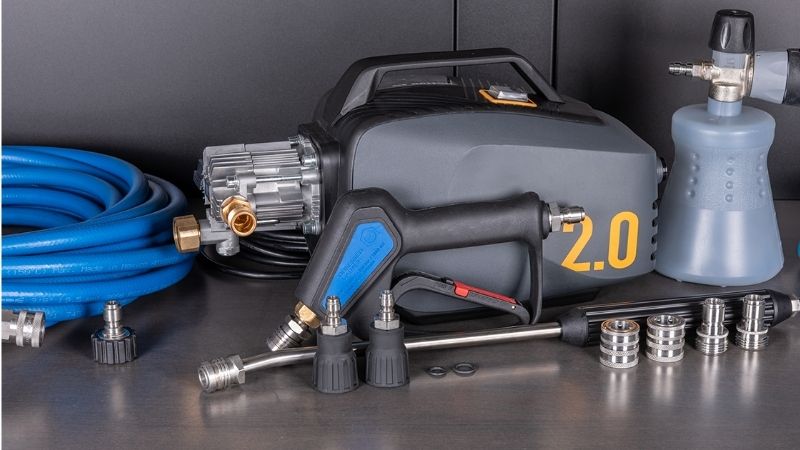
Rated Versus Max PSI
The first thing to untangle is rated versus maximum PSI, because they describe different things. Greenworks lists the GPW2301 at a rated 2,300 PSI at 1.2 GPM, a stated operating point, while DeWalt lists the DWPW2400 at 2,400 PSI using max wording and Ryobi lists the RY142500 at 2,500 PSI as a manufacturer rating.
A rated figure describes pressure the unit sustains under a defined condition, while a max figure is a peak that may not hold during real work, so comparing a rated number to a maximum overstates the gap. Treat the operating-point figures, like the Greenworks 2,300 PSI at 1.2 GPM, as the honest basis for comparison.
When a listing only gives a maximum, read it as a ceiling rather than a working value, and do not rank it directly against a rated number. The models here that publish a clear operating point tell you more than a bare maximum, which is why the rated figures carry the most weight in this comparison.
Why GPM Matters
Flow, measured in gallons per minute, drives how fast a surface rinses, so GPM matters as much as pressure. Ryobi lists 1.2 GPM, Greenworks 1.2 GPM at its rated point, and DeWalt 1.1 GPM, and that flow is what carries loosened dirt away, which is why a higher-PSI unit with low flow can still rinse slowly.
Think of pressure as what breaks dirt loose and flow as what washes it off, so a balance of the two cleans faster than maxing either alone. For home jobs, the 1.1 to 1.2 GPM range here is typical, and a unit’s real-world speed depends on that flow working together with the pressure, not pressure by itself.
Be wary of multiplying a maximum PSI by a maximum GPM to rank units, because those peaks may not occur together. Westinghouse lists the ePX3500 at a 2,500 PSI maximum and a 1.76 GPM maximum that are not achieved simultaneously, so treating 2,500 times 1.76 as a combined cleaning figure overstates what it actually does.
Hose and Cord Reach
Reach decides how much of your property you can clean without moving the unit, so check the hose and cord length. Ryobi lists the RY142500 with a 25-foot hose and a 35-foot cord, a combined reach that covers a good span of driveway or siding before you have to relocate the washer and its power source.
Longer reach means fewer stops to reposition, which matters on a big driveway or a two-story wall, while a shorter cord ties you closer to the outlet. Plan your reach around where your outdoor outlets are, since an electric washer must stay within cord distance and should not run on a long daisy chain of extensions.
If your reach falls short, a longer high-pressure hose is often the safer extension than a long power cord, which can affect motor performance. Confirm the hose and cord lengths against your typical cleaning area, because a unit that cleans well but cannot reach the far side of the driveway is a daily annoyance.
Nozzle and Surface Match
The nozzle you use matters as much as the washer, because pressure must match the surface. Higher PSI is not always better: too much pressure can gouge wood, strip paint, or etch soft surfaces, so the right move is to match nozzle angle and pressure to what you are cleaning rather than blasting everything at maximum.
A wider-angle nozzle spreads the force for delicate surfaces like siding or a car, while a narrower one concentrates it for stubborn grime on concrete. Start wide and at a distance, then close in only as needed, since you can always add intensity but cannot undo damage from starting too strong on a soft surface.
Read the manual for recommended nozzles and distances for each job, and test on an inconspicuous spot first. The best pressure washer for home use is the one you control with the right nozzle for the surface, which protects your deck, paint, and siding far better than chasing the highest pressure number.
Best Pressure Washers for Home Use
Each pick below leads with its PSI and GPM as the maker states them, noting where a figure is a rated operating point versus a maximum, plus reach where published. Match the pressure and flow to your jobs and surfaces to the jobs you do, and check the current price before you buy any of these.
| Product | Best For | Key Spec | Watch Out For |
|---|---|---|---|
| Greenworks GPW2301 | Best verified rated figures | 2,300 PSI at 1.2 GPM (rated point) | Rated, so peak numbers look lower |
| Ryobi RY142500 | Best reach and all-round | 2,500 PSI; 1.2 GPM; 25 ft hose, 35 ft cord | Confirm the stated operating point |
| DeWalt DWPW2400 | Best for stubborn grime | 2,400 PSI (max wording); 1.1 GPM | PSI stated as a maximum, not rated |
| Westinghouse ePX3500 | Highest stated flow | 2,500 PSI max; 1.76 GPM max (not simultaneous) | Peaks do not occur together |
Greenworks GPW2301 – Best Verified Rated Figures
The Greenworks GPW2301 is the pick for honest, comparable numbers, listed at a rated 2,300 PSI at 1.2 GPM, a stated operating point rather than a peak. That clarity makes it the easiest unit here to trust, because you know the pressure and flow describe how it works, not a maximum it may only briefly touch.
For typical home jobs, 2,300 PSI at 1.2 GPM is a capable, balanced combination that cleans driveways, siding, and outdoor furniture without needing peak claims. Because the figure is rated, it may look lower on a spec sheet than a rival’s maximum, yet it often represents more usable, sustained cleaning power in practice.
The trade-off is purely perception: shoppers comparing a rated 2,300 against a maximum 2,500 may undervalue it, so read the wording carefully. Match the nozzle to each surface rather than assuming more pressure is better, and check the current price at the retailer before deciding on this balanced, honestly stated unit.
Ryobi RY142500 – Best Reach and All-Round
The Ryobi RY142500 is the versatile all-rounder, listed at 2,500 PSI and 1.2 GPM as a manufacturer rating, with a 25-foot hose and a 35-foot cord. That generous combined reach is its standout, letting you cover a long driveway or a tall wall before you have to stop and reposition the washer.
The 2,500 PSI and 1.2 GPM pairing handles the common range of home cleaning, and the long hose-and-cord reach reduces the stop-start of moving the unit around the property. For a shopper who wants one washer that covers most outdoor jobs with minimal repositioning, the Ryobi’s reach is a real daily convenience.
Confirm the exact operating point for its figures, since a manufacturer rating can combine specs that are not always simultaneous, and match the nozzle to the surface. Keep it within cord distance of an outdoor outlet rather than on long extensions, and check the current price at the retailer before buying.
DeWalt DWPW2400 – Best for Stubborn Grime
The DeWalt DWPW2400 is the choice when you face caked-on grime, listed at 2,400 PSI using maximum wording and 1.1 GPM. That higher-pressure peak helps break loose stubborn dirt on hard surfaces like concrete, where concentrated force does more than extra flow to lift embedded grime from the slab.
The DeWalt name and build suit buyers who tackle tougher cleaning and want a familiar tool brand, and the max PSI gives headroom for the hardest jobs. Pair it with the right narrow nozzle for stubborn spots and a wider one for delicate surfaces, since the pressure that clears concrete can damage wood or paint.
The key caveat is that its PSI is stated as a maximum, not a rated operating point, so do not compare it directly to a rated figure as if they match. Treat the number as a ceiling, match pressure to surface to avoid surface damage, and check the current price at the retailer before you decide.
Westinghouse ePX3500 – Highest Stated Flow
The Westinghouse ePX3500 posts the highest stated flow here, listed at a 2,500 PSI maximum and a 1.76 GPM maximum. On paper that flow figure is the largest in this group, which appeals to anyone who wants to rinse large areas quickly, since flow is what carries loosened dirt off the surface.
A higher maximum flow can speed rinsing on big jobs when the unit is running at that end of its range, making it attractive for large driveways or extensive siding. For a shopper focused on covering ground fast, the headline flow number is the ePX3500’s clearest selling point among these four units.
The important caveat is that the 2,500 PSI and 1.76 GPM maxima are not achieved at the same time, so do not multiply them into a combined cleaning figure. Read both as peaks rather than a simultaneous working spec, match the nozzle to the surface, and check the current price at the retailer before buying.
Common Home Jobs
Matching the washer and nozzle to the task is where cleaning goes right or wrong. Concrete, siding, vehicles, and decks each want a different balance of pressure, flow, and distance, so this section walks through the common home jobs and how to approach each without damaging the surface you are cleaning.
Concrete
Concrete is the job that rewards higher pressure, since driveways and patios hold embedded grime that lighter units struggle with. A unit in the 2,300 to 2,500 PSI range here, paired with a narrower nozzle and steady flow around 1.2 GPM, lifts ground-in dirt that a garden hose cannot touch on a hard slab.
Work in overlapping passes and keep the nozzle a consistent distance to avoid streaking, letting the flow carry the loosened dirt away rather than just blasting one spot. For heavy staining, a surface-cleaner attachment spreads the force evenly, which cleans faster and more uniformly than waving a single nozzle back and forth.
Even on concrete, test a corner first, because very high pressure at close range can etch or pit the surface over time. Match the nozzle to the task and keep a sensible distance, since concrete tolerates more pressure than wood but is not immune to damage from careless close-range blasting.
Siding
Siding needs a gentler touch than concrete, because too much pressure can force water behind panels or damage the surface. Use a wider-angle nozzle and more distance, letting flow do the rinsing work, and keep the stream angled to avoid driving water up under laps where it can get behind the siding.
The balanced units here at 1.1 to 1.2 GPM clean siding well when you back off the pressure and rely on flow and detergent rather than brute force. Start at a distance and move closer only if needed, since siding, trim, and windows are easy to damage with a narrow nozzle held too close.
Avoid pointing a high-pressure stream upward under the panels, and keep away from vents, lights, and seals. The goal on siding is steady, controlled rinsing rather than maximum pressure, which is exactly why the rated, balanced units are often a better match than chasing the highest peak number on the shelf.
Vehicles
Vehicles call for the gentlest approach, because paint and trim damage easily under concentrated pressure. Use a wide nozzle, keep your distance, and rely on flow and a foam detergent rather than pressure, since the aim is to lift dirt without stripping wax or chipping paint on panels and trim.
The lower-flow, balanced units here work fine for a car when you use the right nozzle and stand back, and many pressure washers offer a soap applicator that does most of the cleaning. Never use a narrow, high-pressure nozzle up close on paint, which can leave marks that are far harder to fix than the dirt you started with.
Keep the stream off badges, seals, and glass edges, and finish with a wide rinse. A pressure washer is a convenient car-cleaning tool when treated gently, so match it to the surface, the same principle that governs every job, and let flow and soap carry the work rather than raw pressure.
Decks and Paint
Decks and painted surfaces are the most pressure-sensitive jobs, where higher PSI is clearly not better. Too much pressure gouges soft wood grain and strips paint, so use a wide nozzle, keep your distance, and move steadily, letting the flow clean while the lower effective pressure protects the surface underneath.
On a wood deck, test an inconspicuous board first and work with the grain, since concentrated force can furr up or carve soft wood in a single pass. For painted surfaces you want to keep, back off the pressure entirely and rely on a wide spray and detergent, because stripping paint is easy and hard to reverse.
If your main jobs are decks and painted surfaces, prioritize control over peak pressure when choosing a unit, since the rated, balanced washers are easier to feather. This is the clearest case for the rule that runs through every job: match nozzle and pressure to the surface rather than reaching for the highest number.
Final Thoughts
The best pressure washer for home use is the one whose rated PSI and GPM at a stated operating point suit your jobs, not the one with the biggest maximum on the box. Compare the Greenworks, Ryobi, DeWalt, and Westinghouse on rated figures, remember peak numbers do not multiply, match the nozzle to each surface, and check the current price first.