Key takeaways
- Pros: Safe on most sealed floor types; predictable dilution ratio makes cost-per-use easy to track.
- Con: Not designed for heavy grease, so kitchen floors still need a separate degreaser pass.
Cleaning floors in a restaurant kitchen, a warehouse, or a school hallway is a different problem than mopping a bathroom. Grease builds up fast, foot traffic grinds in grit, and a solution that works on tile might leave hardwood streaky or dull. A commercial floor cleaner has to cover more ground, handle tougher soils, and often do it without rinsing, because nobody has time to mop twice. The wrong choice means sticky residue, faded finish, or a product that simply cannot break down the mess you actually have.
What separates a good pick from a mediocre one comes down to a few concrete decisions: pH level for your floor type, concentration ratio for cost control, and whether the product is a liquid chemistry or a machine that does mechanical scrubbing. This roundup from 2026 compares eight products that owners and facility managers have discussed most, focusing on published specs, listed prices, and recurring feedback about performance and value.
Our top picks
| Product | Key specs | |
|---|---|---|
 Zep Neutral PH Industrial Floor Cleaner Zep Neutral PH Industrial Floor Cleaner | Check price | |
 Bissell Commercial BigGreen BGFS650 Hercules Scrub and Bissell Commercial BigGreen BGFS650 Hercules Scrub and | Check price | |
 OdoBan Professional Series Neutral pH No Rinse OdoBan Professional Series Neutral pH No Rinse | Check price | |
 Zep Neutral PH Industrial Floor Cleaner Zep Neutral PH Industrial Floor Cleaner | Check price | |
 HHQ Commercial Floor Scrubber Machine with Brushes HHQ Commercial Floor Scrubber Machine with Brushes | Kit Included: 1 Orbital Floor Buffer & Scrubber… Commercial Grade Orbital Floor Scrubber & Buffer &… ECM Motor: Multiple Speed Modes (175 to 1950… | Check price |
 ZEP ZUMSF128 128 oz Multi Floor Cleaner ZEP ZUMSF128 128 oz Multi Floor Cleaner | Cleans multiple surfaces Removes dirt Does not streak | Check price |
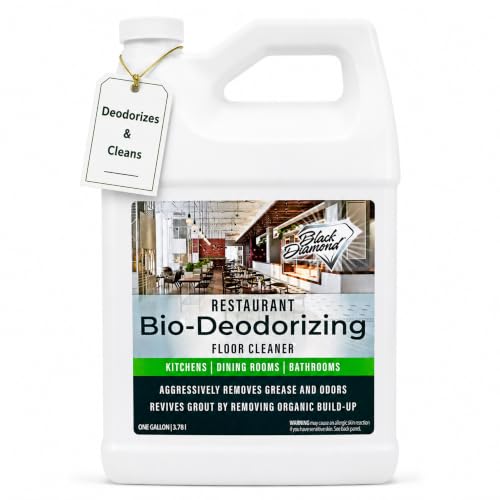 Restaurant Bio-Deodorizing Floor Cleaner Restaurant Bio-Deodorizing Floor Cleaner | Enzyme-powered formula helps break down grease, organic buildup,… Suitable for tile, concrete, laminate, hardwood, and natural… Ideal for restaurants, commercial facilities, kitchens, bathrooms, and… | Check price |
 Zep All-Purpose Cleaner and Degreaser Zep All-Purpose Cleaner and Degreaser | A versatile all-purpose degreaser cleaner that effectively tackles… Effortlessly cuts through grease, grime, and dirt Perfect for tile, stainless steel, porcelain, fiberglass, and… | Check price |
As an Amazon Associate we earn from qualifying purchases at no extra cost to you.
Quick Picks
| Product | Best for | Price |
|---|---|---|
| Zep Neutral PH 1 Gallon | Daily maintenance on sealed floors | $12.98 |
| Bissell BigGreen Hercules | Deep scrubbing of hard surfaces | $149.95 |
| OdoBan Neutral pH No Rinse | No-rinse efficiency at scale | $29.89 |
| Zep Neutral PH Pack of 4 | Bulk purchasing for multi-site teams | $38.73 |
| HHQ Commercial Floor Scrubber | Hands-free polishing and buffer work | $459.97 |
| Zep ZUMSF128 Multi Floor | Switching between floor types easily | $14.27 |
| Restaurant Bio-Deodorizing Floor Cleaner | Kitchens where odor control matters | $20.98 |
| Zep All-Purpose Degreaser | Grease-heavy areas and prep surfaces | $8.78 |
How We Picked
We filtered this category on four criteria. First, floor-type compatibility: a neutral pH formula protects sealed tile, vinyl, and finished hardwood, while alkaline degreasers belong in kitchens and garages. Second, concentration economics: a gallon of concentrate that dilutes at a high ratio costs less per cleaning session than a ready-to-use bottle, so we looked at per-gallon pricing relative to dilution flexibility. Third, mechanism of cleaning: chemical-only products handle light-to-moderate soil, but embedded grime and scuff marks often demand a machine. Fourth, owner-reported drawbacks: recurring complaints about residue, smell, or pump failure weighed heavier than marketing claims.
The 8 Best Commercial Floor Cleaner in 2026
Zep Neutral PH Industrial Floor Cleaner 1 Gallon
A workhorse for facility managers who need one jug covering tile, vinyl, and sealed concrete without worrying about etching the finish. The neutral pH formula is the reason it appears on so many commercial cleaning schedules: it will not strip wax or cloud acrylic sealers.
- Pros: Safe on most sealed floor types; predictable dilution ratio makes cost-per-use easy to track.
- Con: Not designed for heavy grease, so kitchen floors still need a separate degreaser pass.
Skip this one if your primary mess is oil-based or if you need an enzyme formula for organic odor removal.
Bissell Commercial BigGreen BGFS650 Hercules
For shops, gyms, or school corridors where mopping leaves streaks and scuffs behind, this walk-behind scrubber handles the mechanical agitation that chemistry alone cannot. Owners cite its compact footprint as a reason it fits in storage closets where larger machines do not.
- Pros: Scrubs and extracts in one pass; no need for a separate rinse step on lightly soiled floors.
- Con: Higher upfront cost than any liquid cleaner on this list, and replacement brushes and pads add ongoing expenses.
Skip this if your area is small enough for a mop or if you already own a comparable auto-scrubber.
OdoBan Professional Series Neutral pH No Rinse Concentrate
Targeted at janitorial crews who need speed over brute force. The no-rinse design cuts labor time on large floor plates, and the four-gallon jug means fewer supply runs. Made in the USA, which matters for some municipal procurement requirements.
- Pros: No-rinse formula saves time on high-traffic commercial floors; bulk volume lowers per-gallon cost versus single-jug options.
- Con: The scent, while pleasant in dilution, is noticeable during application and can be a concern in food-prep areas.
Skip this if you work in kitchens or food-service zones where fragrance residue is not acceptable.
Zep Neutral PH Pack of 4
Identical chemistry to the single-gallon version above, but sold as a four-pack that drops the per-gallon price significantly. Best suited for property management companies or franchise operators who standardize one product across multiple locations and reorder in volume.
- Pros: Lower per-unit cost than buying singles; same trusted formula and dilution guidance.
- Con: Four full gallons require storage space and a shelf-life plan, since opened jugs degrade over months.
Skip this if you are a single-location buyer with limited storage or if usage is too low to finish four gallons before effectiveness drops.
HHQ Commercial Floor Scrubber Machine
A heavy-duty buffer and polisher that goes beyond cleaning into surface restoration. It handles tile, grout, hardwood, and even carpet when swapped between pad types, making it the most versatile mechanical option here.
- Pros: Multiple brush and pad options cover a wide range of floor types; eliminates hand-and-knee scrubbing for grout lines.
- Con: Priced well above every other product in this list, and its bulk demands dedicated storage and some learning curve on pad selection.
Skip this if you only need a liquid cleaner and already have a way to handle periodic deep scrubbing.
Zep ZUMSF128 128 oz Multi Floor Cleaner
A versatile liquid option for facilities with mixed flooring: tile in the restroom, vinyl in the hallway, sealed concrete in the lobby. The multi-surface label means one product covers zones where crews might otherwise carry separate jugs.
- Pros: Single product simplifies inventory for mixed-floor facilities; ready-to-use volume is manageable for small teams.
- Con: As a multi-surface formula it is a compromise on any single floor type, so dedicated neutral or alkaline options outperform it in their niche.
Skip this if you have one dominant floor type and want optimized chemistry for it.
Restaurant Bio-Deodorizing Floor Cleaner
Enzyme-based formulas eat organic matter rather than masking it, which makes this a standout for restaurant kitchens, locker rooms, and anywhere grease-trap runoff or food residue causes persistent odors.
- Pros: Enzymes continue working after application to break down organic films; targets odor at the source rather than covering it.
- Con: Requires dwell time to be effective, so it is slower than a rinse-and-go neutral cleaner on floors that are already clean.
Skip this if your problem is surface scuffs and dirt rather than organic buildup and smell.
Zep All-Purpose Cleaner and Degreaser
The most aggressive chemistry on this list and the lowest per-gallon price at $8.78. Alkaline degreasers cut through kitchen hood grease, garage oil, and sticky floor films that neutral pH cleaners cannot touch.
- Pros: Lowest cost per gallon; handles grease and adhesive residue that lighter formulas leave behind.
- Con: Alkaline and not safe on all finishes, so it can dull sealed floors or etch stone if misapplied.
Skip this if you have unsealed stone, waxed wood, or any surface where alkaline cleaners are contraindicated.
Buying Guide
Match pH to Your Floor Finish
Sealed hardwood, vinyl composition tile, and acrylic-coated concrete all share one vulnerability: strong alkalis strip their protective topcoat. Neutral pH cleaners in the 6 to 8 range dissolve light soils and leave the finish intact. Alkaline degreasers, which sit higher on the scale, belong on quarry tile, sealed concrete in garages, and stainless-steel prep surfaces where grease is the target. Getting this wrong means progressive dulling or a product that simply sits on top of the film without breaking it.
Calculate True Cost Per Use
A gallon of concentrate that dilutes at one part solution to thirty-two parts water delivers roughly 33 gallons of working fluid. Compare that against a ready-to-use 128-ounce bottle and the economics shift fast. When evaluating bulk packs, factor in storage shelf life, because an opened gallon sitting on a janitor closet shelf for six months may lose effectiveness. The cheapest jug on the shelf is not always the cheapest clean at the mop.
Decide If You Need a Machine
Chemistry handles soil; machinery handles adhesion. Scuff marks on gym floors, ground-in grit in warehouse aisles, and dark grout lines in commercial restrooms resist what a mop and a cleaning solution can achieve, no matter how concentrated. Walk-behind scrubbers and rotary buffers add upfront cost but reduce labor hours and restore a uniform appearance that liquid-only routines cannot. If your floor looks clean but feels sticky or looks patchy under light, you likely need mechanical agitation.
Our Verdict
For most readers who need a reliable daily cleaner that will not damage sealed floors, the Zep Neutral PH 1 Gallon is the top pick: proven formula, fair price, and broad compatibility. The budget pick is the Zep All-Purpose Degreaser at the lowest listed price, ideal for kitchens and garages where grease is the enemy. If your facility has mixed flooring and limited storage, the OdoBan No Rinse in its four-gallon format wins on labor savings and supply-run frequency.
FAQ
Can I use a neutral floor cleaner on unsealed concrete?
You can, but a neutral formula will not break through oil or grease stains that penetrate raw concrete. For unsealed surfaces, start with an alkaline degreaser and rinse thoroughly before considering a neutral maintainer for day-to-day traffic cleaning.
Do commercial floor cleaners work on carpets?
Hard-floor chemistry is not formulated for carpet fibers and will leave sticky residue that attracts more soil. The HHQ scrubber can work on low-pile carpet when fitted with a carpet-specific pad, but liquid products here are intended for hard surfaces only.
How often should I switch from a neutral to a degreaser?
There is no universal schedule. Watch for visible films, sticky tack underfoot, or odors that a neutral mop pass does not resolve. Those are signals that organic or grease buildup has exceeded what a daily maintainer can handle, and a targeted degreaser pass is warranted.
Are enzyme floor cleaners safe around food-prep areas?
Enzymes target proteins, fats, and starches, which makes them well-suited to kitchens where organic residue drives odor. They are generally food-contact-safe after rinsing, but check the specific product label for your jurisdiction’s health-code compliance list before relying on one in a regulated kitchen.