Buying a diplomacy board game is one of the most polarizing decisions a tabletop group can make. The genre demands a specific temperament from every player at the table: patience for long negotiation rounds, tolerance for betrayal, and the willingness to lose a four-hour session to a single miscalculated army movement. Pick the wrong title and you alienate half your group permanently. Pick the right one and you unlock some of the deepest strategic engagement available outside of competitive chess.
What separates a worthwhile diplomacy board game from a shelf ornament is not production value or component count. It is whether the mechanics create genuine pressure to negotiate, whether the player count supports meaningful alliances, and whether the rulebook respects your time. We compared published specifications, tracked pricing across retailers, and aggregated owner feedback from hundreds of verified buyers to separate the titles that deliver from those that merely promise. This guide reflects that work for 2026 and covers eight distinct options at different price points and complexity levels.
Our top picks
 Renegade Game Studios Diplomacy
- Cunning Over Chance: Strategy decides every outcome, not…
- Premium Wooden Components: 140 updated wooden meeples represent…
- Immersive Historical Strategy: Navigate early 1900s Europe as…
 Renegade Game Studios Diplomacy: Era of Empire
- Strategic Gameplay Without Randomness: Rely on cunning diplomacy…
- Immersive 19th Century Setting: Experience the pivotal age…
- Complete Stand-Alone Experience: This full game includes gameboard,…
 Renegade Game Studios Diplomacy: The Golden Blade
- Strategic Negotiation Gameplay: Form alliances and orchestrate betrayals…
- Standalone Card Game for 2-7 Players: Experience the…
- No Player Elimination Keeps Everyone Engaged: Stay active…
| Product | Key specs | |
|---|---|---|
| Renegade Game Studios Diplomacy | Cunning Over Chance: Strategy decides every outcome, not… Premium Wooden Components: 140 updated wooden meeples represent… Immersive Historical Strategy: Navigate early 1900s Europe as… | Check price |
| Renegade Game Studios Diplomacy: Era of Empire | Strategic Gameplay Without Randomness: Rely on cunning diplomacy… Immersive 19th Century Setting: Experience the pivotal age… Complete Stand-Alone Experience: This full game includes gameboard,… | Check price |
| Renegade Game Studios Diplomacy: The Golden Blade | Strategic Negotiation Gameplay: Form alliances and orchestrate betrayals… Standalone Card Game for 2-7 Players: Experience the… No Player Elimination Keeps Everyone Engaged: Stay active… | Check price |
 World Order World Order | Reflecting real-world international relations, it takes into account… An academically-grounded experience covering global diplomacy, economics, and… Take control of the USA, China, Russia, or… | Check price |
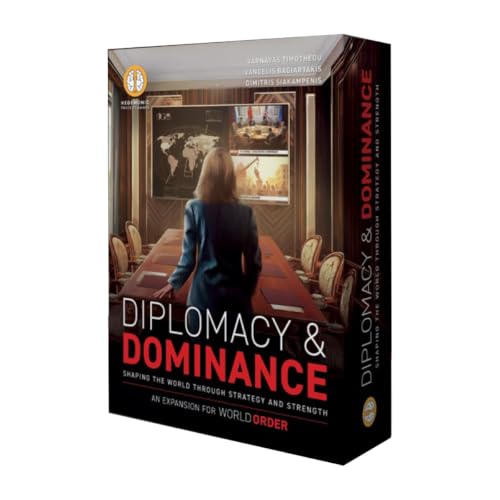 World Order: Diplomacy & Dominance World Order: Diplomacy & Dominance | Expansion introduces new strategic paths and asymmetric modules… New rules allow you to play solo against… Your objectives now reflect strategic orientations of real-world… | Check price |
 Secret Hitler Secret Hitler | A fast-paced game of deception and betrayal Beautiful wooden components Solid game boards with foil inlay | Check price |
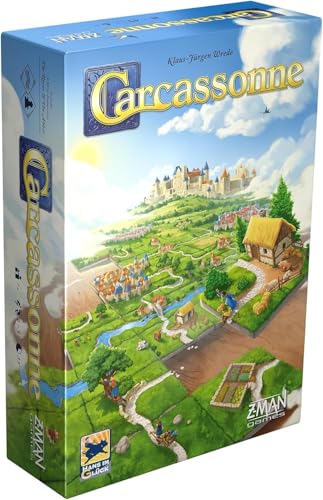 Carcassonne Tile Placement Strategy Board Game Carcassonne Tile Placement Strategy Board Game | Draw and place landscape tiles to build cities,… Carcassonne pairs intuitive rules with meaningful decisions, making… Randomized tile draws create a different landscape every… | Check price |
 CGE Codenames Board Game CGE Codenames Board Game | Two teams race to identify their agents from… Spymasters give one-word clues and a number to… Teammates guess words matching the clue while avoiding… | Check price |
As an Amazon Associate we earn from qualifying purchases at no extra cost to you.
Quick Picks
| Product | Best for | Price |
|---|---|---|
| Renegade Game Studios Diplomacy | Purists seeking the classic negotiation experience | $31.50 |
| Renegade Game Studios Diplomacy: Era of Empire | Players wanting a modernized rule set | $48.00 |
| Renegade Game Studios Diplomacy: The Golden Blade | Groups who prefer card-driven over area control | $26.99 |
| World Order | Economically themed asymmetric conflict | $84.99 |
| World Order: Diplomacy & Dominance | Expanding an existing World Order group | $24.99 |
| Secret Hitler | Social deduction with a political veneer | $45.00 |
| Carcassonne | Introducing new players to territory strategy | $32.88 |
| CGE Codenames (2nd Edition) | Party-scale diplomacy through word association | $24.97 |
How We Picked
We evaluated each title on four criteria: negotiation depth (does the game mechanically require alliances to win), accessibility of rules (how long until a new player understands the core loop), table time per decision (does the pace reward thought or punish it), and replayability relative to component cost. A diplomacy board game that demands eight players to function is a worse recommendation than one that generates tension at four, because real groups rarely field full rosters consistently. We also weighted pricing against the number of distinct strategic paths available per dollar.
The 8 Best Diplomacy Board Game in 2026
Renegade Game Studios Diplomacy
This is the reference standard. If you want to understand why the genre exists at all, this is where the conversation begins. The Renegade edition modernizes component quality while preserving the original’s unforgiving simultaneous-movement resolution. It suits experienced groups who already trust each other enough to handle the emotional fallout. The negotiation phase is where the game lives or dies; combat without prior alliance-building is almost always suicidal.
- Pro: Unmatched tension during the press-release phase when all players commit simultaneously
- Pro: Compact footprint despite seven starting powers, making it easier to find table space
- Con: Requires a minimum of five players to avoid a degenerate leader problem, which limits casual appeal
Skip it if your group is smaller than five or if members take losing personally. The game is designed to produce winners through betrayal, and not every social circle survives that.
Renegade Game Studios Diplomacy: Era of Empire
Era of Empire restructures the classic formula with variable victory conditions and a more forgiving elimination rule set. It targets players who find the original’s all-or-nothing endgame frustrating. The asymmetric starting positions create distinct strategic identities for each power, which rewards players who enjoy planning a specific path rather than adapting opportunistically.
- Pro: Variable objectives mean the same strategy rarely wins twice, extending shelf life
- Pro: Better solo-to-three scaling through automated power control compared to the base game
- Con: Higher price than the original without proportional increase in negotiation depth
Skip it if you already own the base Diplomacy and your group plays six-plus regularly. The improvements matter most at lower player counts.
Renegade Game Studios Diplomacy: The Golden Blade
This card game strips away the board entirely and replaces area control with hand management and bluff-based resource negotiation. It appeals to players who want the social pressure of a diplomacy board game without the time commitment. Sessions run significantly shorter, and the component cost is the lowest in this lineup.
- Pro: Setup and teardown take under two minutes, making it a reliable filler
- Pro: Bluffing through hidden hands creates negotiation tension without requiring physical map presence
- Con: Lacks the spatial puzzle that makes the genre satisfying for strategic thinkers
Skip it if your group values positional play. This is a bluffing card game wearing a diplomacy label, and that distinction matters to people who enjoy army logistics.
World Order
World Order merges economic engine-building with military area control and asymmetric deck-driven events. It is the most mechanically complex title here and demands a mature group willing to read a substantial rulebook before the first session. The economic layer means you can lose a military engagement but still win the game through superior resource conversion, which adds a strategic dimension absent from pure negotiation games.
- Pro: Deck-building integration creates emergent narratives that no scripted campaign could match
- Pro: Asymmetric powers with genuinely distinct win conditions rather than cosmetic differences
- Con: Premium price and steep learning curve limit it to dedicated hobby groups
Skip it if you need a game that teaches itself in ten minutes. This rewards investment that casual players rarely offer.
World Order: Diplomacy & Dominance
This expansion adds solo and cooperative modes through the double-layered automa board, plus new strategic paths that alter power balance. It only makes sense for existing World Order owners. The automa system is competent for practice runs but does not replicate the negotiation pressure that defines the core experience.
- Pro: Enables solo play for a genre that almost universally requires multiple humans
- Pro: New strategic modes add meaningful variety to the base game without replacing it
- Con: Zero standalone value; buying it without the base game is a waste of money
Skip it if you have not yet played World Order enough to feel stale. The base game’s depth is substantial.
Secret Hitler
Secret Hitler delivers hidden-role deduction layered over legislative voting, which creates a political atmosphere without requiring any strategy beyond reading people. It is not a diplomacy board game in the mechanical sense, but it captures the social dynamics of suspicion and coalition-building that define the genre. Groups of seven to ten players will find more satisfaction here than in any area-control title.
- Pro: Scales effortlessly to large party sizes where other titles become unmanageable
- Pro: Each round lasts under fifteen minutes, making repeat play easy in one evening
- Con: Limited strategic depth after a group has played the same roles multiple times
Skip it if your members prefer deterministic strategy over social deduction. There is no board to optimize and no army to command.
Carcassonne Tile Placement Strategy Board Game
Carcassonne introduces territory control through tile placement with meeple scoring, offering a gentler entry into spatial strategy. It is not a negotiation game in any real sense, but it teaches players to think about contested areas and timing windows that matter in harder titles. For families or mixed groups, it builds the spatial literacy that a true diplomacy board game later demands.
- Pro: Rulebook is under ten pages and teaches itself through a single play
- Pro: Supports two players genuinely well, unlike every other title on this list
- Con: No negotiation mechanic, so it will not satisfy someone seeking that specific social pressure
Skip it if you already own a full diplomacy board game and want to replace it. This is an on-ramp, not a destination.
CGE Codenames Board Game (2nd Edition)
Codenames generates linguistic negotiation between a spymaster and a team, rewarding players who can read a group’s associations and predict their interpretations. It is the fastest game here, with rounds under twenty minutes, and it works at party scale without anyone feeling excluded between turns.
- Pro: Scales to ten-plus players with everyone engaged or listening for clues
- Pro: Near-zero rulebook barrier; a complete newcomer plays meaningfully within three minutes
- Con: Strategic depth is finite; veteran groups exhaust the novelty faster than they expect
Skip it if your group wants a game that rewards long-term planning. This is a one-evening experience that fades after twenty plays.
Buying Guide
Player Count and Table Reliability
The single biggest factor in whether a diplomacy board game stays in rotation is whether you can consistently field the required players. Five-player minimums eliminate half your potential game nights before you open the box. Prioritize titles that remain engaging at four players or that offer automa options. If your group fluctuates between three and six members, a game that degrades below five is a poor investment regardless of how deep it plays at full capacity.
Negotiation Mechanics Versus Spatial Control
Some games in this category make negotiation the primary decision axis, while others treat it as a secondary layer on top of area control. The former produces higher emotional stakes but lower strategic depth per turn. The latter rewards optimization but can feel cold without the social friction. Decide which dimension your group actually enjoys before choosing between, say, Era of Empire and World Order.
Session Length and Resumption
Longer games accumulate state that is difficult to preserve between sessions. If you cannot dedicate four uninterrupted hours, a shorter title that completes in one sitting will see far more table time than an epic you shelve after two weeks of setup attempts. Check whether the publisher provides a save mechanism or whether the state is purely in players’ heads, because the latter option is fragile in practice.
Our Verdict
For a group of six or more that already trusts each other, the Renegade Game Studios Diplomacy at $31.50 remains the definitive choice in this category. Nothing else matches its negotiation intensity per dollar. For a budget-conscious entry point that still delivers social pressure, The Golden Blade at $26.99 is the smartest low-risk purchase. If your group skews smaller (two to four players) and you want strategic depth without requiring full human rosters, World Order with the Diplomacy and Dominance expansion combined wins that specific case decisively.
FAQ
Do I need to play classic Diplomacy before trying Era of Empire?
No. Era of Empire was designed as a modernized alternative with variable victory conditions that remove the original’s binary endgame frustration. Its rulebook assumes no prior knowledge, and most new groups find it more accessible than the base game despite the higher component count.
Is Secret Hitler appropriate for a mixed group that includes non-gamers?
It is one of the most welcoming titles on this list for non-hobbyists because the rules are social rather than mechanical. The political theme requires a brief conversation about comfort levels, but the actual gameplay involves voting, bluffing, and reading facial expressions rather than tracking resources or calculating probabilities.
Can World Order be played as a standalone expansion without the base game?
No. Diplomacy and Dominance requires the World Order base game to function. Its automa board and new strategic paths modify existing systems rather than replacing them. There is no path to using it independently.
Which of these games works best at exactly two players?
Carcassonne is the clear answer. It was designed with two-player scoring interactions in mind, and the tile-drafting tension actually sharpens at that count. Every other title on this list either degrades significantly or becomes unsuitable at two players without automation, and the World Order automa option only addresses that gap partially.