Key takeaways
- If your room already has enough lighting, a light kit just adds cost, weight and a dated look. That is why many buyers want indoor ceiling fans without lights: a clean fixture chosen purely for how much air it moves.…
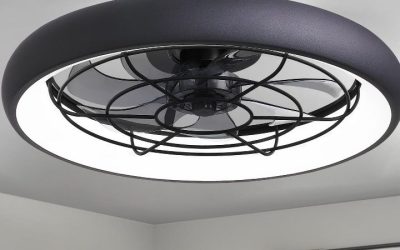
If your room already has enough lighting, a light kit just adds cost, weight and a dated look. That is why many buyers want indoor ceiling fans without lights: a clean fixture chosen purely for how much air it moves. Airflow, blade span and how low the blades hang vary far more than the photos suggest, so the right pick depends on your room.
As an Amazon Associate we earn from qualifying purchases.
By KK Home Furnishings Editorial Team
How to Choose Indoor Ceiling Fans Without Lights
Four things decide whether a light-free fan actually cools a room: the airflow in CFM at high speed matched to room size, the blade span, the ceiling-to-blade height your ceiling allows, and the controls and motor type. Read airflow with its test conditions and measure your ceiling first, because marketing coverage figures hide more than they reveal.
Match CFM to the Room, Not Marketing Coverage
Airflow in cubic feet per minute at high speed is the number that tells you how much air a fan moves, and these models span a wide range. The Minka-Aire Supra 52 is rated 6,233 CFM at high, the Hunter Builder Elite 52 lists 4,516 CFM, the Minka Roto 52 is 4,422 CFM, and the Kichler Eads 52 runs a 1,396 to 5,904 CFM range from low to high.
Use that high-speed figure, not a “covers X square feet” claim, because coverage depends on how a brand assumes air changes per hour and a roughly 8-foot ceiling. A larger or taller room needs more airflow to feel the same breeze, so size the CFM to the room’s volume and your comfort, then treat any square-footage label as a loose starting point rather than a rule.
Airflow also comes at a power and noise cost that shows up over years of nightly use. A high-output motor like the Supra’s draws more watts at full speed, and cheaper motors can develop a hum or wobble as bushings wear, so favor a fan whose high-speed figure you will actually use rather than one you buy for a number you keep dialed down.
Choose the Right Blade Span
Blade span sets how broadly a fan spreads air, and all four of these pick a 52-inch span, which is the common size for a standard bedroom or living room. The span should suit the room’s footprint: too small and the breeze stays over one spot, too large and the fan overwhelms a compact space and crowds the walls.
A 52-inch fan is a comfortable match for many medium rooms of roughly 150 to 300 square feet, but the better check is clearance to the walls, with a common guideline of leaving around 18 to 24 inches from blade tip to the nearest wall. In a small bedroom, measure the open ceiling area before assuming a 52-inch span fits, since furniture and sloped ceilings change what works.
Span and balance together drive long-term wobble. A wider blade set magnifies any imbalance from warped blades or a loose canopy, so check that the fan ships with balancing clips and that the blades are a stable material; a fan that wobbles is not just annoying but accelerates wear on the downrod and mounting hardware.
Check Ceiling-to-Blade Height
How low the blades hang decides whether a fan is safe and comfortable or a hazard in a lower room. The Minka Roto lists an 11.6-inch hanging height on a standard 6-inch downrod, which keeps the blades fairly close to the ceiling, while a longer downrod drops the fan further for better airflow on a high ceiling.
Most installation guides call for leaving at least 7 feet of floor-to-blade clearance, so on an 8-foot ceiling a low-profile mount is often the right call, and a room with an 8-foot ceiling leaves little room for a long downrod. Measure your ceiling height and subtract the fan’s drop before buying, because a fan that hangs too low is both unsafe and a constant distraction.
Mount choice is hard to undo, so get it right first. A flush or hugger-style mount suits low ceilings but moves slightly less air than a downrod-dropped fan at the same span, while too long a downrod on a high ceiling wastes airflow near the ceiling; match the drop to the room rather than defaulting to the included hardware.
Compare Controls and Motor Type
The last split is how you run the fan and what drives it. These models use pull chains, wall controls or remotes depending on the version, and motor type affects both efficiency and noise; the Hunter Builder Elite publishes an average efficiency of 84 CFM per watt, and the Roto lists 77 CFM per watt at high.
Think about how you will actually use it. A bedroom fan benefits from a remote or wall dimmer so you are not reaching for a chain in the dark, while a living-room fan you set and forget can rely on a wall control; choose the control before installation, since adding a remote receiver later means reopening the canopy.
Efficiency figures are worth comparing only within the same test point. The Supra’s high-speed derived efficiency works out to roughly 86 CFM per watt from its published numbers, but that is not measured the same way as Hunter’s published average, so do not rank one fan as more efficient than another across those different conditions; use efficiency as a tie-breaker within a brand’s own ratings.
Top Picks
These four cover the real range of 52-inch light-free fans, from maximum airflow to a low-profile mount and a solid everyday pick. Airflow and efficiency figures come from each maker’s published specs; pricing on fans shifts with finish and retailer, so each pick lists a tier and you should check the current price before ordering.
| Product | Best For | Key Spec | Watch Out For |
|---|---|---|---|
| Minka-Aire Supra 52 (F568) | Best for High Airflow | 6,233 CFM high; 72.1 W; 52 in | Highest power draw at full speed |
| Hunter Builder Elite 52 (53240) | Best Classic Indoor Pick | 4,516 CFM high; 84 CFM/W avg; 52 in | Mid-range airflow |
| Minka Roto 52 (F524) | Best Low-Profile Downrod | 4,422 CFM high; 11.6-in hang; 52 in | Retailer-listed specs |
| Kichler Eads 52 | Best Alternative 52-Inch Pick | 1,396–5,904 CFM; 52 in | Wide range, confirm high-speed figure |
Minka-Aire Supra 52 – Best for High Airflow
The Supra is the pick when moving the most air is the goal. Its manual lists 6,233 CFM at high on a 52-inch span, pulling 72.1 watts at that speed at 187 RPM, which is the strongest airflow in this group and makes it a good fit for a warm, larger living room that needs a real breeze. It sits toward the premium tier, so check the current price.
That output is its reason to exist: in a hot climate or a room that never quite cools, the extra CFM is noticeable, and a 52-inch span spreads it broadly rather than concentrating it over one chair. For a main living space where you want the fan to carry the cooling load, it earns its place.
The trade is power and presence. At 72.1 watts on high it draws more than the quieter picks here, so running it at full speed costs more over a season, and a high-output motor makes blade balance and a solid mount more important; use the included balancing clips and a secure downrod to keep a fast fan from developing a wobble.
Hunter Builder Elite 52 – Best Classic Indoor Pick
The Builder Elite is the balanced everyday choice. It is an indoor, no-light 52-inch fan rated 4,516 CFM at high with a published average efficiency of 84 CFM per watt and an Energy Guide-style average airflow of 3,130 CFM, which makes it a sensible match for a standard bedroom or medium living room. It reads as a mid-tier pick, so check the current price.
Its appeal is that the numbers are honest and the fan is easy to live with: enough airflow for most rooms, a reasonable efficiency figure, and the kind of straightforward indoor design that installs cleanly on a typical ceiling. For a buyer who wants a dependable fan rather than a maximum one, it is the safe pick.
Its airflow is mid-range rather than class-leading, so a large or very warm room may want the Supra’s higher output instead. As with any fan, the long-term wear points are the motor bearings and a loose canopy that lets the fan wobble, so mount it firmly and keep the hardware snug to protect the downrod over time.
Minka Roto 52 – Best Low-Profile Downrod
The Roto is the pick for a room with limited ceiling height. It is a dry-rated, no-light 52-inch fan rated 4,422 CFM at high and 77 CFM per watt, and it lists an 11.6-inch hanging height on a standard 6-inch downrod, which keeps the blades close to the ceiling without a hugger mount. It sits in the mid tier, so check the current price.
That low hang is the whole point: on an 8-foot ceiling it helps you keep safe floor-to-blade clearance while still dropping the fan enough to move air, which a bulky fixture cannot do. For a bedroom or den where headroom is tight, it solves the clearance problem without giving up a full 52-inch span.
Its figures are drawn from retailer-listed specs rather than a full manufacturer sheet, so confirm the exact airflow and hanging height on the current listing before you buy, especially if you plan a non-standard downrod. The usual fan wear points apply, so check that the maker treats the downrod and canopy hardware as serviceable parts.
Kichler Eads 52 – Best Alternative 52-Inch Pick
The Eads is the flexible alternative when you want a range of speeds rather than a single strong setting. A major retailer lists it as a 52-inch, no-light fan with an airflow range of 1,396 to 5,904 CFM from low to high, giving it both a gentle low setting and a fairly strong top end. It reads as a mid-tier option, so check the current price.
That broad range suits a room where needs change through the year: a soft low speed for a cool night and a high setting near 5,904 CFM for a hot afternoon. For a bedroom where you mostly want gentle circulation but occasionally need more, the wide span of speeds is genuinely useful.
Because the figures are retailer-listed, confirm the high-speed CFM and the control type on the current page before ordering, since a wide published range can hide how the fan behaves at the setting you will actually use. As always, a secure mount and balanced blades are what keep a multi-speed fan quiet as it ages.
Frequently Asked Questions
These are the questions buyers ask most when shopping for indoor ceiling fans without lights, answered with the airflow and mounting figures from the picks above.
How many CFM should an indoor ceiling fan have?
For a typical medium room, high-speed airflow somewhere in the 4,000 to 6,000 CFM range usually feels right, which is why these 52-inch fans cluster there, from the Hunter’s 4,516 CFM to the Supra’s 6,233 CFM. The figure to compare is high-speed CFM, since that is the output you feel on a hot day.
The right number scales with room volume, ceiling height and climate. A larger or taller room, or a hot climate, wants airflow toward the top of that range, while a small bedroom is comfortable lower; size the CFM to the air you need to move rather than to a brand’s square-footage label, which assumes a roughly 8-foot ceiling and a set number of air changes.
If you are between two fans, choose the higher high-speed figure and run it at a lower setting most of the time, since a fan with headroom runs quieter at the speed you actually use. A fan that only just meets your room’s needs has to work at full tilt, which is louder and harder on the motor over the years.
Is a 52-inch fan too large for a bedroom?
Not usually, since 52 inches is a common size for standard bedrooms, but it depends on the room’s footprint and clearance. The practical check is blade-to-wall distance, with a common guideline of roughly 18 to 24 inches from the blade tip to the nearest wall, so measure the open ceiling area rather than the floor space.
Clearance to the floor matters as much as to the walls. On a lower ceiling a 52-inch fan still fits if you use a low-profile mount like the Roto’s 11.6-inch hang to keep at least 7 feet of floor-to-blade clearance; a room with sloped ceilings or a low fixture position may push you to a smaller span instead.
If the bedroom is genuinely small or tight on clearance, a smaller span centered over the bed can move enough air without crowding the room. The goal is even circulation with safe clearance, so measure first and treat 52 inches as the default for medium rooms rather than an automatic fit for every bedroom.
Are ceiling fans without lights more efficient?
Not inherently, no. Removing a light kit lowers the fixture’s total electrical draw because you are not powering bulbs, but the fan’s own efficiency is set by its motor, measured in CFM per watt, not by whether it has a lamp; the Hunter here lists 84 CFM per watt average and the Roto 77 CFM per watt at high.
Compare efficiency only at matching test points. The Supra’s high-speed figure works out to roughly 86 CFM per watt from its published numbers, but that is not measured the same way as Hunter’s published average, so those figures should not be ranked head-to-head; a DC motor often runs more efficiently than an AC motor, though that is a tendency, not a guarantee.
In practice the bigger efficiency lever is running the fan at a lower speed and only when the room is occupied, since a fan cools people, not empty rooms. So choose the motor and airflow that suit your space, and treat the absence of a light as a small saving on total fixture draw rather than a meaningful fan-efficiency advantage.
How low should ceiling-fan blades hang?
Keep the blades at least about 7 feet above the floor, which is the clearance most installation guides call for. On an 8-foot ceiling that leaves little room, so a low-profile mount like the Roto’s 11.6-inch hang on a standard 6-inch downrod is often the right choice to preserve safe headroom.
The ideal drop changes with ceiling height. A high ceiling benefits from a longer downrod to bring the fan into the occupied zone where you feel the air, while a standard or low ceiling wants a flush or hugger mount; measure your ceiling and subtract the fan’s hanging height before ordering so you are not surprised by how low it sits.
If the math leaves you under 7 feet of clearance, switch to a flush mount or a smaller-profile fan rather than living with blades too close to head height. Getting the mount right is a one-time decision, since changing the downrod later means reopening the canopy, so size the drop to the room before you buy.
Final Thoughts
The best indoor ceiling fans without lights are chosen on real numbers rather than looks: high-speed CFM matched to your room’s volume, a 52-inch span that clears your walls, a mount that keeps the blades at least 7 feet off the floor, and a motor whose efficiency you compare only at matching test points. The Supra moves the most air, the Hunter is the balanced everyday pick, the Roto solves low ceilings, and the Eads offers a wide speed range; measure your ceiling and room first, then pick the airflow you will actually use.