Key takeaways
- The first thing to settle about a dewalt battery powered air compressor is which tool you actually mean: a cordless tank compressor that runs nailers, or a tankless tire inflator. They are not the same. This guide separates the two,…
The first thing to settle about a dewalt battery powered air compressor is which tool you actually mean: a cordless tank compressor that runs nailers, or a tankless tire inflator. They are not the same. This guide separates the two, then compares real cordless compressors by the number that runs tools — SCFM at 90 PSI.
As an Amazon Associate we earn from qualifying purchases.
By KK Home Furnishings Editorial Team
How to Choose a Battery-Powered Air Compressor
A cordless compressor fills a tank to run pneumatic tools; an inflator just tops up tires and has no tank for tool use. Mixing them up is the common mistake, so settle that first. Four things decide the buy: compressor versus inflator, airflow (SCFM) at 90 PSI, tank and pressure, and the battery platform.
Compressor or Inflator: Settle This First
The biggest error is buying an inflator expecting a compressor. A tank compressor like the DEWALT DCC2520 stores air to drive brad nailers and staplers; a tankless inflator like the DEWALT DCC020IB tops up tires and sports balls but cannot run air tools. Decide which job you have before comparing any other spec.
Match the tool to the task. Framing, finish nailing and air stapling need a compressor with a tank and enough airflow; inflating tires, balls and air mattresses needs only an inflator, which is smaller and cheaper. If you will run pneumatic tools, an inflator is the wrong tool no matter how high its pressure number reads.
A high inflator pressure can mislead here. The DCC020IB reaches 160 PSI, higher than the DCC2520’s 140, yet it still cannot run a nailer because it has no tank or sustained airflow. Pressure alone does not make a compressor, so read for a tank and an SCFM rating, not the biggest PSI, when you need to drive tools.
Airflow (SCFM) at 90 PSI Runs the Tools
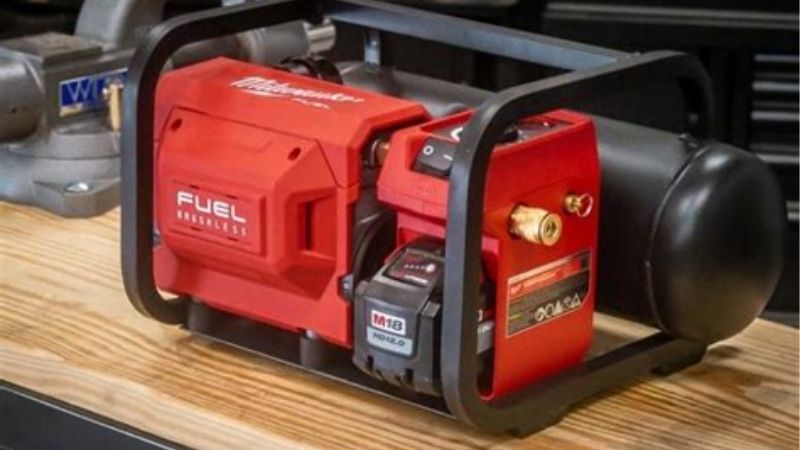
For running pneumatic tools, the number that matters is SCFM at 90 PSI — the sustained airflow. A Milwaukee 2840-20 publishes about 1.2 SCFM at 90 PSI, enough for finish nailing; many cordless compressors list tank and pressure but are quieter about SCFM. Look for that airflow figure, since it sets which tools the unit feeds.
Match SCFM to the tool’s demand. A brad or finish nailer sips air and suits a cordless compressor’s modest SCFM; a framing nailer or an impact wrench needs far more than these deliver, so they are the wrong match. Check the tool’s required SCFM at 90 PSI against the compressor’s rating before assuming it will keep up.
Where a maker does not publish SCFM, treat the unit cautiously for tool use, since tank size and pressure do not substitute for airflow. A compressor that only lists a 2.5-gallon tank and 140 PSI tells you how much air it stores and at what pressure, not how fast it can supply it, which is what a nailer needs.
Tank Size and Pressure: What They Do
Tank and pressure set how long between refills, not airflow. The DCC2520 holds 2.5 gallons at up to 140 PSI, while the Makita AC001G runs a 2-gallon tank cycling between about 105 and 135 PSI. A bigger tank means more shots before the motor restarts, but it does not raise the SCFM the tool receives.
Match the tank to your pace. A small 2-to-2.5-gallon tank suits intermittent finish nailing, refilling during natural pauses; continuous or heavy nailing drains it faster than the motor refills, where more SCFM, not a bigger tank, is the fix. Plan short bursts rather than expecting a cordless unit to keep up all day.
Cut-in and cut-out pressures, like the Makita’s 105 to 135, tell you when the motor runs to refill, which affects noise and battery drain. A higher max PSI stores more usable air per fill but does not change airflow. Read tank, pressure and SCFM as three separate things, since only SCFM says what tools the unit can run.
Battery Platform and Runtime
Cordless means battery, so the platform matters. These run on their makers’ systems — DEWALT’s 20V, Makita’s 40Vmax — and the battery you own may steer the choice, since a compressor that shares your existing packs saves buying into a new line. Check the voltage and whether a battery and charger are included or extra.
Runtime depends on the work and the pack. A cordless compressor’s battery sets how many fills or shots you get before recharging, so a higher-capacity pack lasts longer between charges. For a day of finish nailing, plan a spare battery, since the convenience of cordless fades fast if you are waiting on a single charge.
Factor the battery into the real cost and the duty. Compressors are hard on batteries, draining them faster than a drill, and heat shortens pack life, so let them cool. Favor a platform you already own or plan to build on, and confirm replacement packs, since the battery, not the pump, often limits a cordless tool’s life.
Top Picks
Four cordless units cover the ground, led by the DEWALT compressor shoppers search for, plus a DEWALT inflator included only to show what is not a compressor. The number that ranks them for tool use is SCFM at 90 PSI, which makers publish unevenly. Each leans on manufacturer-stated specs and a tier — confirm the price.
| Product | Best For | Key Spec | Watch Out For |
|---|---|---|---|
| DEWALT DCC2520 | Best for the DEWALT compressor search | 2.5 gal; up to 140 PSI | Confirm SCFM for your tools |
| Milwaukee 2840-20 | Best for published airflow | 2 gal; ~1.2 SCFM at 90 PSI | Cross-brand; needs its battery |
| Makita AC001G | Best for a 40V platform | 2 gal; 105–135 PSI cut-in-out | SCFM not stated here |
| DEWALT DCC020IB | Not a compressor: tire inflator | 160 PSI; no tank | Cannot run pneumatic tools |
DEWALT DCC2520: Best for the DEWALT Cordless Compressor Search
The model behind the search, the DCC2520 is a cordless tank compressor holding 2.5 gallons at up to 140 PSI on DEWALT’s 20V platform. It reads mid-to-premium tier; prices move, so confirm the current price, whether a battery is included, and the stated SCFM, since that airflow figure decides which tools it can run.
It suits finish and brad nailing where cordless convenience matters, especially if you already own DEWALT 20V packs. The 2.5-gallon tank gives a useful buffer between motor cycles for intermittent work. Match it to light pneumatic tools, not framing or impact tools, and plan a spare battery for a long session of nailing.
Confirm the SCFM against your tools before buying, since tank and pressure alone do not tell you airflow. Compressors are hard on batteries, so let packs cool and keep a spare. Drain the tank after use to prevent moisture buildup, and confirm DEWALT sells the wear parts and that your battery platform is supported.
Milwaukee 2840-20: Best for Published Airflow
If you want the airflow number stated plainly, the Milwaukee 2840-20 publishes about 1.2 SCFM at 90 PSI from a 2-gallon tank. It reads mid-to-premium tier; verify the current price and that it suits your battery situation, since this is a cross-brand pick running on Milwaukee’s platform rather than DEWALT’s.
That published 1.2 SCFM at 90 PSI is enough for finish and brad nailing and lets you match the tool’s demand directly, which is harder when a maker omits the figure. It is the pick when airflow transparency matters most. The trade is buying into Milwaukee’s battery line if you do not already own it.
Because it runs on its own platform, factor a battery and charger into the cost if you are a DEWALT user, and confirm replacement packs. Drain the tank after use, let batteries cool between heavy runs, and treat the published SCFM as the real guide to tool compatibility, since it is the figure that feeds the nailer.
Makita AC001G: Best for a 40V Platform
On Makita’s 40Vmax system, the AC001G runs a 2-gallon tank cycling between about 105 and 135 PSI. It reads mid-to-premium tier; confirm the current price, the battery inclusion and the SCFM, since the listing here states tank and pressure but not a clear airflow figure, which is what decides tool use in practice.
It suits owners already on Makita’s 40Vmax platform who want cordless finish nailing, sharing batteries across tools. The 105-to-135 cut-in-out range tells you when the motor refills, affecting noise and battery drain. Match it to light pneumatic tools, and plan a spare pack, since compressors drain batteries quickly.
The gap to confirm is SCFM: without a stated airflow figure, verify it with the maker before relying on it for a specific nailer, since tank and pressure do not substitute. Drain the tank after use, let packs cool, and favor it if the 40Vmax platform is already yours, since the battery line is much of the value.
DEWALT DCC020IB: Not a Compressor, a Tire Inflator
Included only to prevent confusion, the DEWALT DCC020IB is a tire inflator, not a compressor: it reaches 160 PSI but has no tank and cannot run pneumatic tools. It reads budget-to-mid tier for an inflator; confirm the current price and the battery, but buy it for inflating, not for nailing or any air-tool work.
Its real use is topping up car and bike tires, sports balls and air mattresses, where a cordless inflator shines with a digital gauge and auto-shutoff. The 160 PSI is for inflation pressure, not sustained airflow, so do not read it as out-performing the tank compressors here — it is a different tool for a different job.
If you also own air tools, the inflator complements a compressor rather than replacing it; many people want both for different tasks. On DEWALT’s 20V platform it shares batteries with a DCC2520. Just keep the roles straight: the inflator for tires, the tank compressor for nailers, and the SCFM figure for choosing the latter.
Frequently Asked Questions
Cordless-compressor shoppers ask the same key things: the difference between a compressor and an inflator, what tools these run, whether a bigger tank means more power, and how long the battery lasts. The answers below use the tank, pressure and SCFM figures above and keep the two tool types clearly apart.
What’s the Difference Between a Compressor and an Inflator?
A tank compressor stores air to run pneumatic tools; an inflator just tops up tires and has no tank for tool use. The DCC2520 is a compressor; the DCC020IB is an inflator. If you want to drive a nailer or stapler, you need a compressor, no matter how high an inflator’s pressure number happens to read.
The giveaway is the tank and the SCFM rating. A compressor lists a tank size and ideally an airflow figure at 90 PSI; an inflator lists only a maximum inflation pressure and no sustained airflow. Read for those features, not the headline PSI, since a 160-PSI inflator still cannot feed an air tool the way a tank does.
Many people end up owning both, since they do different jobs: the inflator lives in the car for tires, the compressor in the shop for nailing. Decide which task you actually have — inflation or air tools — and buy for that, rather than expecting one tool to cover both well, because neither really does the other’s job.
What Tools Can a Cordless Compressor Run?
Light pneumatic tools, mainly finish and brad nailers and staplers. A cordless compressor’s modest airflow — around 1.2 SCFM at 90 PSI on the Milwaukee, for example — suits tools that sip air. Framing nailers, impact wrenches and air sanders demand far more SCFM than these deliver, so they are the wrong match.
Check the tool’s required SCFM at 90 PSI against the compressor’s rating before buying either. If the tool needs more than the compressor supplies, it will drain the tank faster than the motor refills and stall, which a bigger tank delays but does not fix. The airflow number, not the tank, decides compatibility.
For a mix of light tools, match the compressor to the thirstiest one you will use. If that is a framing nailer, a cordless unit is likely underpowered and a corded or gas compressor fits better. Cordless compressors shine for trim and finish work where their airflow is enough and the portability pays off most.
Does a Bigger Tank Mean More Power?
No. A bigger tank stores more air, so you get more shots or longer runs between the motor cycling, but it does not raise the SCFM the tool receives. Power to run a tool comes from sustained airflow, not tank volume, so a 2.5-gallon unit is not automatically stronger than a 2-gallon one for driving a nailer.
Tank size affects duty and pacing: more gallons mean fewer interruptions during intermittent work, which is convenient. But if a tool needs more airflow than the compressor produces, it will drain any tank and stall, where only a higher-SCFM unit helps. Read tank size as a buffer, and SCFM as the actual capability.
So size the tank to your work rhythm and the SCFM to your tools. A small tank with adequate SCFM beats a big tank with low airflow for running a nailer steadily. Do not let a large tank number stand in for the airflow figure, since the two answer different questions about what the compressor can really do.
How Long Does the Battery Last?
It depends on the pack and the work, since compressors are hard on batteries. A single charge drives a number of fills or nails rather than a fixed time, and heavier or more continuous use drains it faster. For a long session, plan a spare battery, since recharging mid-job undoes the convenience of going cordless.
Higher-capacity packs last longer between charges, and keeping batteries from overheating preserves their life, so let them cool during heavy runs. The platform matters too: sharing packs across your existing cordless tools stretches your batteries further than buying into a new system just for the compressor itself.
Factor battery cost and lifespan into the decision, since packs wear and are a real part of the price. Confirm replacement batteries are available for the platform, and store them charged but not hot. For all-day or continuous work, a corded compressor may serve better, since the battery, not the pump, is the usual limit.
Final Thoughts
The right dewalt battery powered air compressor starts with knowing you want a tank compressor like the DCC2520, not the DCC020IB inflator — then choosing on SCFM at 90 PSI, the number that actually runs your tools. A bigger tank adds buffer, not airflow, so match SCFM to the nailer you will use and plan a spare battery.