Key takeaways
- A briggs & stratton pressure washer is easy to mis-spec because the PowerFlow+ models run in two modes — high pressure or high flow — and the headline numbers are not simultaneous. This guide compares them by mode and by…
A briggs & stratton pressure washer is easy to mis-spec because the PowerFlow+ models run in two modes — high pressure or high flow — and the headline numbers are not simultaneous. This guide compares them by mode and by engine, and shows why you never multiply the top PSI by the top GPM to judge cleaning power.
As an Amazon Associate we earn from qualifying purchases.
By KK Home Furnishings Editorial Team
How to Choose a Briggs & Stratton Washer
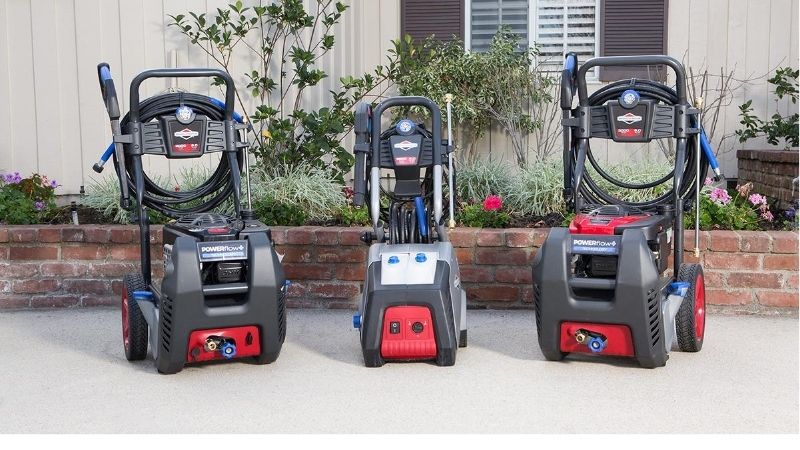
These are gas washers for driveways, siding and fences, and the key twist is the PowerFlow+ dual-mode system on some models. Reading the modes correctly, and the engine and pump, decides the right pick. Four things matter: the pressure and flow by mode, the dual-mode system, the pump and engine, and safe use.
Read Pressure and Flow by Mode
On a PowerFlow+ model, pressure and flow are not a single pair. The 3200 PowerFlow+ runs either high-pressure — about 3200 PSI at 2.1 GPM — or high-flow — about 4.5 GPM at 150 PSI — but never both maxima at once. So the honest spec is each mode’s pairing, not the biggest PSI next to the biggest GPM from different modes.
Match the mode to the task. High pressure suits caked grime, concrete and stripping prep; high flow suits rinsing large areas and moving debris with volume at low pressure. Simpler models like the 2800 PowerFlow+ list maxima of 2800 PSI and 3.5 GPM as dual-mode ceilings too, so read what each mode actually delivers.
The trap is multiplying the top numbers. Taking 3200 PSI times 4.5 GPM invents a cleaning figure the machine cannot produce, since those are separate modes. Judge each mode on its real pairing, and pick the machine whose modes fit your jobs, rather than a headline product of two numbers that never occur together at one time.
Understand the Dual-Mode System
PowerFlow+ lets you switch between a high-pressure and a high-flow setting, which is the brand’s main selling point. In high-pressure mode you get more cleaning force at lower flow; in high-flow mode you get more water volume at much lower pressure for rinsing. Knowing which mode a task needs is how you use the machine well.
Match the switch to the work in front of you. Stubborn stains and prep want the high-pressure mode; sheeting water across a driveway or clearing leaves and mud wants high flow. The dual mode is genuinely useful if your jobs vary, but it means reading two spec pairs, not one, when you compare models or plan a task.
The caveat is not to assume the modes stack. You cannot run maximum pressure and maximum flow together, so the machine’s ceiling in each mode is the real limit. Treat PowerFlow+ as two tools in one, each with its own numbers, and judge whether both modes suit you, rather than reading the two maxima as a single capability.
Pump, Engine and Class
Gas washers differ by engine and pump class, which set durability and output. The lineup spans a 2800 PowerFlow+ for homeowner cleaning up to a 4000 model rated 4000 PSI and 4.0 GPM for professional-class work. Higher classes use stronger pumps and engines built for longer runs, so match the class to how hard you will use it.
Match the engine and pump to your duty. Occasional home cleaning suits the smaller PowerFlow+ models; frequent or heavy work, or a 4000 PSI professional unit, needs the sturdier pump that handles sustained use. A bigger machine is more to store and maintain, so size the class to the jobs rather than buying the top model by default.
Pumps fail from neglect more than age across all classes. Running dry, freezing with water inside, or skipping pump care shortens life, so drain and use a pump saver before winter. Favor a model whose pump, unloader and seals are available as parts, since those wear first, especially on a higher-output 4000 PSI machine.
Use a Gas Washer Safely
At these pressures the spray can injure, so safe use is part of the buy. From 2800 to 4000 PSI, the stream can cut skin, strip paint and gouge wood, so start with a wider tip at a distance and keep the wand away from people, pets and windows. The higher the model’s pressure, the more care the nozzle demands.
These are gas machines, so run them outdoors only — never in a garage or enclosed porch — because engine exhaust carries carbon monoxide. Keep the unit on stable ground, wear eye protection, and settle the wand pointed down as you pull the trigger. A 4000 PSI professional unit especially is a tool to respect, not rush.
Match the tip and the mode to the surface. A narrow tip in high-pressure mode etches wood and chips paint, so use a wider tip or the high-flow mode on delicate surfaces, and test a hidden spot first. The dual modes are a safety tool too, since high flow at low pressure cleans gently where high pressure would damage.
Top Picks
Three Briggs & Stratton models cover homeowner to professional, plus a row on reading the PowerFlow+ modes correctly. The modes, not a single headline number, separate them, and you never multiply the top PSI by the top GPM. Each leans on manufacturer-stated specs and a tier, not a fixed price — confirm it first.
| Product | Best For | Key Spec | Watch Out For |
|---|---|---|---|
| 2800 PowerFlow+ | Best for homeowner cleaning | 2800 PSI / 3.5 GPM max modes | Maxima are separate modes |
| 3200 PowerFlow+ | Best for mixed heavy and rinse jobs | [email protected] or 4.5 GPM@150 | Do not multiply the two modes |
| 4000 model | Best for professional-class work | 4000 PSI / 4.0 GPM | Heavy, gas; outdoor use only |
| Reading PowerFlow+ | Match the mode to the task | High-pressure vs high-flow | Modes do not run at once |
2800 PowerFlow+: Best for Homeowner Cleaning
For regular home cleaning, the 2800 PowerFlow+ lists dual-mode maxima of about 2800 PSI and 3.5 GPM, each in its own mode. It reads mid tier for a gas washer; prices move, so confirm the current price and remember the 2800 and 3.5 are separate ceilings, not a combined figure, when you compare it to other machines.
It suits driveways, siding, fences and furniture for a homeowner who wants both a pressure and a rinse mode without stepping up to a professional unit. Use high pressure for grime and high flow for rinsing. Plan storage space, since even a mid gas washer is heavier and taller than an electric one, and keep it outdoors in use.
As a gas machine it needs engine upkeep, fuel and outdoor-only operation, plus winter pump care — drain it and use a pump saver. The pump is homeowner-class, not for all-day runs. Confirm Briggs & Stratton stocks the pump seals and unloader, since those wear first, and store the hose out of the sun to prevent cracking.
3200 PowerFlow+: Best for Mixed Heavy and Rinse Jobs
The 3200 PowerFlow+ is the flexible pick, running either high-pressure at about 3200 PSI and 2.1 GPM, or high-flow at about 4.5 GPM and 150 PSI. It reads mid-to-premium tier; verify the current price, and note those are two separate modes — the machine never delivers 3200 PSI and 4.5 GPM at the same time.
It suits a user with varied jobs: high pressure for caked grime, concrete and prep, then high flow to sheet water across a driveway or clear leaves and mud. The dual mode earns its place when your tasks really differ. Switch modes to match the surface, since high flow at low pressure cleans gently where high pressure bites.
The honest caveat is reading it right: do not judge it by a product of the two maxima, since those come from different modes. Judge each mode on its own pairing against your jobs. As a gas machine, it needs the usual engine and pump care, so drain it for winter and confirm replacement pump parts are available.
4000 Model: Best for Professional-Class Work
For heavy or frequent work, the 4000 model is rated 4000 PSI and 4.0 GPM in a professional class. It reads premium tier; confirm the current price and whether you truly need this much, since 4000 PSI is more than most home surfaces want and demands a stronger pump, more care and careful nozzle control to avoid damage.
It suits contractors or demanding jobs — large concrete areas, commercial cleaning, heavy prep — where the higher pressure and flow and a sturdier pump pay off under sustained use. For a homeowner it is often more machine than needed. Match the class to the workload, and respect that 4000 PSI etches soft surfaces fast.
The trade-offs scale with the output: more weight, more maintenance, and a pump that must be cared for to last under heavy runs. Keep it outdoors for exhaust safety, drain it for winter, and use a pump saver. Confirm the pump, unloader and seals are stocked, since a professional-class machine is one you keep serviced.
Reading PowerFlow+: Match the Mode to the Task
The most important skill across the range is reading the dual modes correctly. PowerFlow+ gives high pressure at lower flow, or high flow at low pressure — two settings, two spec pairs, never combined. Before buying or starting a job, decide which mode the task needs, since that, not the top number, is how these clean.
Use high pressure for stubborn grime, stains and prep; use high flow for rinsing wide areas, sheeting water and moving leaves and mud at low pressure. Matching the mode to the surface also protects it, since high flow at low pressure is gentler. The dual system is only an advantage if you actually switch to suit the work.
Never read the modes as a single capability or multiply them: 3200 PSI times 4.5 GPM is a number the machine cannot produce, since each belongs to a different mode. Judge each model by its real per-mode pairings against your jobs, and the dual-mode design becomes a genuine two-in-one rather than a marketing headline.
Frequently Asked Questions
Briggs & Stratton shoppers ask the same things: what the two PowerFlow+ modes mean, how to compare models fairly, whether gas is necessary, and what the machine can safely clean. The answers below use the per-mode numbers above and avoid combining maxima that belong to different modes.
What Do the Two PowerFlow+ Modes Mean?
They are two settings, not one. High-pressure mode gives more cleaning force at lower flow — about 3200 PSI at 2.1 GPM on the 3200 model — while high-flow mode gives more water at low pressure, around 4.5 GPM at 150 PSI. You pick the mode for the task; the machine does not run both maxima at the same time.
High pressure suits caked grime, concrete and prep; high flow suits rinsing large areas and clearing debris with volume. The dual mode is useful when your jobs vary, but it means each model has two spec pairs to read. Match the mode to the surface, since the right setting cleans faster and protects delicate finishes.
The key thing is not to treat the two modes as additive. The machine’s real capability in each mode is its own pair of numbers, so plan the task around whichever mode it needs. Learning to switch modes is most of using a PowerFlow+ washer well, more than any single headline figure on the box or the listing.
How Do I Compare Models Fairly?
Compare like modes, and never multiply across modes. Judge high-pressure performance by each model’s high-pressure pair, and high-flow by its high-flow pair, rather than taking the biggest PSI times the biggest GPM. That product is meaningless here because the maxima come from different settings that cannot run together.
Then weigh the class and duty: a 2800 PowerFlow+ for home use, a 3200 for mixed heavier jobs, a 4000 for professional work. Match the pump and engine to how hard and often you will run it. The fair comparison is each model’s real per-mode numbers plus its build class, against the jobs you actually have.
Factor in weight, storage and maintenance, which scale with the class, and the availability of pump parts. A bigger machine is not better if you do not need the output and will struggle to store it. Size the model to your workload and compare honestly by mode, and the right Briggs & Stratton pick becomes clear.
Do I Need a Gas Washer?
For this pressure range, yes. Briggs & Stratton pressure washers at 2800 PSI and up are gas-powered, which brings the flow and mobility for driveways and siding but also engine upkeep and outdoor-only use. If your jobs are light — cars, patio furniture — a lower-pressure electric would suit better and cost less to run.
Choose gas if you need the pressure and flow, especially away from an outlet, and do not mind maintenance and fuel. For heavy or frequent outdoor cleaning, gas earns its keep, and the PowerFlow+ dual mode adds versatility. Just plan for the storage, the exhaust safety and the winter pump care gas machines require.
If you only occasionally face heavy grime, renting a gas unit or choosing the smallest model that covers your jobs avoids storing more machine than you need. Match the tool to the frequency of the heavy work, since a big gas washer used twice a year is more upkeep than its value, where a modest one or a rental fits better.
What Can These Safely Clean?
Hard, durable surfaces take the pressure: concrete, brick, unpainted masonry, metal and vinyl siding at the right distance and tip. Use high flow at low pressure, or a wider tip, on wood, paint and anything soft or older. At 2800 to 4000 PSI, start far back and move in, since these remove finish as fast as grime.
Keep people, pets, windows and fixtures out of the spray, and run the engine outdoors only for exhaust safety. Use the high-flow mode to clean gently where high pressure would damage, and test a hidden spot on anything delicate. The dual modes let you match force to surface, which is both effective and safer than one fixed setting.
The higher the model, the more careful you must be: a 4000 PSI professional unit etches soft surfaces almost instantly in high-pressure mode. Match the mode, tip and distance to each surface, and when unsure, start gentle. Respecting the pressure and using the right mode protects both you and whatever you are cleaning.
Final Thoughts
The right briggs & stratton pressure washer is the one whose per-mode numbers and engine class fit your jobs, not the one with the biggest headline you get by multiplying modes that never run together. Read the PowerFlow+ high-pressure and high-flow pairs separately, match the mode to each surface, and run any gas unit outdoors only.