Key takeaways
- Shopping for an air compressor dewalt model usually starts with tank size, but the number that actually runs your tools is SCFM at 90 PSI. This roundup compares four verified DEWALT compressors, from 1.0 to 6.2 SCFM and from $219…
Shopping for an air compressor dewalt model usually starts with tank size, but the number that actually runs your tools is SCFM at 90 PSI. This roundup compares four verified DEWALT compressors, from 1.0 to 6.2 SCFM and from $219 to about $705, by the airflow your tools need before you weigh tank gallons, power or noise.
As an Amazon Associate we earn from qualifying purchases.
By KK Home Furnishings Editorial Team
How to Choose a DEWALT Air Compressor
A compressor’s job is to deliver enough air at the pressure your tools work at, which is why tank size is the wrong place to start. Match the airflow to the most demanding tool you will run, then weigh the tank, the power source and the noise, because a big tank on a small pump still starves a thirsty tool once the reserve runs out.
Start With SCFM at Your Tool’s Required PSI
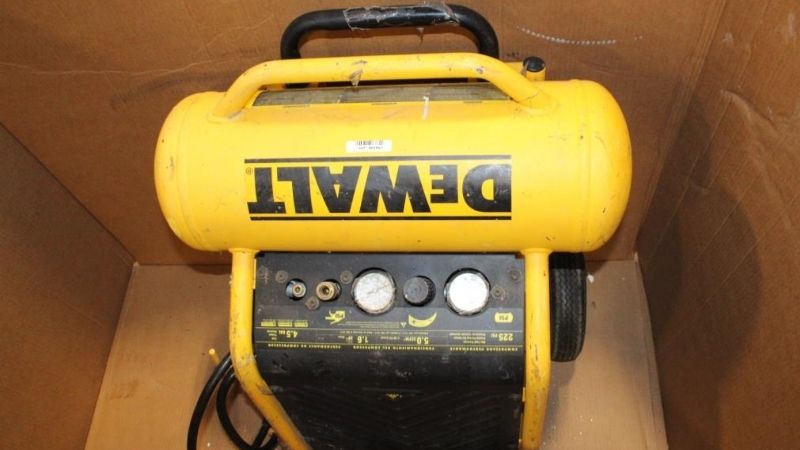
SCFM at 90 PSI is the figure that decides whether a compressor can run your tool, so start there. Across these DEWALT models it ranges from 1.0 on the cordless DCC2520B to 6.2 on the DXCM303.COM, with the DWFP55126 at 2.6 and the DXCMSAC260 at 4.0, a wide spread that maps directly to what each one can actually power.
Match that number to the tool, with margin. A brad nailer sips air and runs happily on 1.0 SCFM, while a framing nailer, impact wrench or sander needs far more, so look up the tool’s requirement at its working pressure and choose a compressor that clears it comfortably. Sizing to the thirstiest tool you own prevents constant waiting.
Read SCFM at the pressure you will use, not a headline. Airflow figures are quoted at a specific pressure, here 90 PSI, and fall at higher pressures, so compare like for like across models. A compressor that meets a tool’s air demand at its actual working pressure is the one that keeps up; tank size does not change that airflow.
Tank Size Changes Runtime, Not Pump Airflow
A bigger tank buys time between pump cycles; it does not raise the airflow the pump produces. The DXCMSAC260’s 26 gallons and the DXCM303.COM’s 30 gallons store more compressed air than the 6-gallon DWFP55126, so the pump runs less often, but the SCFM each one delivers still comes from the pump, not from the size of the tank.
Use tank size to match the work pattern. A larger tank suits sustained tasks like sanding or running an impact wrench, where you want a reserve before the pump restarts; a small 6-gallon tank is fine for intermittent nailing. Pair the tank with the airflow, since a big tank behind a weak pump still empties under a genuinely thirsty tool.
Do not read tank gallons as power. A 30-gallon tank is not stronger than a 6-gallon one in the sense buyers often assume; it simply holds more air, and once that reserve is used, the pump’s SCFM is the limit. Size the airflow to the tool first, then choose a tank large enough for how long you run that tool at a stretch.
Choose Cordless vs Corded Around the Jobsite
Power source decides where the compressor can work. The DCC2520B is a cordless, battery-run unit with cut-out pressures of 125 or 140 PSI depending on the battery, while the DWFP55126, DXCMSAC260 and DXCM303.COM are corded electric models, so the choice is really about mobility versus sustained output on a reliable power supply.
Match the format to the job. A cordless compressor suits trim work, punch lists and spots with no outlet, where its portability and 1.0 SCFM are enough for a nailer; a corded unit suits a shop or a site with power and heavier air demand. Decide where you will actually use it before you weigh the airflow figures against each other.
Account for the full cost of the cordless route. The DCC2520B is sold as a tool only, so the battery and charger are extra, and a cordless unit’s runtime depends on the battery, not a published figure you can assume. Do not price a bare tool as if it includes a battery, and do not call a cordless unit stronger on voltage alone.
Check Noise, Duty Cycle and Maintenance Before Buying
Noise and upkeep separate compressors that are pleasant to live with from ones that are not. DEWALT lists the DWFP55126 at 75.5 dBA and the cordless DCC2520B at 80 dBA in its own testing, a real difference in a garage or near others, so factor the dBA figure in alongside the airflow and the tank you have already chosen.
Plan the maintenance the manual actually calls for. DEWALT’s manuals direct owners to drain the tank’s condensate daily or after each use to prevent corrosion, and oil-lubricated models like the DXCM303.COM need oil checks that oil-free units skip entirely. Match the upkeep you are willing to do to the model before you buy it, not after.
Treat safety as part of the choice, not an afterthought. DEWALT’s manuals say to wear eye and hearing protection, never modify the pressure tank, and never use untreated compressor air for breathing, since it is not breathing air without treatment equipment. Those conditions apply to every model here, whatever its airflow or tank size.
Top Picks
Each DEWALT compressor below fills a clear role, with airflow, tank and noise figures drawn from DEWALT’s manuals and current listings, as of October 2026. Prices and stock move, so confirm before buying. The table pairs the airflow at 90 PSI with the main catch for each, since that figure drives most of the purchase decision.
| Product | Best For | Key Spec | Watch Out For |
|---|---|---|---|
| DWFP55126 | Best Overall | 2.6 SCFM @90; 6 gal; 75.5 dBA | 33 lb in manual vs 30 lb advertised |
| DCC2520B | Best Cordless Portability | 1.0 SCFM @90; 20V/60V | Tool only; battery/charger extra |
| DXCMSAC260 | Best Larger Tank | 26 gal; 4.0 SCFM @90 | Much larger footprint and price |
| DXCM303.COM | Best Higher Airflow | 6.2 SCFM @90; 30 gal | Oil-lube; not a compact portable |
DWFP55126: Best Overall
The DEWALT DWFP55126 is the overall pick for most home and trim work, balancing airflow, size and noise. It delivers 2.6 SCFM at 90 PSI from a 6-gallon tank with a 165 PSI cut-out, runs at 75.5 dBA in DEWALT’s testing, and lists around $229 at Home Depot as a compressor-only unit as of October 2026, sitting in the budget tier.
It suits finish nailing, tire and small air tasks, and light shop use where its 2.6 SCFM comfortably runs a brad or finish nailer and the 6-gallon tank gives enough reserve for intermittent work. The 75.5 dBA rating is the quietest here. Check your tools’ air demand against 2.6 SCFM, as heavier tools will quickly outpace it.
The catch is a spec discrepancy worth noting: DEWALT’s manual lists the unit at 33 pounds while the retailer advertises 30 pounds, so treat the weight as unconfirmed rather than a precise figure. The 2.6 SCFM also caps it for heavy continuous tools like sanders, so it is a trim-and-tasks compressor, not a full shop workhorse.
DCC2520B: Best Cordless Portability
The DEWALT DCC2520B is the pick when you need air with no outlet in sight. It is a cordless unit delivering 1.0 SCFM at 90 PSI with a cut-out of 125 or 140 PSI depending on the battery, rated at 80 dBA, and lists around $219 at Home Depot as a tool-only purchase as of October 2026, close in price to the DWFP55126.
It suits trim carpentry, punch-list work and remote spots where portability matters more than high airflow, since 1.0 SCFM runs a brad or finish nailer well. The battery platform makes it easy to carry up a ladder or across a site. Confirm your tool’s air demand sits within 1.0 SCFM before relying on it for any particular job.
The catch is the tool-only format: the battery and charger cost extra, so the real price is higher than the $219 figure, and runtime depends on the battery you fit rather than a published number. It is also the lowest-airflow unit here, so do not expect it to run heavier tools, and do not judge it stronger on voltage alone.
DXCMSAC260: Best Larger Tank
The DEWALT DXCMSAC260 is the pick when you want a larger air reserve. It pairs a 26-gallon tank with 4.0 SCFM at 90 PSI and a 175 PSI maximum, and lists around $549 at Home Depot as of October 2026 in the mid tier, stepping up from the portable units to a model built for more sustained air demand in a shop.
It suits a workshop or garage running tools like an impact wrench or occasional sander, where the 26-gallon tank reduces how often the pump cycles and the 4.0 SCFM keeps up with heavier demand than the portables. Match that airflow to your thirstiest tool, and plan space for a tank and footprint much larger than a 6-gallon unit.
The catches are size and price class. At 26 gallons it needs real floor space and costs more than the portable models, so it suits a fixed workspace rather than carrying between jobs. Its 4.0 SCFM, while strong, still has a ceiling, so the largest continuous air tools may need the higher-airflow option that sits above it in this range.
DXCM303.COM: Best Higher Airflow
The DEWALT DXCM303.COM is the pick when airflow is the priority. It delivers 6.2 SCFM at 90 PSI, the most here, from a 30-gallon tank with a 175 PSI maximum, in an oil-lubricated vertical format, and lists around $705.49 at Home Depot as of October 2026, the premium option built for the heaviest air demand in this whole group.
It suits a serious shop running demanding tools such as sanders or impact wrenches for longer stretches, where the 6.2 SCFM and 30-gallon tank keep air available without constant cycling. The vertical format saves floor space for its capacity. Confirm your heaviest tool’s SCFM sits comfortably under 6.2 at its working pressure.
The catches are format and upkeep. Being oil-lubricated, it needs regular oil maintenance that oil-free units skip, and its size and $705 price make it no substitute for a compact portable you carry to jobs. It is a stationary workhorse, so choose it for sustained airflow in a fixed shop rather than for mobility or for quick, light tasks.
Frequently Asked Questions
Buyers comparing DEWALT compressors ask the same core questions, mostly about airflow, pressure, safety and maintenance. Each answer below starts with the direct reply, then adds the condition that changes it, so you can apply it to the specific model and tools you have rather than a general rule for every compressor.
How much SCFM does a DEWALT air compressor need?
Enough to clear your most demanding tool at its working pressure, with margin. These DEWALT models range from 1.0 to 6.2 SCFM at 90 PSI, so the right one depends entirely on the tool: a brad nailer runs on 1.0, while a sander or impact wrench needs far more. Size the compressor to the tool, not the other way around.
Do not size by tank gallons. A large tank stores more air but does not raise the pump’s SCFM, so a 30-gallon unit with weak airflow still starves a thirsty tool once the reserve runs out. Look up each tool’s SCFM at its operating pressure, add a margin, and choose a compressor whose airflow clears the highest figure you find.
Account for running more than one tool at once if you do. Simultaneous tools add their air demands together, which can exceed a compressor that handles each alone, so total the requirement for your real workflow. When in doubt, choosing airflow with headroom costs less frustration than a unit that cannot keep the pressure up under a load.
Is 165 PSI better than 140 PSI?
Not automatically. A higher maximum pressure, like the DWFP55126’s 165 PSI cut-out versus the cordless unit’s 140, mainly means more stored air before the pump restarts, not more power at your tool. What actually runs the tool is the SCFM available at the tool’s working pressure, which is usually well below that stated maximum figure.
Use the maximum pressure as a reserve indicator, not a strength rating. A higher cut-out lets a tank hold more air, extending runtime between cycles, which helps on sustained work, but it does not increase the airflow the pump delivers. Two compressors with different maximum pressures can differ most in SCFM, the figure to compare.
Match both to the job rather than chasing the bigger number. For intermittent nailing, either pressure is ample; for heavier continuous tools, prioritize SCFM at 90 PSI and a tank sized to your run time. A higher PSI ceiling is a bonus for reserve, but it never substitutes for the airflow a demanding tool actually requires to run.
Can DEWALT compressor air be used for breathing?
No, not directly. DEWALT states that untreated compressor output is not safe for human breathing, so you should never use the air from these units for breathing without the proper treatment equipment. Compressed air from a standard compressor can carry oil, moisture and contaminants that make it unsafe to inhale just as it comes out.
The reason is what the air picks up on the way out. Lubricants, condensate and particles from the pump and tank end up in the stream, which is fine for tools but not for lungs, so breathing-air use requires dedicated filtration and treatment that a standard compressor does not include. Treat this as a firm safety limit, not a caution.
Keep it to tool and inflation duties. These DEWALT compressors are built to drive pneumatic tools and inflate tires, and that is where they belong; any breathing-air application is a separate, regulated use with its own equipment. If you have such a need, source a system designed and certified for it, not a tool compressor.
How often should an air-compressor tank be drained?
Daily or after each use, per DEWALT’s manuals for these units. Draining the tank’s condensate that often prevents moisture from collecting inside and corroding the tank from within, which is the main maintenance habit that protects a compressor’s life. It takes a moment and is easy to skip, which is exactly why it matters so much.
The reason is the water that compression creates. Pressurizing air wrings moisture out of it, and that water pools in the tank, so leaving it sitting invites rust at the one part you must never let fail. Open the drain valve after use, let the condensate out, and close it again before the next session with the unit.
Pair draining with the rest of the routine. Oil-lubricated models like the DXCM303.COM also need oil checks that oil-free units skip, and all of them call for eye and hearing protection in use. Following the manual’s schedule for your specific model, rather than a generic habit, is what keeps a compressor safe and working for years.
Final Thoughts
The right air compressor dewalt choice comes down to airflow first: size the SCFM at 90 PSI to your most demanding tool, then weigh tank reserve, power format, noise and maintenance. The balanced DWFP55126, cordless DCC2520B, larger-tank DXCMSAC260 and high-airflow DXCM303.COM each suit a particular set of tools and workspace.