Key takeaways
- Working on a staircase safely means using a ladder designed to stand with its legs at different heights, not a stepladder perched on steps. The best ladders for stairways offer a manufacturer-confirmed staircase configuration and a real ANSI duty rating,…
Working on a staircase safely means using a ladder designed to stand with its legs at different heights, not a stepladder perched on steps. The best ladders for stairways offer a manufacturer-confirmed staircase configuration and a real ANSI duty rating, so each leg lands securely on the stairs instead of balancing on a makeshift base.
As an Amazon Associate we earn from qualifying purchases.
By KK Home Furnishings Editorial Team
How to Choose Ladders for Stairways
A stair ladder is judged first on whether it is actually built to stand on stairs, then on its rating and reach. The criteria below start with a true staircase configuration and the rule never to improvise, then cover the duty rating, the working range, and the material that matters near electricity.
A True Staircase Configuration, Not a Balanced Stepladder
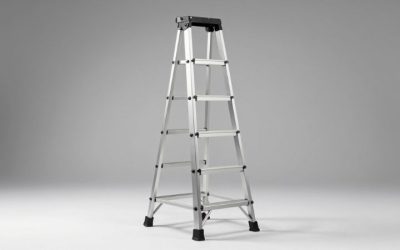
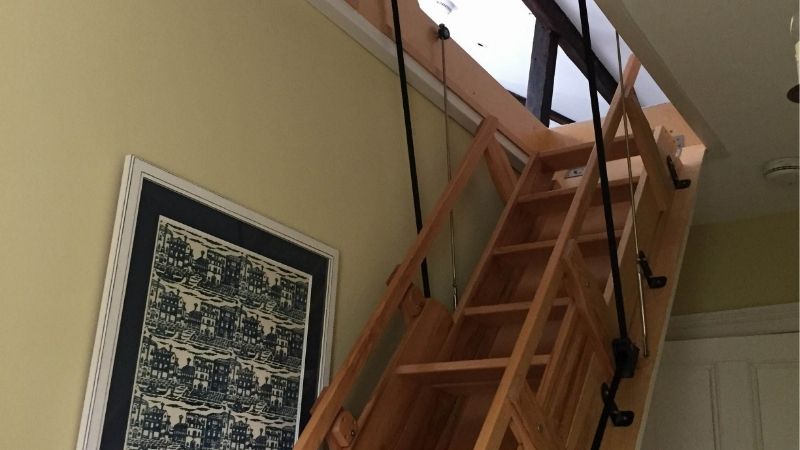
The defining feature is a manufacturer-confirmed staircase configuration that lets the ladder stand with its legs at different heights. The Little Giant Epic and Dark Horse, the Gorilla multi-position, and the Werner Multi-Position Pro all offer this, so confirm the model lists a staircase setup rather than assuming any stepladder can balance on steps.
Never improvise by placing blocks, boxes, or anything else under one leg to level an ordinary ladder on stairs. That makeshift base is unstable and a leading cause of falls, so the whole point of a stair ladder is that its design, not a stack of objects, puts each foot securely on a different step.
If a ladder does not explicitly support a staircase setup, it is the wrong tool for stairs regardless of how sturdy it feels flat. Confirm the configuration in the product details, since a model built for stairs holds each leg at the correct height by design, which is what keeps you safe where the floor is not level.
Duty Rating and Total Load
The duty rating is a total-load limit, not just body weight. These are largely Type IA, rated to 300 pounds, which includes you plus tools and materials, though some Werner models run to 375 pounds, so add everything you carry up and keep model-specific, since the rating can vary across a family [ANSI].
Confirm the exact model’s rating rather than assuming a whole line matches, since the Werner Multi-Position Pro family spans 300 and 375-pound variants depending on the specific model. Pick a rating above your total load with margin, and treat the figure as a ceiling to respect rather than a target to approach each time you climb.
Because the rating covers everything on the ladder, a 185-pound person with a toolbelt and materials can pass 300 pounds, so size up where needed. Keep the duty rating tied to the exact model you buy, since mixing a line’s figures is an easy way to overload a ladder that is actually rated lower than you assumed.
Reach and Working Range
Reach height and ladder length are different, so size by the task. The Gorilla multi-position cites an 18-foot reach, while the Little Giant Epic lists a stepladder reach of about 12 feet 3 inches, so match the working range to the stairwell or ceiling you must reach rather than the ladder’s physical length on the box.
Figure the height you need, remembering your own reach adds to the ladder, and confirm the model’s working range covers it in its staircase setup. A multi-position ladder’s reach varies by configuration, so check the stair setup’s specific range, since the reach in A-frame mode differs from its extension or staircase heights.
Keep reach, like duty, model-specific, since these families include several lengths. The Werner Multi-Position Pro comes in multiple sizes, so confirm the exact model’s reach in the configuration you will use, and choose the length that covers your tallest realistic stairway task rather than the longest ladder available by default.
Material and Electrical Safety
Material decides weight and electrical safety. Aluminum is lighter but conducts electricity, while fiberglass is heavier yet nonconductive, which is why the fiberglass Little Giant Dark Horse suits work near wiring, a service panel, or overhead lines on a stairwell where a metal ladder would be a hazard.
Weight is a handling convenience, not a safety ranking, so do not confuse the two. The Gorilla at about 30.88 pounds is roughly 19 percent lighter than the 38-pound Epic, which makes it easier to carry, but lighter does not mean safer, since safety comes from the configuration, rating, and correct setup.
Match the material to the work: fiberglass anywhere electricity is near, aluminum where it is not and weight matters. Inspect either ladder before use for cracks, bent rungs, or loose hinges, since a multi-position ladder has more joints to check, and every hinge must lock fully before you put weight on it on a stairway.
Top Picks
Each pick offers a manufacturer-confirmed staircase configuration, the defining trait for ladders for stairways, with its ANSI rating noted model-specific rather than as a line-wide figure. Weight differences are handling conveniences, not safety rankings, so judge these by the stair setup, the rating for the exact model, and the material for your work.
| Product | Best For | Key Spec | Watch Out For |
|---|---|---|---|
| Little Giant Epic Model 17 | Best overall | Staircase config; Type IA 300 lb | Heavier at about 38 lb to carry |
| Gorilla GLMPXA-18 | Best value and lightest | Staircase among 20 positions; 300 lb; 30.88 lb | Reach is retailer-stated; confirm it |
| Little Giant Dark Horse M17 | Best for electrical work | Fiberglass; staircase config; 300 lb | Fiberglass adds weight for the safety |
| Werner Multi-Position Pro MT | Best for leveling needs | Stairway config; 300/375 lb by model | Duty and reach vary; confirm the exact SKU |
Little Giant Epic Model 17: Best Overall
The Little Giant Epic Model 17 takes the top slot as a versatile multi-position ladder with a confirmed staircase configuration, rated Type IA to 300 pounds. It suits a home needing one capable ladder for stairs and more. It sits in the premium tier, so confirm the current price before ordering it.
Its advantage is a trusted, multi-position design that stands securely on stairs with its legs at different heights, backed by a 300-pound total-load rating that includes you plus tools [ANSI]. Confirm each hinge locks fully before climbing, and use the staircase setup rather than ever improvising a base with blocks under one leg.
The honest caveat is weight: at about 38 pounds it is heavier to carry than the lighter Gorilla, though weight is a handling matter, not a safety ranking. Inspect the hinges before each use, keep the load under the 300-pound rating, and confirm the working range in its stair setup covers your tallest stairway task.
Gorilla GLMPXA-18: Best Value and Lightest
The Gorilla GLMPXA-18 is the value and lightest pick, offering a Stairway Stepladder among 20 adjustable positions, rated Type IA to 300 pounds, with an 18-foot reach at about 30.88 pounds. It suits buyers who want versatility and easy carrying. It sits in the mid tier, so confirm the live price before ordering.
Its advantage is the low weight, roughly 19 percent lighter than the Epic, and a generous 18-foot reach across its many positions, which makes it easy to move and tall enough for most stairway tasks. Use the dedicated Stairway configuration for steps, and confirm each position locks fully before putting weight on it.
The honest caveat is that the 18-foot reach is a retailer-stated figure, so confirm it for the exact model, and remember reach is not the ladder’s physical length. The lighter weight aids handling but is not a safety advantage, so rely on the staircase setup and the 300-pound rating rather than lightness for safe use.
Little Giant Dark Horse M17: Best for Electrical Work
The Little Giant Dark Horse M17 is the pick for work near electricity, a fiberglass multi-position ladder that converts to A-frame, extension, 90-degree, staircase, and trestle setups, rated Type IA to 300 pounds. It suits stairwell tasks near wiring or a panel. It sits in the premium tier, so confirm the current price.
Its advantage is nonconductive fiberglass, which is the right choice near overhead lines, a service panel, or wiring on a stairway, plus a staircase configuration and broad versatility. Confirm the staircase setup for stairs, lock every hinge before climbing, and keep the total load under the 300-pound rating that includes your tools.
The honest caveat is that fiberglass adds weight compared with aluminum, which is the trade for the electrical safety it provides. Weight is a handling matter rather than a safety ranking, so accept the extra heft for work near power, and inspect the rungs and hinges before each use, since the convertible design has many joints.
Werner Multi-Position Pro MT: Best for Leveling Needs
The Werner Multi-Position Pro MT family is the pick when levelers help, offering a stairway configuration and leveling variants that adjust up to about 7 inches, with duty ratings of 300 or 375 pounds depending on the exact model. It suits uneven landings. It sits in the premium tier, so confirm the live price.
Its advantage is the leveling feature on variants that need to compensate for uneven ground, paired with a true stairway configuration and strong ratings. Werner notes the built-in levelers should not be used to compensate on a traditional level staircase, where the stairway configuration itself is the correct setup, so use each as intended.
The honest caveat is that duty rating and reach vary across the family, from 300 to 375 pounds, so confirm the exact model rather than assuming a line-wide figure. Keep the rating and reach model-specific, use the stairway setup on stairs and levelers only where ground is genuinely uneven, and lock every hinge before climbing.
Frequently Asked Questions
Homeowners working on stairs ask the same questions about safety, ratings, and setup. Each answer below opens with the short version, then the detail that changes it, so you can match ladders for stairways to the task safely rather than balancing an ordinary stepladder on steps, which is the mistake these ladders exist to prevent.
Can a normal step ladder be used on stairs?
No, not safely. An ordinary stepladder is built for level ground, so balancing it on steps leaves it unstable, and improvising with blocks or boxes under one leg is a leading cause of falls. Use a ladder with a manufacturer-confirmed staircase configuration that holds each leg at the correct height by design.
The reason is the uneven surface. Stairs put each foot at a different height, which a stepladder cannot accommodate without a makeshift base, and that base is exactly what fails. A stair ladder solves this through its design, so the legs land securely on different steps without anything stacked underneath to level them.
If you only have a standard stepladder, do not force it onto stairs; borrow or buy one configured for staircases instead. The risk is not worth the convenience, since a fall on stairs is especially dangerous, and the whole category of stair ladders exists precisely because an ordinary stepladder is unsafe on steps.
What does the Type IA 300-pound rating include?
Everything on the ladder, not just your body weight. A Type IA rating of 300 pounds covers you plus your clothing, tools, and any materials you carry up, so add all of it before deciding the rating is enough [ANSI]. A person near 200 pounds with a toolbelt and supplies can approach that limit quickly.
Treat the rating as a ceiling to stay under, with margin. Some models in these families run to 375 pounds, so if you carry heavy loads, confirm the exact model’s rating rather than assuming the line matches, since mixing figures can leave you on a ladder rated lower than you believed.
Because the figure is a total, size up where your realistic load is high. The rating assumes correct setup, so it applies only when the staircase configuration is used properly and every hinge is locked, not when the ladder is balanced or improvised, which no rating accounts for on stairs.
What is a stairway configuration?
It is a setup where the ladder’s legs can stand at different heights so it sits securely on stairs. A multi-position ladder with a staircase configuration adjusts each side independently, letting the feet land on different steps without a makeshift base, which is what makes it usable on a staircase where a stepladder is not.
The configuration is specific to models built for it, so confirm the product lists a staircase or stairway setup rather than assuming any adjustable ladder qualifies. Once set, each hinge must lock fully, since the stability depends on the legs being fixed at the chosen heights rather than shifting under your weight.
Use the configuration as the maker intends, and do not confuse it with levelers. Werner, for instance, says built-in levelers should not substitute for the staircase configuration on a traditional level staircase, where the configuration itself is the correct setup, so apply levelers only where the ground is genuinely uneven.
Fiberglass or aluminum for a stairway ladder?
Fiberglass for any work near electricity, aluminum where none is present and weight matters. Fiberglass is nonconductive, so it is the safe choice near wiring, a panel, or overhead lines on a stairwell, while aluminum is lighter and cheaper but conducts, making it wrong around power despite being easier to carry.
Weight is a handling convenience, not a safety ranking, so do not choose aluminum for safety reasons; choose it only for weight where no electrical hazard exists. The fiberglass Dark Horse is heavier than an aluminum equivalent, which is the trade for the electrical protection it provides on tasks near power.
If your stairway work ever involves electricity, fiberglass is the safer single choice despite the weight. Inspect either material before use for cracks or bent parts, store it properly, and remember that material affects conductivity and weight, but the staircase configuration and correct setup are what keep any ladder safe on stairs.
Final Thoughts
The right ladders for stairways have a manufacturer-confirmed staircase configuration and an ANSI rating that covers your full load, not a stepladder balanced on steps. Before climbing, confirm every hinge locks and never improvise height with blocks under one leg, since a makeshift base is what fails on stairs.