Key takeaways
- Daily or weekly: shoes, recycling bins, pet food, bikes, the trash can. These go closest to the house door.
- Monthly: yard tools, car care, hand tools. Middle walls.
- Seasonal: holiday decor, camping gear, coolers, snow gear. High shelves, back wall or overhead.
The cheapest way to organize a garage is to get everything off the floor and onto the walls in a fixed order: purge first, then add freestanding shelving, then wall rails or pegboard for tools, and only then think about cabinets or overhead racks. Done in that sequence, a typical one- or two-car garage can be transformed for roughly $100 to $600, depending on how much you build yourself. Below is a budget plan by spending tier, with the measurements that keep cars, doors and walkways clear.
Step Zero: The Free Part
Every dollar you spend storing things you do not need is wasted. Before buying anything, spend one weekend sorting the garage into four piles: keep, donate, sell, and trash or recycle. Paint, solvents, old batteries and electronics usually need a household hazardous waste drop-off rather than the curb. Most garages lose a quarter or more of their contents in this step, which directly shrinks the amount of shelving you need.

Rubbermaid FastTrack Garage Wall-Mounted Storage System, 24-Piece Kit
Included for 'Garage Organization Ideas on a Budget: What $100, $300 and $600 Gets You' because the listing specifies 24-Piece Kit, details this guide uses to compare options.
View on Amazon
Rubbermaid Fasttrack Garage Organization System All-in-One Rail & Hook Kit, 5-Piece (1784417)
Included for 'Garage Organization Ideas on a Budget: What $100, $300 and $600 Gets You' because the listing specifies 5-Piece (1784417), details this guide uses to compare options.
View on Amazon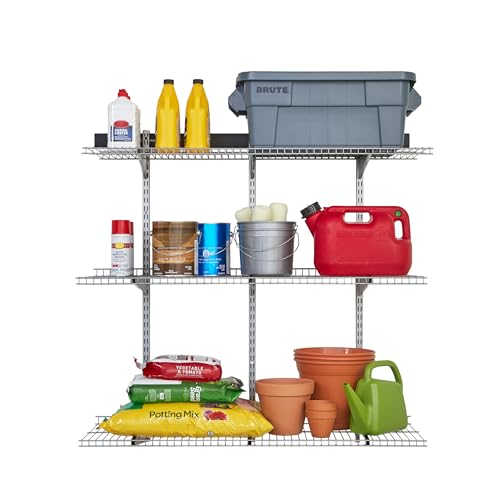
Rubbermaid FastTrack Rail Storage 48"x16" 3-Shelf Kit, 350 lbs. Per Shelf, for Home/Garage/Shed/Workshop Organization
Included for 'Garage Organization Ideas on a Budget: What $100, $300 and $600 Gets You' because the listing specifies 350 lbs. Per Shelf and for Home/Garage/Shed/Workshop Organization, details this guide uses to compare options.
View on Amazon
Rubbermaid Garage FastTrack 8-Piece Small Kit Black/Grey All-in-One Rail & Hook Wall Hanging Kit Wall Mounted Storage Solution for Home/Garage
Included for 'Garage Organization Ideas on a Budget: What $100, $300 and $600 Gets You' as a relevant option in this category; details come from the product listing.
View on AmazonThen draw a rough zone map. Group items by how often they are used:
- Daily or weekly: shoes, recycling bins, pet food, bikes, the trash can. These go closest to the house door.
- Monthly: yard tools, car care, hand tools. Middle walls.
- Seasonal: holiday decor, camping gear, coolers, snow gear. High shelves, back wall or overhead.
Clearances to Plan Around
Garage storage only works if the car still fits and you can still open the doors. These are practical working numbers; measure your vehicle and garage before buying shelving deep enough to cause problems.
| Measurement | Typical figure | What it means for storage |
|---|---|---|
| Standard single-car garage | 12 x 20 to 14 x 22 ft | Room for one 18 in deep shelving run along a side wall |
| Standard two-car garage | 20 x 20 to 24 x 24 ft | Shelving on the back wall and one side wall is realistic |
| Midsize SUV width with mirrors | About 7 ft | Leave about 30 in beside the driver door to get out |
| Walkway past a parked car | 24–36 in | Shelves deeper than 18 in on a side wall can block it |
| Typical overhead door track height | Around 8–9 ft (door + track) | Overhead racks must sit clear of the door’s travel path |
| Comfortable reach for daily items | 24–60 in off the floor | Keep the most-used things in this band |
Tier 1: Around $100 — Get Things Off the Floor
With about $100, focus on vertical storage you can mount in an afternoon.
- Utility hooks screwed into studs ($2–$6 each): the highest value item in any garage. Use them for ladders, extension cords, hoses, folding chairs and bikes hung by the front wheel.
- A broom and tool grip rail ($15–$30): holds rakes, shovels and brooms upright instead of leaning in a corner.
- Repurposed containers: clean coffee cans, jars with lids screwed to the underside of a shelf, and shoe organizers hung on a wall for spray cans.
- Clearly labeled boxes you already own: uniform cardboard boxes on a high shelf are fine for dry, light items. They are not fine on the floor, where they absorb moisture.
Always anchor hooks into wall studs, usually spaced 16 inches on center. Drywall anchors alone are not suited to bikes, ladders or anything that gets pulled on.
Tier 2: Around $300 — Shelving and a Tool Wall
This is where most garages see the biggest change. Spend the bulk of the money on one or two shelving units and the rest on tool storage.
Freestanding steel or resin shelving
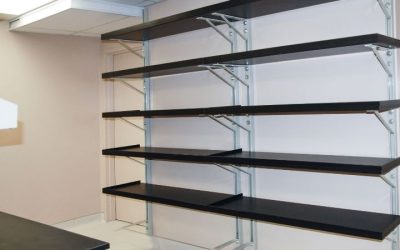
A five-shelf boltless steel unit around 48 in wide, 18–24 in deep and 72 in tall typically costs $60–$150 and is often rated somewhere between several hundred and a couple of thousand pounds total, depending on gauge. Resin (plastic) shelving costs less and does not rust, but shelves sag under heavy loads and ratings are much lower, often 50 to 150 pounds per shelf. Whichever you choose, strap the top of the unit to a wall stud; a fully loaded shelf tipping over is a real hazard.
Tool organization ideas for a garage
- Pegboard ($20–$50 per 4 x 8 ft sheet, plus hooks): cheap and flexible. Mount it on furring strips so hooks have space behind the board. Tempered hardboard pegboard holds up better than thin versions.
- Slat wall or rail systems: cost more per foot but hold heavier tools and resist hooks falling out every time you grab something.
- A French cleat wall: the best DIY value. Rip 3/4 in plywood at 45 degrees, screw strips to studs, and build custom holders for drills, saws and hand tools from scrap.
- Magnetic strips ($10–$20): ideal for screwdrivers, wrenches and drill bits above a workbench.
Trace the outline of each tool on the board with a marker. It costs nothing and makes it obvious when something has not been put back.
Tier 3: Around $600 — Bins, Overhead and a Work Surface
- Matching latching totes ($12–$35 each): buy one size so they fit the shelves and stack. Opaque lids protect contents from sunlight through garage windows.
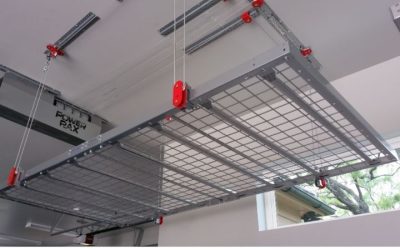
- An overhead ceiling rack ($100–$250): a 4 x 8 ft platform is common, with ratings typically in the several-hundred-pound range when lagged into ceiling joists. Use it only for light seasonal items, and check that the garage door and opener clear it fully when open.
- A simple workbench: a 2×4 frame with a plywood or butcher block top at 34–38 in high (roughly hip height) is cheaper than most prebuilt benches and can be sized to your wall.
Budget Ideas Compared
| Idea | Approx. cost | Install time | Best for | Main drawback |
|---|---|---|---|---|
| Stud-mounted hooks | $2–$6 each | 5 min each | Ladders, bikes, cords | Must find studs |
| Steel boltless shelving | $60–$150 per unit | 30–45 min | Bins, paint, heavy items | Bare steel can rust in damp garages |
| Resin shelving | $40–$90 per unit | 15–20 min | Light items, damp spaces | Sags under weight |
| Pegboard wall | $40–$100 | 2–3 hours | Hand tools | Hooks slip out |
| French cleat wall (DIY) | $50–$120 in plywood | Half a day | Power tools, custom holders | Needs a saw that can bevel |
| Overhead rack | $100–$250 | 2–3 hours, 2 people | Seasonal bins | Hard to reach; ladder needed |
Common Mistakes That Waste the Budget
- Buying cabinets first. Garage cabinet systems are the most expensive option per cubic foot. Shelving plus bins covers most needs at a fraction of the cost.
- Shelves that are too deep. 24 in deep shelves bury items in the back. 18 in is easier to see into and keeps walkways open.
- Mixed bin sizes. Odd sizes waste shelf space and do not stack.
- Cardboard on concrete. Concrete wicks moisture into boxes; lift everything at least a few inches off the slab.
- Storing chemicals near heat or kids. Fuel, pool chemicals and pesticides belong on a high shelf away from water heaters and furnaces.
Quick Weekend Order of Operations
- Saturday morning: empty, sort, purge and sweep.
- Saturday afternoon: locate studs, mount hooks and rails, assemble and anchor shelving.
- Sunday morning: build or hang the tool wall.
- Sunday afternoon: load bins, label the short ends, and put everything back by zone.
Keep a donate bin by the door afterward. A garage stays organized when there is a place for things leaving, not just a place for things arriving.