Key takeaways
- Heavy cabinets and the generator go forward of the axle.
- Balance left and right. A wall of steel cabinets on one side and nothing on the other makes the trailer lean and wears one set of tires faster.
- Weigh the loaded trailer at a public scale once your build-out is finished, and confirm you are under GVWR and axle ratings.
The most effective enclosed trailer tool storage combines track systems (E-track or L-track) bolted through the wall studs for anything that moves, lightweight cabinets or shelving with lips or doors for small tools, and a layout that keeps heavy items low and slightly ahead of the axle. Every idea below is built around two facts most garage-storage advice ignores: the trailer walls are thin, and everything inside gets shaken on every trip.
Start With the Trailer’s Limits
Before buying shelves, check three numbers on the trailer’s VIN plate or spec sheet: the gross vehicle weight rating (GVWR), the empty weight, and the interior dimensions. The difference between GVWR and empty weight is your payload, and storage systems eat into it.
| Trailer size | Typical interior height | Typical empty weight | Typical payload |
|---|---|---|---|
| 6 x 10 ft single axle | About 5.5–6 ft | 1,000–1,300 lb | 1,500–1,900 lb |
| 6 x 12 ft single axle | About 6 ft | 1,200–1,500 lb | 1,400–1,800 lb |
| 7 x 14 ft tandem axle | About 6.5–7 ft | 1,900–2,400 lb | 4,600–5,100 lb |
| 8.5 x 20 ft tandem axle | About 7 ft | 2,800–3,500 lb | 4,500–7,000 lb |
Steel cabinets for a 14-foot trailer can easily add 300 to 600 pounds before a single tool goes in. Aluminum or plywood builds cut that substantially.
Mount Into the Frame, Not the Plywood
Most enclosed trailers have 3/8 inch plywood or thin composite walls over steel tube studs spaced 16 or 24 inches on center. A screw into plywood alone will pull out once a loaded shelf bounces over a pothole. Find the studs (they line up with the exterior rivet rows) and fasten into them with self-tapping metal screws or through-bolts. Many owners add horizontal 2×4 or plywood backer strips across several studs, then mount shelves and hooks to those strips, so placement is no longer tied to stud spacing.
Storage Ideas by Zone
Walls: E-track or L-track
Horizontal E-track rows at about 24 and 48 inches high let you clip in straps, shelf brackets, hooks and bins, and move them as jobs change. L-track (airline track) is lower profile and suits finished-looking trailers. Both work best mounted to studs every 16 to 24 inches.
Front wall (ahead of the axle): heavy cabinets
A run of base cabinets 24 to 36 inches tall across the front, with a work surface on top, holds compressors, power tool cases and fastener stock. Use cabinets with positive-latching doors or drawers that lock closed; standard household drawers slide open under braking.
Upper walls: light items only
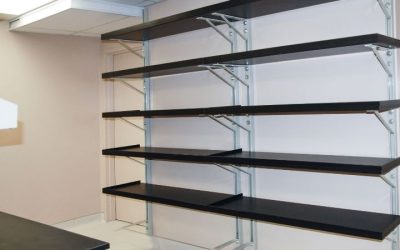
Shelves 12 inches deep at 60 to 72 inches high are fine for extension cords, safety gear and light bins. Add a 2 to 3 inch front lip or a bungee across the front.
Ceiling: ladders and long stock
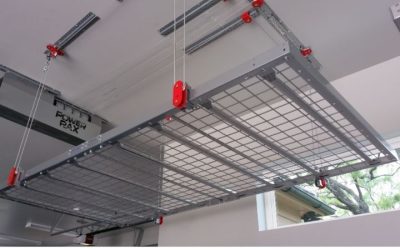
Interior ceiling racks hold ladders, pipe, conduit and levels. Keep them light and mounted to the roof bows, never to the thin ceiling skin alone.
Doors: quick-grab items
The inside of a side door or a ramp door can hold a pegboard panel or rail for hand tools you grab most often. Keep total door load under about 30 to 50 pounds so hinges do not sag.
Floor: rolling items
Generators, pressure washers and toolboxes on wheels should be strapped to floor D-rings or floor E-track. A wheel chock or a cleat screwed to the floor keeps them from shifting forward.
Weight Distribution: The Safety Part
A bumper-pull trailer should carry roughly 10 to 15 percent of its loaded weight on the tongue. In practice, that means about 60 percent of the cargo weight ahead of the axle center and 40 percent behind it. A rear-heavy trailer reduces tongue weight and can sway dangerously at highway speed.
- Heavy cabinets and the generator go forward of the axle.
- Balance left and right. A wall of steel cabinets on one side and nothing on the other makes the trailer lean and wears one set of tires faster.
- Weigh the loaded trailer at a public scale once your build-out is finished, and confirm you are under GVWR and axle ratings.
Cabinet and Shelf Materials Compared
| Material | Weight | Durability on the road | Typical cost |
|---|---|---|---|
| Aluminum cabinets/shelving | Light | Excellent; no rust | High |
| Steel cabinets | Heavy | Strong; drawers can rattle open without locks | Moderate to high |
| 3/4 in plywood, built-in | Moderate | Good if glued and screwed; custom fit | Low (materials) |
| Plastic shelving units | Light | Flexes and cracks under bouncing loads | Low |
| Wire shelving | Light | Fine for light items with a lip | Low |
Plywood built-ins are the most popular DIY route because you can size every bay to your tools. Glue and screw joints, and add a 1/2 inch lip around every shelf.
Small-Part and Hand-Tool Storage
- Latching organizers: clear plastic boxes with secure lids for screws and connectors, stored upright on shelves like books.
- Modular tool boxes: stackable systems such as Milwaukee Packout or DeWalt ToughSystem can mount to wall plates and lift off for the jobsite.
- Bins with lids: open bins dump their contents on the first sharp turn.
- Magnetic strips: handy for drivers and bits on the door or above the bench, but not for heavy tools.
Climate, Security and Safety
- Moisture: trailers sweat inside in cool mornings. Roof vents and a few desiccant packs in tool drawers reduce rust.
- Fuel and fumes: never run a generator inside the trailer, even with doors open; exhaust contains carbon monoxide. Store gas cans in an approved container, ideally outside on a tongue rack.
- Theft: hasp locks, a coupler lock and a wheel lock deter casual theft. Keep the most expensive tools in a locked cabinet inside.
- Fire extinguisher: mount one near the side door.
Layouts by Trade
| Use | Front | Sides | Rear |
|---|---|---|---|
| General contractor | Bench with base cabinets, compressor | E-track, bins, cords | Open floor for materials, ladder on ceiling |
| Landscaping | Fuel cabinet, trimmer racks | Hooks for rakes, shovels, blowers | Open floor for mower, ramp door |
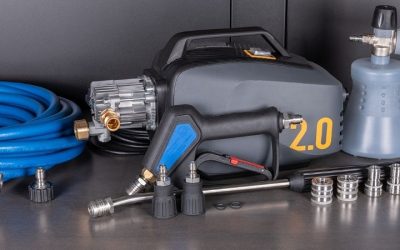
| Mobile mechanic or detailer | Tool chest strapped down, generator | Shelves for chemicals, hose reels | Pressure washer and water tank near axle |
| Hobby and weekend DIY | Plywood bench, tool cases | Pegboard on backer strips | Space for bikes or supplies |
Build in stages: start with E-track and a front bench, use the trailer for a few weeks, then add shelving where you keep reaching. That avoids carrying hundreds of pounds of storage you do not need.