Key takeaways
- Support boards at least every 32 inches; long spans let boards sag and take a set.
- Store sheet goods nearly vertical with the bottom edge on a strip of wood, not bare concrete, which can wick moisture.
- Let pressure-treated lumber dry with spacers (stickers) between layers before stacking tightly.
- Keep wood away from the garage door seam and exterior walls that sweat in winter.
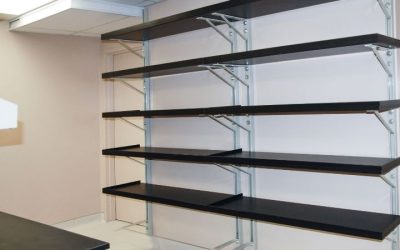
The most space-efficient lumber storage for a garage is a horizontal cantilever wall rack with arms every 24–32 inches for long boards, combined with a vertical bin for offcuts and a separate upright slot for sheet goods. That trio keeps boards straight, gets wood off the floor and leaves room for bikes and fishing rods, which this guide also covers because they compete for the same wall space.
Know the Weight Before You Mount Anything
Lumber is heavier than it looks, and the load adds up quickly on a wall rack. Approximate weights for common stock:

BORA Wood Rack, 6-Level Wall Mount Lumber Storage Rack for Wood Storage
Included for 'Lumber Storage Ideas for the Garage: Wall Racks, Sheet Goods, Bikes and Fishing Rods' because the listing specifies 6-Level Wall Mount Lumber Storage Rack for Wood Storage, details this guide uses to compare options.
View on Amazon
Ultrawall Wall Mount Wood Organizer and Lumber Storage Rack with 3-Level
Included for 'Lumber Storage Ideas for the Garage: Wall Racks, Sheet Goods, Bikes and Fishing Rods' as a relevant option in this category; details come from the product listing.
View on Amazon| Material | Approx. weight | 10 pieces on one rack level |
|---|---|---|
| 2×4 x 8 ft, kiln-dried SPF | About 9–10 lb | 90–100 lb |
| 2×4 x 8 ft, pressure-treated (fresh) | About 13–17 lb | 130–170 lb |
| 1×6 x 8 ft pine | About 6–8 lb | 60–80 lb |
| 4×8 sheet 1/2 in plywood | About 40–48 lb | Store upright, not on arms |
| 4×8 sheet 3/4 in plywood | About 60–75 lb | Store upright, not on arms |
| 4×8 sheet 3/4 in MDF | About 90–100 lb | Store upright and fully supported |
A typical steel cantilever arm is rated somewhere around 100–200 pounds per arm, and wood-built racks vary with how they are fastened. Whatever the arm rating, the real limit is the fastener into the stud, so use structural screws or lag bolts into framing, never drywall anchors.
Lumber Storage Options Compared
| Option | Wall space used | Best for | Typical cost | Drawback |
|---|---|---|---|---|
| Horizontal cantilever wall rack | 8–12 ft wide, 12–20 in deep | 8–12 ft boards, trim, dowels | $40–$150 for steel kits; $30–$60 DIY in 2x4s | Needs a long open wall |
| Vertical lumber rack (boards on end) | 2–4 ft wide | Boards up to 8 ft, quick access | $30–$80 DIY | Needs ceiling height over 8 ft for 8 ft boards; boards can bow |
| Rolling offcut cart | Floor footprint about 2×3 ft | Pieces under 4 ft | $40–$100 DIY | Takes floor space |
| Sheet goods slot or A-frame | About 12–16 in deep along a wall | Plywood, MDF, panels | $30–$70 DIY | Sheets must lean slightly, not lie flat |
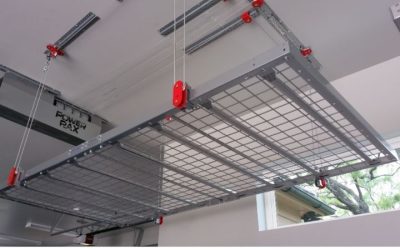
| Overhead ceiling rack | Ceiling over the car hood or door track gap | Long, rarely used boards | $80–$250 for kits | Lifting overhead; joist capacity limits |
How to Build a Simple Horizontal Rack
- Locate studs. Standard spacing is 16 inches on center. Mark three to four studs across an 8-foot span.
- Set arm spacing. Put uprights on every other stud, giving supports about every 32 inches. For thinner trim or 1x stock that sags, use every stud (16 inches).
- Choose arm length. 12–18 inches deep holds a good stack without poking into the walkway. Keep the arms angled slightly upward, about 5 degrees, so boards do not slide off.
- Level spacing. Space levels 12–16 inches apart vertically; tighter gaps make it hard to pull a board out.
- Mount height. Keep the lowest arm about 18–24 inches above the floor so a shop vac or rolling bin fits underneath, and the top arm below about 7 ft so you can reach it without a ladder.
Steel brackets that slide into slotted wall standards are the quickest route; 2×4 uprights with angled 2×4 or pipe arms are the cheapest. Pipe arms made from 3/4-inch black iron pipe threaded into floor flanges on a 2×6 ledger are a durable middle ground.
Keeping Boards Straight
- Support boards at least every 32 inches; long spans let boards sag and take a set.
- Store sheet goods nearly vertical with the bottom edge on a strip of wood, not bare concrete, which can wick moisture.
- Let pressure-treated lumber dry with spacers (stickers) between layers before stacking tightly.
- Keep wood away from the garage door seam and exterior walls that sweat in winter.
Fitting Bikes Into the Same Garage
Bikes are the next biggest wall hog. Plan their space alongside the lumber rack so neither blocks the other.
| Bike storage method | Space per bike | DIY cost | Notes |
|---|---|---|---|
| Vertical wall hook (hang by front wheel) | About 18–24 in of wall, sticks out 40–45 in | $5–$15 per hook | Stagger hook heights by 8–12 in to fit bikes 12–14 in apart |
| Horizontal wall mount | About 6 ft of wall, sticks out 12–18 in | $15–$40 | Good above a workbench or lumber rack top |
| Ceiling hoist | Ceiling only | $20–$50 | Needs about 6 ft of ceiling length; anchor to joists |
| DIY floor rack from 2x4s | About 10–14 in per bike | $15–$30 | Easiest for kids’ bikes |
A simple DIY approach is a 2×6 ledger screwed into studs with screw-in bike hooks every 14–18 inches. Heavier e-bikes, often 45–70 pounds, are better on floor stands or wall racks rated for their weight than on a single hook.
Fishing Rod Storage in the Garage
Rods are long, light and easy to snap if they lean in a corner. Two DIY layouts work well:
- Vertical wall rack. A lower board with shallow cups or holes for the butt and an upper board with slots for the blanks, spaced about 4–5 inches apart. A 7-foot rod needs a top rail around 5–6 feet high; most garages can handle it.
- Horizontal ceiling rack. Two notched strips screwed to joists, spaced 4–5 feet apart, hold rods overhead. This frees walls but keep them away from the garage door track and opener.
Store rods out of direct sun from windows and away from heaters, and keep tackle in sealed boxes so garage humidity does not rust hooks.
Sample Layout for a Two-Car Garage Side Wall
On a 20-foot side wall: a 10-foot cantilever lumber rack starting 24 inches up, with a sheet-goods slot at one end; a 6-foot run of bike hooks next to it; and a vertical rod rack in the remaining corner. That arrangement keeps the heaviest items at waist level, the longest items along the longest uninterrupted wall, and leaves the back wall free for a workbench.
Safety Checklist
- Fasten every rack into studs or joists, with at least 2–2.5 inches of screw penetration into the framing.
- Do not load ceiling racks beyond what the kit and your joists allow; garage ceiling joists are often designed for light storage only.
- Keep heavy boards below shoulder height to avoid overhead lifting.
- Leave at least 36 inches of clear walkway in front of racks so cars and people pass safely.