Key takeaways
- Usable offcuts: pieces of bar, angle, tube, plate and sheet long enough to use in a future project. These need to be visible and easy to find by size.
- True scrap for recycling: pieces too small, damaged or mixed to use. These need to be sorted by metal and stored until there is enough for a trip to the yard.
The scrap metal storage ideas that work best start with sorting: separate bins for each metal type (copper, brass, aluminum, stainless and plain steel), a vertical rack for usable offcuts, and a covered, off-the-ground spot outdoors for bulky steel. Sorted, clean scrap is easier to reuse in projects and usually earns more at a scrap yard than a mixed pile, so the storage system pays for itself in both time and money.
Decide What Is Scrap and What Is Stock
Most garage and shop “scrap” is really two different things, and they need different storage:
- Usable offcuts: pieces of bar, angle, tube, plate and sheet long enough to use in a future project. These need to be visible and easy to find by size.
- True scrap for recycling: pieces too small, damaged or mixed to use. These need to be sorted by metal and stored until there is enough for a trip to the yard.
A simple cutoff rule keeps the two from blending: anything shorter than about 6 inches for bar and tube, or smaller than your palm for plate and sheet, goes to scrap unless you have a specific use for it.
Sorting Guide: How to Tell Metals Apart
| Metal | Quick identification | Magnet sticks? | Suggested container | Relative scrap value |
|---|---|---|---|---|
| Copper (clean pipe, bare wire) | Reddish-orange, darkens to brown | No | 5-gallon bucket with lid | Highest |
| Insulated copper wire | Copper inside plastic jacket | No | Separate bucket or tote | High |
| Brass (valves, fittings) | Yellow-gold, heavy for its size | No | 5-gallon bucket | High |
| Aluminum (extrusions, sheet, cans) | Light weight, silver-gray, soft | No | Tote or 32-gallon can | Moderate |
| Stainless steel | Bright silver, resists rust | Usually no or weak | Bucket or milk crate | Moderate |
| Steel and cast iron | Gray, rusts, heavy | Yes, strongly | Steel drum, bin or pallet pile | Lowest per pound |
Keep a strong magnet hanging next to the bins. Anything that sticks firmly is ferrous and goes in the steel bin; anything that does not is worth a closer look, because non-ferrous metals are where the value is. Scrap prices change constantly, so check with your local yard for current grades and how they want material prepared.
Indoor Storage Ideas for a Garage or Shop
Bucket row under a bench
Five-gallon buckets fit under most workbenches, which are usually 34 to 36 inches tall. A row of five takes about 5 feet of floor and covers the main non-ferrous metals. Label each lid and the side of each bucket with large letters. Copper and brass get heavy quickly; a bucket of brass fittings can easily pass 50 pounds, so set a fill line on the inside to keep it liftable.
Vertical offcut rack
For bar, tube and angle offcuts, stand pieces upright in a rack divided by length. A simple version is a wooden frame with three or four bays, or short lengths of 4-inch PVC pipe screwed to a backer board. Group by length: under 2 feet, 2 to 4 feet, and over 4 feet. Upright storage shows every piece at a glance; a horizontal pile always buries the one you need.
Wall-mounted cantilever arms
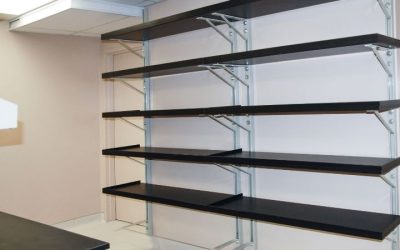
Longer stock, 4 to 20 feet, sits best on cantilever arms bolted to wall studs or a freestanding cantilever rack. Light-duty arms often carry roughly 100 to 300 pounds each, depending on length and anchoring. Keep the heaviest material on the lowest arms.
Sheet and plate slot rack
Sheet metal and plate are safest stored on edge in a slotted rack with dividers every 2 to 4 inches. Lying flat, sheet scratches and is hard to pull out; leaning against a wall, it can slide and fall. Edges are sharp, so a rack also cuts down on handling.
Rolling bins for the cutting area
A rolling 20 to 32 gallon bin next to the saw or grinder catches small cutoffs as they are made. Empty it into the sorted bins at the end of each session. Use a steel or heavy plastic bin; hot chips from grinding can melt thin plastic.
Outdoor Scrap Storage
| Option | Approx. capacity | Weather protection | Typical cost | Best for |
|---|---|---|---|---|
| Pallets with a tarp | A 48 x 40 in pallet stack | Fair | Low, often free pallets | Bulky steel, appliance parts |
| 55-gallon steel or plastic drum | 55 gal | Good with lid | $30–$100 | Aluminum cans, small steel |
| Lean-to roof against a shed | Depends on build, often 4 x 8 ft | Good | $150–$500 in materials | Long stock and sorted bins |
| Small resin or metal storage shed | Roughly 30–150 cu ft | Very good | $300–$1,500 | Sorted, valuable non-ferrous |
Get scrap off the ground; even a pallet keeps it out of standing water and slows rust on steel. Keep valuable copper and brass inside or locked away, since scrap metal theft is common and a visible pile of copper attracts attention. Check local rules as well: many cities and homeowner associations restrict visible outdoor storage of scrap and junk, so a covered or screened area avoids complaints.
What Not to Put in Scrap Bins
- Batteries of any kind: lead-acid and lithium batteries need separate recycling and can leak or catch fire.
- Pressurized containers: propane tanks, aerosol cans and refrigerant cylinders need proper handling or disposal routes.
- Electronics: circuit boards and appliances with electronics often go to e-waste programs rather than metal bins.
- Oily or fluid-filled parts: drain engine parts and transmissions before storage, and keep them on a drip tray.
Match the Setup to Your Situation
| Situation | Recommended setup |
|---|---|
| Hobby welder or fabricator | Vertical offcut rack, sheet slot rack, rolling bin at the saw |
| Plumber or electrician collecting job scrap | Lidded bucket row for copper, brass and insulated wire |
| Homeowner clearing a garage | Two bins only: magnetic and non-magnetic, then sort at the yard |
| Small yard with space outdoors | Pallets under a lean-to for steel, locked shed for non-ferrous |
| Renter or shared garage | Lidded totes on a shelf; haul scrap away monthly |
Whatever the scale, wear cut-resistant gloves when sorting, keep heavy containers at a height you can lift safely, and empty bins on a regular schedule. A sorted system that stays small is far easier to manage than a big mixed pile that has to be dealt with all at once.