Key takeaways
- Use the removable bins as single-size homes: one fastener size per bin.
- Third-party nesting cups and lift-out trays, including 3D-printable designs shared by users, split deep compartments into upper and lower layers. They are useful if you own or can access a printer.
- For electrical and plumbing fittings, put the most-used size in the front row and overflow behind.
- Label the lid edge, not the bin bottom; you read the lid while it is closed.
The best way to organize a RIDGID tool box setup is to treat the Pro Gear System as a stack with jobs: small-parts organizers on top where the clear lids are visible, a drawer unit in the middle for hand tools you reach for all day, and the large modular box and rolling base at the bottom for power tools and bulk items. Inside each piece, the wins come from fixed homes for every tool: cup inserts for fasteners, foam or dividers in drawers, and the removable tray for a daily carry kit.
Here are layout ideas for the RIDGID modular boxes, how to set up the drawers, and stack plans for common trades and home users.
Know the Pieces You Are Organizing
RIDGID’s Pro Gear System Gen 2.0 is a stackable, latch-together line of 22-inch-wide boxes. The pieces most people combine are listed below; all of them lock onto each other, and the 2.0 line is designed to connect with the earlier Pro Gear 1.0 pieces as well.
| Piece | What it is | Best contents | Organizing tip |
|---|---|---|---|
| Rolling tool box (base) | Large wheeled box with telescoping handle | Corded tools, saws, extension cords, batteries and chargers | Heaviest items low and toward the wheels |
| 22 in. modular tool box | Deep box (about 5,000 cu in) with a removable utility tray and lid organizers | Drills, drivers, multi-tools, meters | Use the tray as a grab-and-go daily kit |
| XL 2-drawer modular box | Two pull-out drawers with included dividers | Hand tools, bits, sockets, tape, knives | Divide by task, not by tool brand |
| Compact tool box | Smaller latching box | One trade kit: plumbing, electrical, or finishing | One kit per box, labeled on the front |
| Compact organizer | Shallow organizer with clear lid, 6 compartments | Box-sized quantities of screws, anchors, wire nuts | Compartments fit a whole box of 3-in deck screws |
| Small parts organizer (10-compartment) | Clear-lid organizer with removable bins | Mixed fasteners, fittings, connectors | Pull a bin and carry it to the work spot |
Prices vary with sales and bundles, but individual modular pieces usually run from about $40 for an organizer to $150 or more for the rolling base, and multi-piece bundles are common.
Idea 1: Build the Stack Around Weight and Frequency
A loaded RIDGID stack of four pieces can easily weigh 80 to 120 pounds. Order it like this:
- Bottom: rolling base, heaviest and least-used items.
- Second: 22-inch modular box with power tools.
- Third: drawer box, so drawers sit at a comfortable 24 to 30-inch working height.
- Top: organizers, clear lids up, so you can see fasteners without unlatching.
Keep the stack under about 4 feet so it does not tip when rolled over thresholds, and unlatch the top organizers before lifting the stack into a truck.
Idea 2: Turn the Utility Tray Into a Daily Kit
The removable tray in the modular box is the best organizing feature in the system because you can lift it out and carry only what you need. Fill it with your 10 to 15 most-used tools: tape measure, utility knife, a multi-bit driver, pencils, a small level, pliers, and one compact driver. If you find yourself digging under the tray more than once a job, something in the tray belongs below and something below belongs in the tray.
Idea 3: Cups and Inserts for the Organizers
The organizer compartments are deep enough that small parts sink and mix. Fixes that work:
- Use the removable bins as single-size homes: one fastener size per bin.
- Third-party nesting cups and lift-out trays, including 3D-printable designs shared by users, split deep compartments into upper and lower layers. They are useful if you own or can access a printer.
- For electrical and plumbing fittings, put the most-used size in the front row and overflow behind.
- Label the lid edge, not the bin bottom; you read the lid while it is closed.
Owners commonly note that keeping organizers level in a stack works best when they are sandwiched between boxes or used in matched pairs.
Tool Box Drawer Organizer Ideas
Drawers, whether in the XL 2-drawer modular box or a steel rolling chest, need structure or they become junk drawers within a month.
| Method | Best for | Pros | Cons |
|---|---|---|---|
| Included plastic dividers | Quick setup in modular drawers | Free, adjustable | Items still slide when the box is moved |
| Two-color foam cut to tool outlines | Hand tools, pliers, screwdrivers | Shows instantly what is missing; nothing rattles | Takes an evening; fixed layout |
| Socket rails and holders | Socket sets, extensions | Sizes stay in order | Rails need drawer depth of about 2 in or more |
| Magnetic bit and wrench holders | Bits, wrenches | Fast to grab and return | Can pull loose if the box is dropped |
| Small trays or bins | Mixed small items, blades, tips | Lift out to carry | Can shift in transport |
Two guiding rules for any drawer: store a tool so you can lift it out with one hand without moving another tool, and assign every drawer one task (cutting and measuring, driving, gripping, electrical testing).
Idea 4: Stack Plans by User
| User | Suggested pieces, bottom to top | Key organizing move |
|---|---|---|
| Homeowner, general repairs | 22 in. modular box, compact organizer | Tray for household basics; organizer for picture hooks, anchors, screws |
| Electrician | Rolling base, drawer box, two small parts organizers | Drawers for testers and strippers; organizers for wire nuts, connectors, straps |
| Plumber | Rolling base, modular box, small parts organizer | Organizer for fittings by size; modular box for press or crimp tools |
| Finish carpenter | Rolling base, drawer box, compact organizer | Foam drawer for chisels, squares and blades; organizer for trim nails and screws |
| Auto and DIY garage | Rolling base, drawer box | Socket rails and magnetic wrench holders in drawers |
Idea 5: Wall-Mount When the Stack Gets Too Tall
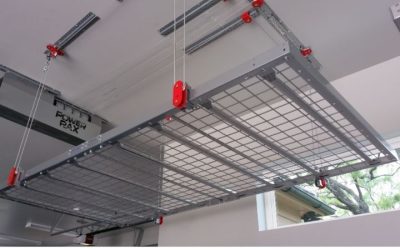
The modular box includes wall-hanging brackets, so in a garage you can hang a box on the wall at chest height and keep the rolling stack shorter. A wall-hung organizer with a clear lid at eye level becomes a fastener station; you take the whole box off the wall when you leave for a job.
Maintenance That Keeps It Organized
- Once a month, empty the utility tray and return strays to their homes.
- Keep a small “unknown parts” cup in each organizer instead of dropping odd screws into the wrong bin.
- Check the seals and latches; the boxes are designed to resist water and dust, and dirt in the gasket channel weakens that.
- Restock fasteners when a bin drops below a quarter full, not when it is empty.
A RIDGID stack is only as organized as the decisions behind it. Assign each box one job, keep heavy items low, and give every small part its own bin, and the system stays usable from one project to the next.