
Key takeaways
- Office chairs are made from several materials working together, not a single fabric. The most useful way to compare ergonomic chair materials is to separate the seat covering, the structure supporting your weight, and the components that move. Mesh, fabric,…
Office chairs are made from several materials working together, not a single fabric. The most useful way to compare ergonomic chair materials is to separate the seat covering, the structure supporting your weight, and the components that move. Mesh, fabric, leather, foam, plastic, and metal each solve different problems, but none guarantees a good fit or a long service life on its own.
As an Amazon Associate we earn from qualifying purchases.
By KK Home Furnishings Editorial Team
Ergonomic Chair Materials and What Each One Does
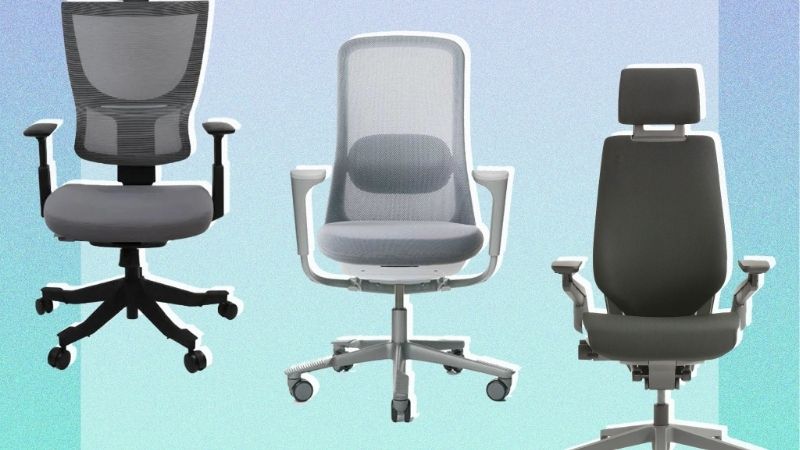
Start with the part you touch, then look beneath it. A chair advertised as mesh-backed may still have a foam seat; a fabric-covered chair can have a plastic seat shell and a metal mechanism. Steelcase’s Leap, for example, offers fabric, leather, and vinyl upholstery choices, as well as a 3D Knit back paired with an upholstered seat [Steelcase, Leap product specifications, accessed October 2026].
| Material or Component | Typical Role | Potential Trade-Off | Check Before Buying |
|---|---|---|---|
| Open-weave mesh or elastomeric suspension | Backrest or supported seat surface | Feel depends on tension, weave, and frame edges | Exact material and replacement availability |
| Woven or knitted upholstery | Covers padded seats and backs | Stains, pilling, and abrasion vary by textile | Care code and material-specific test data |
| Leather or coated synthetic upholstery | Finished seat or back surface | Care needs, temperature feel, and surface wear vary | Genuine material type and cleaning manual |
| Foam cushioning | Compressible support beneath the covering | Compression and contour may change over time | Cushion design, replacement policy, and warranty |
| Engineered polymer or metal structure | Seat shell, back frame, arms, and base | Strength depends on complete design, not material name | Model configuration and published test or load claims |
| Polymer or polyurethane-tread casters | Movement between chair and floor | Wrong caster can roll poorly or unexpectedly | Floor rating and manufacturer-approved options |
Upholstery: Mesh, Woven Fabric, Leather, and Vinyl
Mesh usually refers to an open fabric or elastic suspension, while a woven textile covers a separate supporting cushion or back pad. Those are different constructions: a mesh back with a padded seat is not a fully suspended mesh chair. Herman Miller describes its Aeron seat and back as 8Z Pellicle elastomeric suspension; Steelcase lists 3D Knit for Leap’s back, with another upholstery material on the seat [Herman Miller, Aeron Chair US specifications; Steelcase, Leap].
Fabric permits a wide choice of surface textures, while leather and vinyl supply distinct finishes and cleaning requirements. Do not group bonded, coated, synthetic, and full-grain leather under one assumed performance claim. The product’s exact upholstery designation matters more than a generic description such as premium leather. Likewise, a loose or dense weave tells you little about real wear without specifications and appropriate testing.
Seat Support: Foam Padding Versus Tensioned Suspension
Foam and suspended seating carry weight differently. Foam compresses under the user through the seat cushion, while a tensioned surface relies on its membrane and supporting frame. Steelcase describes adaptive bolstering in the foam seat of its Gesture; Herman Miller lists elastomeric suspension for Aeron’s seat and back [Steelcase, Gesture product information; Herman Miller, Aeron Chair US specifications, accessed October 2026]. They are examples of two constructions, not proof that either is better for everyone.
Judge the finished seat rather than a material label. A cushion that feels generously soft at first can still have an unsuitable front edge, shape, or depth. A taut suspension can feel supportive to one sitter and expose a frame-edge issue to another. OSHA recommends a padded, rounded seat edge and a seat that fits the person’s thighs without pressing behind the knees [OSHA, Computer Workstations: Chairs, accessed October 2026].
Under the Upholstery: Frames, Arms, and Casters
Chair shells and bases may use molded polymers, reinforced polymers, aluminum, or a combination of materials. Herman Miller’s U.S. Aeron listing specifies aluminum or polymer chassis/base options and polyurethane foam arm pads; its configurations also distinguish carpet from hard-floor casters [Herman Miller, Aeron Chair US store listing, accessed October 2026]. Those examples show why the visible finish alone cannot identify the underlying construction.
Do not assume metal is always stronger, or plastic always weaker, than another model’s frame. Joint design, load distribution, manufacturing quality, and published testing determine practical suitability. The same applies to caster tread and arm-pad coverings: materials need to work with the floor, arm structure, and daily wear. Look for specifications for the exact model and configuration rather than inferring capacity from a material name.
Choose Chair Materials for Six Everyday Work Situations
Once the components are clear, apply them to how the chair will be used. A material choice is most useful when it answers a specific problem: airflow, cleaning, seat support, maintenance, or verification. This keeps the decision separate from general chair-adjustment advice and from claims that a single fabric feels good to everyone.
A Warm Room Where Airflow Matters
For a home office without reliable air conditioning, an open mesh back may feel less enclosing than a continuous upholstered back because air can pass through openings. That is a reasonable reason to inspect a mesh option, but actual comfort depends on ventilation, clothing, room conditions, and how the membrane contacts the body. Neither the word breathable nor a product photo proves a measurable cooling advantage.
Check whether the seat is also suspended or instead uses foam under fabric. Someone who likes airflow at the back may still prefer a padded seat. Compare the actual body-contact surfaces and ask whether the mesh tension is adjustable or fixed. This is a choice about ventilation and seating feel; durability and sagging require a different, longer-term assessment.
A Shared Chair Used by Different People
Where several household members use one desk, upholstery texture may be less important than whether the underlying support works for different sizes and sitting preferences. One user may feel a suspended surface is firm, while another prefers a foam cushion. A fabric-and-foam seat can also differ noticeably from another chair with the same nominal material because contour, density, and cushion thickness are not standardized by the label.
Use materials as the second check after fit. OSHA’s workstation guidance calls for appropriate seat width and depth and adjustable seating suited to individual users [OSHA, Computer Workstations: Chairs, accessed October 2026]. If a showroom trial is possible, let each regular user sit long enough to notice contact at the front edge, back frame, and arm pads. Material preference should not compensate for a poorly fitting seat.
A Busy Household With Spills and Frequent Cleaning
If the chair is near snacks, crafts, or pets, compare cleaning instructions before choosing between woven fabric, leather, vinyl, or synthetic coated upholstery. A surface that wipes easily in one brand’s instructions may be damaged by the cleaner approved for another. Herman Miller publishes separate care guides for textiles, leather, and individual chairs rather than one cleaning recipe for all finishes [Herman Miller, Material Care and Guides, accessed October 2026].
Look for the upholstery code, stain-treatment limitations, and instructions about water or solvent use. Ask whether the manufacturer provides a replacement seat covering or whether the whole cushion must be replaced. Treat broad promises such as stainproof or disinfectant-safe with caution unless they identify the precise material, cleaning agent, dwell time, and approval for that chair.
A Desk User Who Dislikes Pressure at the Seat Edge
When the front of a seat feels hard, switching from mesh to foam is not automatically the solution. The construction might expose a rigid frame, have an overly sharp edge, or place the user too far forward. A well-contoured cushion can help distribute contact differently, but material alone cannot determine how much space the user has between the seat and the backs of the knees.
Check the contact point while seated normally and keep the back supported. OSHA specifically identifies seat pans that are too long or too short as sources of poor support and recommends rounded front edges [OSHA, Computer Workstations: Chairs]. Compare the complete cushion shape and seat dimensions, not a marketing claim about memory foam, high density, or an extra-thick pad.
A Chair You Plan to Keep and Repair
If your priority is long ownership, ask what happens when the fabric tears, the foam loses its original feel, or an arm pad cracks. Replaceability can matter more than whether the initial surface looks luxurious. A chair with documented spare parts, approved upholstery service, and component-level warranty coverage may be easier to maintain than one where the seat and shell are sold only as a complete unit.
Inspect the warranty by component rather than relying on a headline such as lifetime coverage. For example, Steelcase’s published regional Gesture information distinguishes structural components from mechanisms, foam, casters, and arm caps [Steelcase, Gesture Hong Kong product warranty, accessed October 2026]. That specific regional listing is evidence of a coverage structure, not a promise for every U.S. purchase; verify current U.S. terms before ordering.
A Purchase Where Environmental Documentation Matters
Recycled plastic, recyclable aluminum, and certified indoor-air emissions describe different attributes. Recycled-content figures refer to material input, recyclability depends partly on local facilities, and VOC-emissions certifications address a different question from lifespan. A frame made of one recognizable material is not automatically the more sustainable option without information about replacement parts, manufacturing, and the full product.
Ask for a product-specific environmental product declaration, recycled-content statement, or current third-party emissions certificate if those claims affect your decision. Herman Miller documents material configurations and emissions certification for particular Aeron variants; Steelcase discusses a 2025 environmental declaration behind certain Gesture material changes [Herman Miller, Aeron materials; Steelcase, Gesture product sustainability information, accessed October 2026]. Confirm the exact model, market, and certificate rather than applying one chair’s claims to every finish.
Frequently Asked Questions
Is Office Chair Mesh Always Made of Polyester?
No. Mesh is a description of an open structure, not a guaranteed fiber composition. It can refer to woven or knitted textiles or to proprietary elastomeric suspensions, depending on the manufacturer. You cannot reliably identify the polymer or fiber content from a photo or the single word mesh in a listing.
Look for a manufacturer material sheet or construction description. Herman Miller names Aeron’s proprietary 8Z Pellicle elastomeric suspension, while Steelcase uses the term 3D Knit for an optional Leap back [Herman Miller, Aeron; Steelcase, Leap]. Those names describe particular systems; neither should be substituted for an unverified generic polyester claim.
What Do Double Rubs and Martindale Cycles Tell You?
They are results from different fabric-abrasion test methods, not two interchangeable units of expected chair lifespan. The Wyzenbeek approach counts double rubs under a specified test setup; the Martindale method counts cycles using a different motion and abrasive. A higher reported number is not a promise that a finished chair will last an equal number of days or years.
Herman Miller’s Textile Quality Control Standards identify ASTM D4157 for a modified Wyzenbeek method and ASTM D4966 for Martindale, and state that the results have no direct correlation [Herman Miller, Textile Quality Control Standards, June 2017]. Compare numbers only when you know the method, test conditions, and actual textile used on the chair.
How Can I Tell Whether Chair Upholstery Is Genuine Leather?
Check the manufacturer’s precise surface-material description and the chair’s purchase configuration. Terms such as leather, synthetic leather, bonded leather, or vinyl can refer to different constructions; a smooth finish or leather-like grain is not conclusive. A seller who cannot provide an upholstery code may also be unable to confirm the correct cleaning instructions.
Request the product specification or material sample if the distinction affects your purchase. For example, Steelcase lists leather and vinyl as separate Leap upholstery options [Steelcase, Leap product specifications]. That distinction is useful, but it does not establish that another brand uses the same definitions, finishes, or care procedure.
Can You Replace an Office Chair’s Upholstery Without Buying a New Chair?
Sometimes. Some manufacturers sell replacement cushions, back assemblies, or service parts, while others do not support an upholstery-only replacement for a given model. The feasibility depends on how the cover is attached, whether the cushion and frame are separable, and whether approved parts remain available.
Start with the exact chair model and serial or product identification, then ask the manufacturer or an authorized service provider about permitted repairs. Unsupported disassembly may damage tensioned seating or affect warranty coverage. Avoid treating a generic slipcover as an equivalent replacement for a structural mesh suspension or a factory-assembled seat module.
Final Thoughts
The best way to assess ergonomic chair materials is by component and use case. Compare the upholstery you touch, the cushion or suspension beneath it, and the structure and replaceable parts holding everything together. Match cleaning instructions and wear data to the exact configuration, and treat comfort and durability as properties of the whole chair rather than promises made by mesh, foam, leather, or metal alone.









