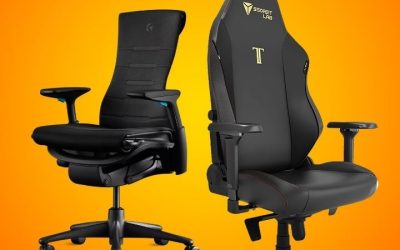
Key takeaways
- An ergonomic office chair is generally designed to adapt to different users and desk tasks; a chair advertised as orthopedic may emphasize supportive contours or a particular comfort need, but the label alone does not establish medical benefit. In an…
An ergonomic office chair is generally designed to adapt to different users and desk tasks; a chair advertised as orthopedic may emphasize supportive contours or a particular comfort need, but the label alone does not establish medical benefit. In an ergonomic vs orthopedic chair comparison, judge the actual shape, adjustments and intended use. If seating has been recommended for a health condition, ask the treating professional what functional requirements matter before relying on a retail description.
As an Amazon Associate we earn from qualifying purchases.
By KK Home Furnishings Editorial Team
Ergonomic vs Orthopedic Chair: What the Labels Mean
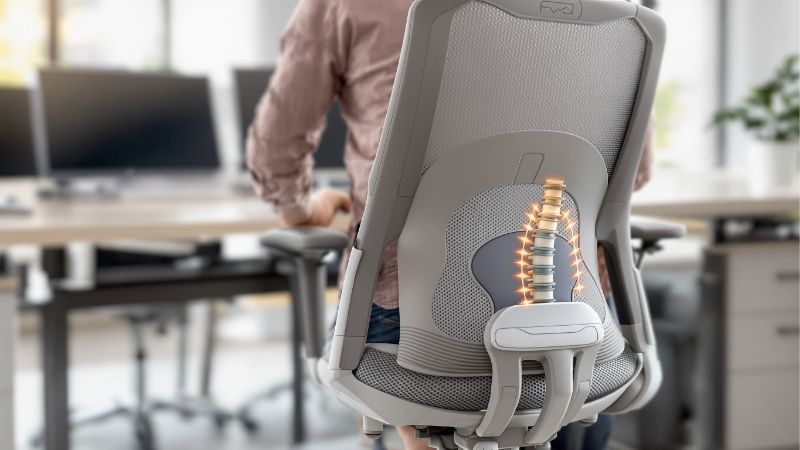
These are not two mutually exclusive chair designs. A seller may call an adjustable desk chair both ergonomic and orthopedic, while another may describe a firm, high-backed household chair as orthopedic even though it is not built for keyboard work. For this guide, an ergonomic chair means an adjustable task chair intended for office use. Orthopedic chair refers to the broader retail description, not to a standardized diagnosis or a promise of treatment. The table compares typical selling points rather than universally required features.
| Decision Factor | Ergonomic Office Chair | Orthopedic-Labeled Chair | What You Should Verify |
|---|---|---|---|
| Main design aim | Adapt seating to computer tasks and different bodies | Often marketed around targeted comfort or body support | Is the chair for desk work, household sitting or specialist use? |
| Adjustment controls | May adjust height, seat depth, arms and backrest | May be adjustable or largely fixed, depending on model | Which controls are documented on the exact listing? |
| Support description | Backrest and seat configured for individual workstation fit | May promote firmer or contoured contact surfaces | Where does the support actually touch your body? |
| Desk compatibility | Often designed for keyboard, display and foot positioning | Some models are not intended to roll under a desk | Do arm height, seat height and base match your workspace? |
| Health-related claims | Label alone does not demonstrate pain treatment | Medical-sounding name does not prove clinical effectiveness | Is a specific, independently supported claim provided? |
| Verification route | Published dimensions, controls and relevant chair testing | Same details, plus clinical input if prescribed or specialized | Check manufacturer documentation and intended user limits |
Ergonomic Describes a Fit-Oriented Design Approach
For computer work, the practical advantage of an ergonomic chair is that seat and back adjustments can help align a person with the work surface. OSHA identifies backrest, seat, armrest and base as important chair components, and notes that increased adjustability can help accommodate different users and sitting positions [OSHA, Computer Workstations: Chairs, accessed October 2026]. That is a workstation-design rationale, not an endorsement of a particular brand or a guarantee of better health outcomes.
Look beyond the number of levers. An adjustable seat can still be too high for a shorter user, and a headrest can interfere with a preferred upright position. The useful question is whether the available settings allow the feet to rest securely, the back to receive appropriate contact, and the chair to approach the keyboard without raised shoulders. Some people need several controls; others can be accommodated by a simpler model with suitable fixed proportions.
Orthopedic Is Not a Substitute for a Defined Use Case
The word orthopedic often appears in advertising for chairs, back supports and cushions, but it does not by itself tell you how the product was evaluated. One advertised orthopedic chair may be a standard office model with contoured lumbar padding. Another may be an upright household chair with a higher seat and stable arms designed to make standing up easier. The designs answer different everyday questions, so comparing labels without identifying the intended setting can mislead a buyer.
If a listing mentions a condition such as sciatica, disc problems or post-surgical recovery, distinguish a seller’s marketing language from guidance about your own situation. A comfortable cushion is not necessarily a therapeutic device, and a firm backrest is not automatically preferable to an adjustable one. Request the exact model’s specifications and any substantiation of its specific claim. When your clinician has recommended special seating, ask about required support location, sitting tolerance, transfer method and restrictions before buying.
Structural Testing Does Not Validate a Medical Promise
ANSI/BIFMA X5.1-2017(R2022) is listed for general-purpose office chairs and addresses structural and performance testing, not whether a seat fits every user or treats symptoms [BIFMA, Standards Descriptions, accessed October 2026]. The standard’s published scope explicitly distinguishes those tests from ergonomic considerations [ANSI/BIFMA X5.1, scope, accessed October 2026]. A seller’s statement that a chair meets that standard should therefore be read as a test-related claim requiring model-level documentation, not as medical certification.
This distinction cuts both ways. An orthopedic-labeled chair is not automatically less durable, and an ergonomic-labeled chair is not automatically tested. Ask which exact standard and edition the manufacturer cites, which configuration was assessed, and whether the stated chair weight rating is documented for that SKU. Separately check seat dimensions, materials and warranty. Those questions can produce a meaningful comparison even when the two advertising labels overlap completely.
Which Chair Makes Sense in Six Seating Situations?
Use the setting and practical limitation to choose an appropriate starting point. None of the situations below diagnoses a condition or establishes a medical indication for furniture. They separate ordinary office fitting from specialized seating decisions. If an orthopedic chair is presented as a condition-specific solution, the absence of model-specific evidence should count against that claim, regardless of price or appearance.
For a Full Workday at a Keyboard
Start with an adjustable office task chair because the keyboard and desk place demands on forearm position, leg clearance and seated mobility. A seat that moves up and down is useful, but seat depth and armrest interference can be just as important. A chair that holds the back comfortably yet forces the user to reach forward for the mouse is not a complete workstation solution. OSHA evaluates the chair together with monitor, keyboard and desk placement [OSHA, Computer Workstations: Chairs, accessed October 2026].
An orthopedic-labeled model can work equally well if it publishes the same usable adjustments and fits the actual work area. Conversely, a supportive-looking household seat that cannot slide under the desk may be a poor choice for typing. Test both with hands on the keyboard, not only while reclining away from the desk. The appropriate purchase is determined by demonstrated fit and task compatibility rather than which word appears more prominently on the tag.
For Someone Who Prefers a Firm, Upright Seat
Do not assume orthopedic means firmer or that firm necessarily means more supportive. Some chairs marketed for upright sitting use a higher seat, a more vertical back and substantial arms; others are plush office chairs with contoured padding. If a firm surface is your preference, examine seat-compression behavior and the shape of the contact area. A chair that feels stable for a brief conversation may not suit an extended computer session if the cushion edge presses against the thighs.
Compare seat height and the depth of the actual sitting surface, not overall product dimensions. Check whether armrests help you rise without obstructing your desk and whether a backrest is comfortable in your normal working position. This is a preference-and-use decision unless a qualified clinician has specified a support requirement. The best-feeling model in one position may not be the most adaptable when the task or user’s position changes.
For Back Discomfort Without a Specific Seating Prescription
Start by identifying the mismatch rather than buying the chair with the strongest pain-relief language. Is the seat too deep, is the lumbar bulge in the wrong place, or does the desk force raised shoulders? An adjustable model might address one of those factors. However, pain may have causes unrelated to furniture. Clinical sources emphasize changing position and staying active rather than treating any single sitting posture as something that must be held indefinitely [Cambridge University Hospitals NHS, Seating and Ergonomics, accessed October 2026].
Do not select an orthopedic-labeled chair solely because an advertisement names the discomfort you recognize. Compare its dimensions and return terms as you would for any chair. If symptoms are persistent, worsening or accompanied by other concerning signs, seek advice from a qualified health professional instead of relying on furniture marketing. A chair can be a practical adjustment to an environment; it is not a substitute for evaluating the cause of pain.
For a Person With a Clinician-Specified Seating Need
Here the useful distinction is not ergonomic versus orthopedic but ordinary retail seating versus equipment chosen to meet an individual functional requirement. A clinician or occupational therapist may specify particular seat dimensions, positioning support, transfer clearances or a different class of seating altogether. A standard task chair with added lumbar padding could be unsuitable even if it is comfortable in a store. Ask for the required characteristics in clear terms before comparing commercial products.
Do not assume a general-purpose office chair has clinical evidence for pressure management, mobility support or post-operative restrictions. Those needs require individualized assessment and sometimes specialist products, which should not be confused with a standard chair carrying an orthopedic label. The manufacturer should document intended use and any applicable limitations for its specific device. When medical instructions conflict with a generic chair-buying checklist, follow the care team’s guidance.
For a Shared Home Office or Hot-Desking Space
A conventional ergonomic task chair is often the more practical starting choice when several users need different seat heights or back positions. OSHA notes that adjustability is particularly relevant when a chair has multiple users [OSHA, Computer Workstations: Chairs, accessed October 2026]. Consider whether the shortest user can obtain stable foot support and whether the tallest user can sit against the backrest without the seat front pressing near the knees. Both should be able to reach and operate the controls.
An orthopedic-marketed chair with mostly fixed contours may feel excellent to one person but poorly fit another. If it has comparable adjustments, there may be no meaningful disadvantage. Ask each user to try the chair with the same desk and accessories rather than deciding from a photograph of the cushion shape. A shared chair is a fit-range problem; an individual support recommendation cannot automatically be generalized to everyone in the household.
For Comparing Two Listings That Promise Better Posture
Reduce the slogans to a written comparison of seat-height range, usable seat depth, backrest behavior, adjustable arm positions and specified load rating. Check for a real manual and model number, not just a diagram with arrows. An advertisement that calls its chair orthopedic because it has a cushion gives you less decision-quality information than a plain ergonomic task chair listing exact controls. The reverse can also be true if the orthopedic-labeled model documents its intended use and fittings.
Examine how much of the product can be returned after assembly and which parts are covered by warranty; unusual comfort claims are difficult to evaluate from photos. A short trial at the actual workstation provides information a category label cannot. The OSHA purchasing checklist recommends trying a chair for fit and comfort before purchase [OSHA, Computer Workstations: Purchasing Guide, accessed October 2026]. If a seller presents clinical study results, verify the exact chair model, study participants and measured outcome rather than borrowing a conclusion from an unrelated cushion.
Frequently Asked Questions
Are Orthopedic and Ergonomic Chairs the Same Thing?
Not necessarily. Ergonomic is commonly used for office seating designed to accommodate different people and tasks through appropriate proportions or adjustments. Orthopedic, in retail descriptions, may suggest targeted back support or a specific seating purpose. A chair can fit both descriptions, but neither word alone establishes a standardized bundle of features. The useful distinctions must come from the model’s actual construction and stated intended use.
Before comparing prices, first make sure the products even serve the same setting. A high-back household chair with supportive arms is not necessarily an alternative to a rolling office task chair, regardless of its label. The product manual and published seat measurements tell you more than a category headline. If the seller also asserts a health effect, ask for evidence specifically linked to that model and claim.
Will an Orthopedic Chair Automatically Fix Bad Posture?
No. A chair cannot force everyone into one universally correct posture, and a medical-sounding label does not establish an individual health benefit. Comfortable support is valuable, but a workstation also depends on the desk, display, keyboard location and opportunities to move. NHS patient guidance advises avoiding prolonged static sitting and adjusting the chair for the activity [Cambridge University Hospitals NHS, Seating and Ergonomics, accessed October 2026].
Focus on whether the chair allows you to change position and work without obvious reaching or unsupported contact. If you are seeking help for a specific diagnosis, ask an appropriate clinician about functional seating requirements. Do not use an online product description as proof that a chair can correct spinal alignment or treat a condition. That conclusion would require more than a broad furniture label.
Can a Lumbar Cushion Make a Regular Chair Suitable?
Sometimes a removable cushion can improve where the backrest contacts a user, but it does not change every dimension of a poorly sized chair. OSHA includes a removable back-support cushion as a possible temporary measure where lumbar support is absent [OSHA, Computer Workstations: Chairs, accessed October 2026]. That suggestion should not be read as a guarantee for every body shape or every source of discomfort.
Check whether the extra thickness pushes the user too far forward, leaving too little thigh support or causing the seat edge to press into the legs. Make sure a cushion stays securely positioned and does not obstruct normal chair controls. For any clinician-recommended positioning aid, use the specified configuration rather than improvising from a photograph of an orthopedic-style support.
What Should I Request From a Seller Before Buying?
Request the exact model number, usable seat dimensions, adjustment ranges, chair weight rating, intended setting and warranty terms. If the listing cites testing, ask which standard applies and whether the documentation covers the configuration you will receive. If it promises pain relief or another health outcome, ask for evidence that actually tests that claim in a relevant population rather than a general statement about good posture.
Make your return decision before assembling the chair, especially if you cannot try it locally. Ask whether the controls are accessible and whether replacement parts are available for wear items. These practical details apply regardless of which marketing label you prefer. If a clinician has supplied particular requirements, send those requirements to the seller and your care team for clarification before ordering.
Final Thoughts
An ergonomic vs orthopedic chair decision should begin with the work you do and any documented seating requirements, not the label on the carton. For ordinary desk work, compare fit and working adjustments. When specialized support is medically advised, confirm the prescribed features and intended use before choosing a retail chair.