
Key takeaways
- A useful way to find the best kettlebell routine is to plan one session you can explain from start to finish. Decide what you will practice, which bell...
What's inside
- Build a session card rather than a challenge
- Establish the squat position
- Give a second movement its own check
- Put rest inside the routine
- Product listings to compare
- Compare routine resources by their instructions
- Prepare the room for the whole session
- Record decisions that help the next session
- Additional product links
- Related reading
A useful way to find the best kettlebell routine is to plan one session you can explain from start to finish. Decide what you will practice, which bell suits that task and where you will pause. This is more practical than selecting a weight from a general label and then trying to complete every exercise printed beside it.
This guide provides practical selection and use considerations. It does not report hands-on product testing.
Build a session card rather than a challenge
Use a short written card with four headings: preparation, main movement, optional second movement and review. For example, a routine can focus on goblet-squat practice, with deadlift practice included only if its technique and loading are already suitable. This is an organizational example, not a fixed prescription for every reader.
Keep the movement choice connected to instruction you understand. An unfamiliar swing, clean or overhead sequence needs its own learning process. It should not become a last-minute substitute because the advertised routine uses equipment you do not own.
Establish the squat position
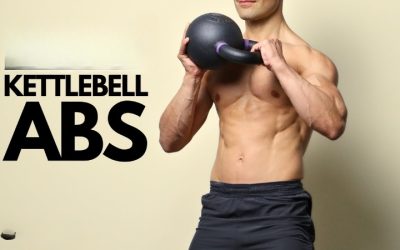
Support the bell close to your chest and brace your torso. Bend at the knees and hips while keeping a neutral back and knees tracking with the toes. Descend within your controlled range, then push through the feet to return upright.
Choose the load for that position. Being able to carry a bell from storage is not the same question as using it through the planned exercise. If the hold or movement is unfamiliar, obtain coaching before turning it into a repeated block. Keep a clear place to set the equipment down between efforts.
Give a second movement its own check
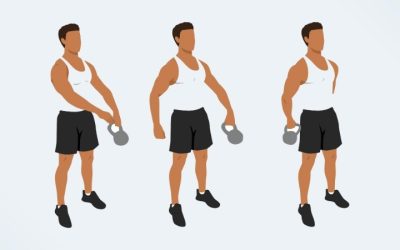
For the deadlift, begin with the bell on the floor between your feet. Hinge at the hips, grip with both hands and brace with a neutral spine. Stand by extending the hips, then reverse the hinge to lower the weight with control.
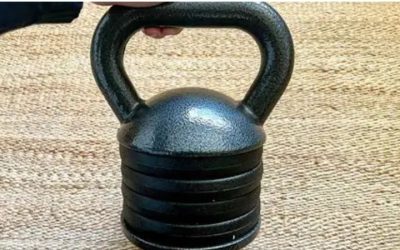
Check its starting position and load independently of the squat. The session does not become less coherent because two exercises use different equipment settings. With an adjustable bell, follow its setting and locking procedure after putting it down; do not improvise a change while moving between positions.
Put rest inside the routine
Prepare with a warm-up, then practice controlled repetitions in manageable groups with rest. Allow form to guide the work rather than forcing a target. More advanced movements come after the fundamentals are learned.
Use each pause to decide what happens next. You might repeat the same movement, finish the block or note a question for an instructor. This makes rest part of the plan rather than an interruption. A printed sequence is easier to use when it gives you permission to review instead of demanding uninterrupted motion.
Product listings to compare
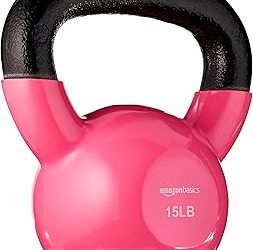
As an Amazon Associate we earn from qualifying purchases at no extra cost to you. Product prices and availability are accurate as of the date shown and are subject to change. Compare the selected variant and its current description with the requirements above.
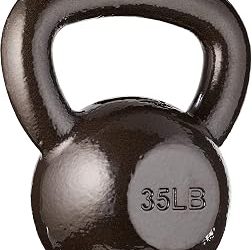
As an Amazon Associate we earn from qualifying purchases at no extra cost to you. Product prices and availability are accurate as of the date shown and are subject to change.


Compare routine resources by their instructions
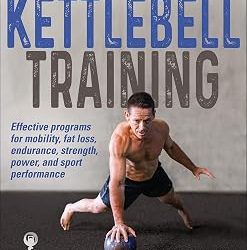
Before choosing a chart or book, inspect whether it explains how to begin and finish each movement. Consider whether the assumed experience matches yours. A resource showing many exercise names can still leave important gaps in transitions, equipment selection or progression.
Keep the resource’s role clear in your shopping notes. A printed program is not a kettlebell, and a bell does not include individual instruction simply because it is advertised alongside a workout. Buy the equipment and guidance you actually need rather than treating them as interchangeable ways to complete the setup.
Prepare the room for the whole session
Choose an appropriate surface and leave the exercise area clear of furniture and loose objects. This stationary example does not need a route for loaded walking or a swinging movement. Avoid adding those tasks simply because there is unused space at one end of the room.
Set the session card where it can be read while resting. If you use a video, preview the sequence and establish how to pause it after putting the weight down. Give the bell a suitable storage location separate from the working area, with an approach that does not require stepping over other equipment.
Record decisions that help the next session
- Which exercise and load did you use?
- Which setup detail was easy to repeat?
- What question needs instruction before continuing?
- Did changing equipment interrupt the plan?
Use the answers when deciding whether to repeat or revise the routine. Keep changes deliberate, particularly when considering a heavier bell or a new movement. An understandable session with an orderly beginning and ending is a strong foundation for home practice, without relying on a promised transformation or a one-size-fits-all weight recommendation.
Additional product links
- Start 30-Day Prime Free Trial →
- See Today’s Amazon Deals
- ▸ Try Amazon Prime — free 30-day trial
- ▸ Start an Audible Premium Plus free trial
- ▸ Read free with Kindle Unlimited
Related reading
- Best kettlebell routine
- Chris Parker
- Best Kettlebell Weight for Men: How to Pick the Right Size
- Best Kettlebell Ab Exercises: 6 Adjustable and Fixed Picks
- Best Kettlebell Core Exercises: 6 Picks for Floor Space
- Best Kettlebell Exercise for Abs: 5 Bells for Long Holds
- Best Kettlebell Ab Workout: 6 Bells Sized for Circuit Work
- Best home pull-up bar
- Best at home pull up bar
- Best in house pull up bar
- Best rated ab roller
- Best kettlebell routines
- Best Kettlebell Weight: How to Size It Plus 6 Top Picks
- Best Flooring Home Gym Owners Pick by Subfloor and Noise
- Best Jump Rope Routine Gear From First Rep to Advanced Work
Write Your Review
No reviews yet. Be the first to share your experience!