Key takeaways
- A power carpet stretcher is chosen by how far it reaches, how its head is controlled and how its pins set into the carpet, not by the longest number on the box. This guide compares four professional stretchers on reach,…
A power carpet stretcher is chosen by how far it reaches, how its head is controlled and how its pins set into the carpet, not by the longest number on the box. This guide compares four professional stretchers on reach, head movement and pin depth so stretch-in installs land tight across any room.
As an Amazon Associate we earn from qualifying purchases.
By KK Home Furnishings Editorial Team
How to Choose a Carpet Stretcher
A carpet stretcher is matched to the room and the carpet, so reach, head control and pin depth drive the choice. The Carpet and Rug Institute standard CRI 104 calls for power stretching on stretch-in installs, and a knee kicker does not replace it. These four span 23 to 38 feet of included reach with different heads.
Match Maximum Reach to the Room
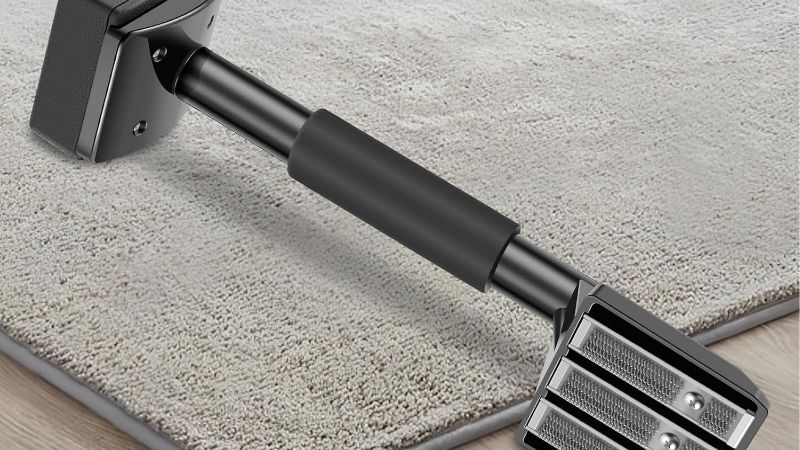
Reach sets how large a room a stretcher spans without resetting. As supplied, the Crain No. 500 and No. 520 each reach about 23 feet, while the ROBERTS Junior and Falcon both reach around 38 feet, so there are two exact ties here rather than a single longest tool.
Pick reach to suit your typical rooms. For big open spaces, the 38-foot ROBERTS kits span wall to wall in one setup, while 23 feet covers most bedrooms and smaller areas. Because reach can often be extended with additional tubes, confirm what each kit includes versus what you would buy separately for your largest jobs.
Avoid the trap of ranking tools purely on reach. The Falcon exceeds the Crain 520 by 15 feet, but that is distance, not stretching force, and more reach does not mean a harder stretch. Likewise, do not call the 520 the shortest option when the Crain 500 matches it exactly at 23 feet.
Fixed Control vs Swivel Control
Head control decides how well a stretcher works in angled or patterned rooms. The Crain No. 520 offers a 60-degree free swivel with five lock positions at straight, 15 and 30 degrees, the ROBERTS Falcon a 40-degree swivel across five positions, while the Crain No. 500 uses a fixed head.
A swiveling head lets you aim the stretch across a room that is not a simple rectangle, or to follow a pattern that must line up. For angled walls, bay windows or patterned carpet, that adjustability keeps the stretch square to the right edge, which a fixed head cannot do as cleanly.
Treat head movement as separate from reach; a wider swivel does not mean a longer or stronger stretch, just more working angles. The fixed-head Crain 500 is simpler and lighter, which suits straightforward rectangular rooms, so match the head to the shapes you install rather than assuming more swivel is always better.
Adjust Pin Depth for Carpet Construction
Pin depth must suit the carpet, not be cranked to maximum. These tools offer adjustable pins: the Crain 500 uses a knob with no screwdriver needed, and the ROBERTS kits adjust pin depth to the carpet thickness, so the pins grip the backing without tearing through a thin carpet or slipping on a thick one.
Set the pins to penetrate the carpet and grip the backing for the construction in front of you. Deeper is not automatically better; pins set too deep can damage the backing or catch the pad, while pins too shallow lose grip and let the carpet slip during the stretch, spoiling the result.
Match the setting to the carpet maker’s guidance and CRI practice, since the required stretch percentage and backing type are manufacturer-specific. A stretcher that holds its pin setting reliably across a room saves the rework that comes from slippage, so adjust deliberately rather than treating pin depth as one more thing to maximize.
Compare Tailblocks, Tubes and Carrying Cases
The tailblock, tubes and case shape how a stretcher works and travels. The Falcon includes a 44-inch tailblock expandable with two quick-release extensions, the Crain 500 packs into a single 53-pound wheeled case, and the Crain 520 uses a double case at about 59 pounds with a lever tube and extensions.
Weigh transport against capability. A single-case tool like the 500 is quicker to move between jobs, while a larger kit with more tubes and a long tailblock spans bigger rooms but takes more handling. For installers carrying gear up stairs all day, case design and weight are a real daily consideration.
Do not rank these tools by how many pieces a kit contains, since a bigger parts count does not make a better stretcher. Judge the tailblock, tube system and case on whether they suit your rooms and transport, and keep spare parts available, as a missing tube or worn pin is what sidelines a stretcher mid-install.
Top Picks
These four cover the realistic span of professional carpet stretcher buyers, from a single-case 23-foot tool to a 38-foot kit with an angled head. Each lists its reach, head type and case; all sit in the professional-tool tier, so confirm the current price and included tubes before ordering.
| Product | Best For | Key Spec | Watch Out For |
|---|---|---|---|
| ROBERTS Falcon 10-284V | Best Overall | 38-ft reach; 40° swivel; 44″ tailblock | highest price of the set |
| ROBERTS Junior 10-237V | Long straight runs | 38-ft value kit | less angle control than Falcon |
| Crain No. 500 | Single-case transport | 23-ft reach; 53 lb | fixed-head design |
| Crain No. 520 | Patterned and angled rooms | 60° swivel, 5 lock positions | 23-ft included reach |
ROBERTS Falcon 10-284V — Best Overall
The Falcon leads for its mix of reach and control. This value kit reaches about 38 feet with six three-foot extension tubes, offers a 40-degree swivel head across five positions, and includes a 44-inch tailblock expandable with two quick-release extensions. It sits at the top of the professional-tool tier.
That combination covers large rooms in one setup while still letting you angle the stretch for bays or offset walls, which a fixed head cannot. The expandable tailblock braces against a wide range of starting walls, making it a versatile single tool for an installer who sees varied room shapes rather than only rectangles.
The trade-off is cost: it is the most expensive option here, and the full kit is more to carry. Remember its 38-foot reach ties the Junior rather than beating it, and that reach is distance, not stretching force, so follow the carpet maker’s required stretch and CRI practice rather than assuming more length does more work.
ROBERTS Junior 10-237V — Best for Long Straight Runs
The Junior suits big rectangular rooms on a tighter budget. This 12-piece value kit reaches about 38 feet with six three-foot extension tubes and offers adjustable pin depth for different carpet thicknesses. It sits in the professional-tool tier below the Falcon in price.
For long, straight wall-to-wall runs it spans the same distance as the Falcon at a lower cost, making it a practical choice where rooms are mostly square. Adjustable pins let you tune grip to the carpet, so it handles a range of constructions without the extra angled-head hardware you would not use on straight work.
The limitation is angle control: it offers less angle-specific adjustment than the Falcon, so patterned or offset rooms are harder to stretch square. Treat its 38-foot figure as the included kit reach, extendable with more tubes, and match pin depth to the carpet rather than setting it deep by default.
Crain No. 500 — Best for Single-Case Transport
The Crain 500 is the pick for installers who value easy carrying. It reaches from about 37 inches up to 23 feet, with optional No. 502 tubes to extend further, and packs into a single 53-pound wheeled case with a knob-adjustable pin depth that needs no screwdriver. It sits in the professional-tool tier.
Everything travels in one wheeled case, which speeds up moving between jobs and up stairs, and the tool-free pin adjustment makes quick carpet-to-carpet changes simple. For straightforward rectangular rooms within its reach, it is a fast, no-fuss stretcher that gets set up and packed down with minimal handling.
Its main limit is the fixed head, so it is less suited to angled or patterned rooms where a swivel helps. Its 23-foot included reach ties the Crain 520 rather than trailing it, and extra tubes extend it, so size it to your rooms and add tubes for the occasional larger space.
Crain No. 520 — Best for Patterned and Angled Rooms
The Crain 520 is built for rooms that are not simple rectangles. It reaches about 23 feet as supplied, extendable with tubes, and its head offers a 60-degree free swivel with five lock positions, packing into a double case around 59 pounds with a lever tube and extensions. It sits in the professional-tool tier.
That wide swivel is its strength: on patterned carpet or angled walls it lets you aim the stretch precisely so patterns line up and edges land square. For installers who regularly face bays, diagonals or matched patterns, that control is worth more than extra reach on a plain run.
The caveats are the heavier double case and the 23-foot included reach, which matches the Crain 500 rather than the 38-foot ROBERTS kits. More swivel is not more reach or force, so pair it with extra tubes for large rooms, and follow the carpet maker’s stretch guidance rather than relying on the head angle alone.
Frequently Asked Questions
Installers and serious DIYers raise the same questions about stretchers and technique. The answers below use the published specs of these four tools and CRI practice, and avoid turning reach into a measure of force, so you can match a stretcher to your rooms and carpet before buying.
Do I need a power stretcher or just a knee kicker?
For a proper stretch-in installation you need a power stretcher, not just a knee kicker. The Carpet and Rug Institute standard CRI 104 calls for power stretching on stretch-in work, and a knee kicker is mainly for positioning and hooking the carpet, not stretching a whole room tight.
The reason is mechanical: a power stretcher braces against one wall and transmits a controlled stretch across the room through its tubes and tailblock, which a knee kicker’s short bursts cannot replicate. Relying on a kicker alone leaves carpet under-stretched, so it loosens, wrinkles and wears unevenly over time.
Use the knee kicker for its real job, tucking and positioning near edges, and the power stretcher to actually stretch and secure the field. The two are complementary tools, so for a lasting install, treat the power stretcher as essential rather than optional, following CRI practice and the carpet maker’s required stretch.
How long should a carpet stretcher be?
Match the included reach to your largest rooms. These kits span 23 to 38 feet as supplied, so a 23-foot tool suits most bedrooms and smaller areas, while 38 feet covers large open rooms in a single setup. Because extra tubes can extend most stretchers, a shorter kit plus extensions can still cover a big room, just with more setup.
Reach can usually be extended with additional tubes, so a shorter base kit plus extensions can cover a big room, just with more setup. Measure the longest wall-to-wall distance you expect to stretch and choose a tool that reaches it comfortably, allowing room to brace at both ends.
Remember that reach is distance, not stretching power, so a longer tool does not stretch harder. Size the stretcher to your rooms rather than buying the longest available, and keep extra tubes on hand for the occasional larger space, which is cheaper than owning two complete stretchers for different room sizes.
Is a swivel head useful for patterned carpet?
Yes. A swivel head helps on patterned carpet because it lets you aim the stretch along the right axis so the pattern stays square and lines up at seams. The Crain 520’s 60-degree swivel is positioned specifically for this. For plain rectangular rooms a fixed head is fine, so the swivel is a feature you buy for the work you actually do.
Patterned and angled rooms rarely let you stretch straight off a single wall, so being able to lock the head at an angle keeps the stretch aligned with the pattern rather than skewing it. A fixed head forces compromises on anything that is not a simple rectangle, which shows up as a wandering pattern.
For plain, rectangular rooms, a fixed head is perfectly adequate and simpler to use, so the swivel is a feature you buy for the work you actually do. If you regularly install patterned carpet or face angled walls, the adjustable head earns its place; if not, you can save the weight and cost.
Can I stretch carpet harder with a longer stretcher?
No. Reach and stretching force are different things, so a longer stretcher does not pull harder. A 38-foot tool simply spans more distance than a 23-foot one; the force comes from the mechanism and how you set it, not the length. The required stretch is set by the carpet’s backing, so follow the maker’s specification rather than the tool’s limit.
The required stretch is set by the carpet, not the tool, and it varies by backing and construction, which is why the carpet maker’s guidance and CRI practice matter. Over-stretching to the tool’s limit can damage carpet, while under-stretching leaves it loose, so the goal is the correct stretch, not the maximum.
Choose a stretcher that reaches your rooms and holds its pin and head settings reliably, then stretch to the manufacturer’s specification. Treating length as a proxy for power is the common mistake; the right technique and the right pin depth do far more for a tight, lasting install than extra reach ever will.
Final Thoughts
The best carpet stretcher suits your rooms and carpet, not the one with the biggest number. Size the reach to your spaces, choose a swivel head only for angled or patterned work, and set pin depth to the carpet. On that basis the Falcon leads, with the Junior, Crain 500 and Crain 520 close behind.