Key takeaways
- A dewalt vacuum can mean a compact 20V wet/dry unit or a full-size corded shop vacuum, so the right choice starts with cleanup volume, power access, and dust type. For most garages, choose the smallest tank that handles the mess…
A dewalt vacuum can mean a compact 20V wet/dry unit or a full-size corded shop vacuum, so the right choice starts with cleanup volume, power access, and dust type. For most garages, choose the smallest tank that handles the mess without constant emptying.
As an Amazon Associate we earn from qualifying purchases.
By KK Home Furnishings Editorial Team
How to Choose a DEWALT Vacuum
DEWALT currently sells wet/dry models from a 2-gallon hybrid unit to 16-gallon corded machines. That spread matters more than a single motor label because tank size changes mobility, hose size affects debris flow, and the filter determines what kind of dust the vacuum should handle.
Tank Capacity and Cleanup Scale
Tank capacity is the cleanest way to separate this lineup. The DCV581H holds 2 gallons, the DXV06P 6 gallons, the DXV09P 9 gallons, and the DXV16PA 16 gallons. DEWALT notes that listed tank volume is the physical tank size, not the usable amount available during operation. Use that figure as a scale marker.
A larger tank reduces how often you stop during big wet pickups or renovation cleanup, but it also creates a bulkier machine to roll, lift, and store. A 16-gallon body makes sense for repeated high-volume messes, while a 2-gallon unit is easier to carry between rooms or vehicles.
For a typical home workshop, the practical choice is not simply the biggest dewalt vacuum. Match capacity to the mess you create most often, then check where the machine will live. A model that blocks a narrow storage bay or stair route can be less useful than a smaller tank emptied more often.
Power Format and Working Reach
Power format changes where the vacuum is useful. The DCV581H can run from a DEWALT 20V MAX battery or AC power, while the DXV06P and DXV09P are corded with 10-foot power cords. The DXV16PA uses a listed 20-foot cord, giving it more outlet reach across a larger garage or shop. It matters when outlets are sparse.
Cordless operation is valuable when cleaning a vehicle, attic, stair landing, or unfinished space without a nearby receptacle. The tradeoff is battery ownership and charging. DEWALT sells the DCV581H as a bare tool, so buyers without a compatible pack and charger need to budget for that system separately.
For long garage sessions, corded power removes battery planning and is usually the simpler workflow. Before buying, measure from the nearest outlet to the farthest cleanup point and include the hose reach. That direct check is more useful than assuming a longer cord automatically suits every layout.
Hose Size and Included Tools
Hose dimensions affect reach and what the machine can swallow comfortably. The DCV581H uses a 5-foot, 1-1/4-inch hose, the DXV06P and DXV09P use 7-foot, 1-7/8-inch hoses, and the DXV16PA includes a 7-foot, 2-1/2-inch hose that better suits bulkier jobsite debris. It also affects adapter choices for connected tools.
The accessory bundles also differ. The three corded DXV models include extension wands, floor, utility, and crevice tools and disposable bags, while the DXV16PA adds three bags, a car nozzle, silencing muffler, and drain-hose adapter. The DCV581H keeps its kit simpler and more portable.
If the vacuum will connect to a saw, sander, or dust port, measure the tool outlet before ordering adapters. Hose diameter is not a universal fit standard across shop equipment. Buying the right adapter in advance can matter more to daily use than choosing a machine with one extra attachment.
Filtration and Fine Dust Limits
Filtration separates a general shop vacuum from a regulated dust extractor. The DCV581H includes a reusable Gore wet/dry HEPA filter, while the DXV06P, DXV09P, and DXV16PA use washable fine-dust cartridge filters for ordinary wet and dry cleanup in shops, garages, and work areas.
OSHA defines a HEPA filter as at least 99.97 percent efficient at removing 0.3-micrometer particles [OSHA, 2016]. Its silica rule can also require specified airflow and filter-cleaning features for some tasks. A cartridge-filter shop vacuum should not be treated as a compliant extractor.
For drywall dust, concrete dust, or other fine particulate, check the exact task and the filter configuration before work begins. For ordinary sawdust, chips, spills, and garage debris, the standard wet/dry models are the more direct fit. This distinction is a safety limit, not a feature ranking.
Top Picks
The four picks below are ranked by use case rather than a single winner because a 2-gallon hybrid and a 16-gallon corded machine solve different problems. The comparison table keeps tank capacity as the common Key Spec, while each H3 explains the power, hose, filter, and ownership tradeoffs.
| Product | Best For | Key Spec | Watch Out For |
|---|---|---|---|
| DEWALT DXV09P | Best For Mid-Size Cleanup | 9-gallon tank | No cordless mode |
| DEWALT DCV581H | Best For Compact Tank Jobs | 2-gallon tank | Battery and charger sold separately |
| DEWALT DXV06P | Best For Smaller Shop Cleanup | 6-gallon tank | 1-7/8-inch hose may need adapters |
| DEWALT DXV16PA | Best For Large Cleanup | 16-gallon tank | Largest tank and body here |
DXV09P – Best For Mid-Size Cleanup
The DXV09P is the mid-size pick here, but it is not the best fit for buyers who need cordless portability or maximum tank volume. Its 9-gallon tank, 5 peak-horsepower label, 10-foot cord, and 7-foot, 1-7/8-inch hose create a practical middle ground for garage and jobsite cleanup.
The DXV09P includes a washable cartridge filter, disposable bag, floor nozzle, utility nozzle, crevice tool, two extension wands, and an accessory storage bag. The reusable filter can limit routine replacement needs, while bags become a recurring supply if you prefer bagged cleanup.
At current U.S. retail in October 2026, the DXV09P sits in the budget tier among these picks. Its main limit is the 10-foot cord versus the DXV16PA’s 20-foot cord. DEWALT also states that peak horsepower is a comparison label, not the motor’s operating horsepower. It remains easy to position in a normal garage.
DCV581H – Best For Compact Tank Jobs
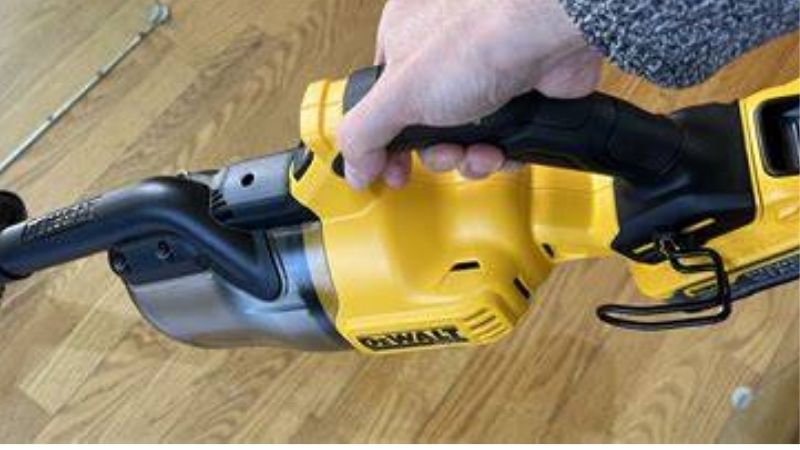
The DCV581H is the compact-tank pick, and its 2-gallon capacity limits it to smaller pickups. Its advantage is power flexibility: use a compatible 20V MAX battery where outlets are awkward, or plug it into AC power for longer work when a receptacle is within practical reach. That can help in cars and stairwells.
The DCV581H uses a 5-foot, 1-1/4-inch hose, with a crevice tool and wide nozzle stored on the unit. It also includes a washable Gore wet/dry HEPA filter. That filter helps with fine dust, but the vacuum itself is not automatically a silica-compliant dust collection system. It is still a compact cleanup tool.
At current U.S. retail in October 2026, the DCV581H sits in the mid tier here, before any battery or charger purchase. The bare-tool format is cheapest to own for someone already in DEWALT 20V MAX. The 2-gallon tank also means more stops on large wet or renovation jobs. That tradeoff favors short, mobile cleanup.
DXV06P – Best For Smaller Shop Cleanup
The DXV06P is the smaller corded shop option, with a 6-gallon tank, 4 peak-horsepower label, 10-foot power cord, and 7-foot, 1-7/8-inch hose. It is a sensible step up from the portable DCV581H when you want wheels, extension wands, and more debris capacity. The package is built around smaller, routine workshop messes.
The DXV06P’s kit covers floor and detail cleanup with a floor nozzle, utility nozzle, crevice nozzle, two extension wands, washable cartridge filter, disposable bag, and mesh accessory bag. The filter is reusable, while extra bags are a recurring supply for buyers who use them. too.
At current U.S. retail in October 2026, the DXV06P sits in the budget tier among these picks. Its compromise is a 10-foot cord and a smaller tank than the DXV09P. If both fit your storage space, the 6-gallon model makes more sense when compactness matters more than fewer emptying stops.
DXV16PA – Best For Large Cleanup
The DXV16PA is the large-cleanup pick because its 16-gallon tank is the biggest among these four. DEWALT pairs that capacity with a 6.5 peak-horsepower label, a 20-foot power cord, and a 7-foot, 2-1/2-inch hose, a package aimed at heavier workshop and jobsite cleanup. It is the clear capacity leader in this comparison.
The DXV16PA has the broadest accessory package here: three disposable filter bags, two extension wands, floor, utility, crevice, and car nozzles, a washable cartridge filter, silencing muffler, accessory bag, and hose adapter. Three included bags delay the first replacement purchase.
At current U.S. retail in October 2026, the DXV16PA sits in the premium tier among these picks. The tradeoff is bulk: a 16-gallon body is harder to carry up stairs or store under shelving. Its 20-foot cord adds reach, but the machine still depends on outlet placement. Plan a dedicated storage spot before buying.
Frequently Asked Questions
Questions about a dewalt vacuum usually come down to compatibility, filter limits, and whether a bigger tank is actually worth storing. The answers below use DEWALT’s current specifications and OSHA’s silica requirements to separate ordinary cleanup from tasks that need a dedicated dust-control setup.
Can a DEWALT wet/dry vacuum pick up water?
Yes, several DEWALT wet/dry models can handle both liquids and dry debris, including the DCV581H, DXV06P, DXV09P, and DXV16PA. Follow the manual for filter setup and emptying because wet pickup procedures can differ by model, and never use a vacuum around flammable liquids or vapors.
For liquid work, tank size matters because it sets how much material the body can physically hold before service, but DEWALT notes that rated tank volume is not the usable operating capacity. A built-in drain on the DXV corded models is more convenient than lifting a full tank to pour it out.
After a wet pickup, clean and dry the tank, hose, and filter as the manual directs before storing the machine. Leaving moisture and debris inside can create odor and clogging problems. If wet cleanup is occasional, prioritize easy draining and filter maintenance over buying the largest tank.
Is a DEWALT HEPA vacuum enough for silica dust?
No, a HEPA label alone does not make every vacuum suitable for every silica task. OSHA Table 1 [OSHA, 2016] can require a dust collector with manufacturer-specified airflow, at least 99 percent filter efficiency, and a filter-cleaning mechanism, with HEPA vacuuming specified for some cleanup steps.
The DCV581H includes a HEPA wet/dry filter, but its product page does not present it as the same class of extractor as DEWALT’s dedicated DWV or FLEXVOLT dust extractors. For concrete grinding, drilling, or tuckpointing, match the extractor to the exact tool and OSHA control method.
For ordinary garage dust, wood chips, dirt, and spills, a general wet/dry vacuum is usually the simpler choice. For regulated construction dust, check the tool manual, shroud, hose connection, extractor airflow, filter, and cleaning mechanism as one system instead of selecting by tank size alone.
What size DEWALT shop vacuum should I buy?
A larger tank is worth it when your cleanup volume regularly forces repeated emptying, not simply because the number is bigger. The 16-gallon DXV16PA suits high-volume work, while a 6- or 9-gallon model can be easier to store and roll around a typical garage without giving up a floor-cleaning accessory set.
Measure the storage footprint, doorway or stair route, and the distance from the outlet before deciding. Also think about how you will dispose of liquid from a full tank. A drain helps, but the machine still has to reach a safe discharge point, and the hose and cord need a practical storage path.
If most jobs are vehicle interiors, small spills, or quick bench cleanup, the 2-gallon DCV581H may be more useful despite its smaller capacity. If you routinely collect bulky debris or large amounts of water, the bigger corded models reduce interruptions and provide wider hoses on the largest unit.
Which DEWALT vacuum is best if I already own 20V MAX batteries?
When choosing a DEWALT vacuum, start with whether you already own compatible DEWALT batteries. The DCV581H is sold without a battery or charger, so an existing 20V MAX setup makes its cordless mode more attractive. Without that ecosystem, a corded DXV model avoids adding a separate battery and charging purchase.
Then choose tank size by the cleanup you actually do, not by the largest specification on the shelf. For a home garage, 6 or 9 gallons is often easier to move and store than 16 gallons. For mobile work, the 2-gallon hybrid is easier to carry but requires more frequent emptying. Choose around the mess, not the badge.
Finally, separate ordinary debris from fine or regulated dust. A fine-dust cartridge, a HEPA filter, and an OSHA-compliant dust-control system are not interchangeable labels. If your work creates concrete or masonry dust, verify the full tool-and-extractor combination before purchase.
Final Thoughts
Before buying a dewalt vacuum, measure the shelf or floor space where it will be stored and the farthest point from the nearest outlet, then compare those limits with tank size, cord, and hose reach. If regulated dust is part of the job, let the required dust-control system override convenience or tank capacity.