Key takeaways
- Ignoring Weight Limits: A standard wooden or thin-walled metal closet rod can sag or fail if it spans more than 4 feet (48 inches) without a center support bracket. Ensure you install a support bracket every 32 to 36 inches, especially if you are hanging heavy coats or suits.
- Forgetting Hanger Depth: Standard adult hangers are 17 to 19 inches wide. If your closet depth is less than 24 inches (22 inches is the absolute minimum), your clothes will rub against the back wall and the front closet doors, causing friction damage and preventing doors from closing smoothly.
- Improper Vertical Spacing: For a double hanging rod setup, the top rod should be installed at approximately 80 to 84 inches from the floor, and the bottom rod should be at 40 inches. Installing them too close together will cause the top garments to drape over the bottom rod, creating clutter.
- Not Planning for Long Hang Items: If you hang long dresses, trench coats, or evening gowns on a standard double-hung system, they will bunch up on the floor. Always reserve at least 12 to 18 inches of horizontal rod space with a vertical clearance of 60 to 66 inches for long garments.
What's inside
The Short Answer
The average adult needs between 3 to 5 feet (36 to 60 inches) of closet rod hanging space. If you are a minimalist or have a highly curated wardrobe, you can comfortably get by with 2 to 3 feet (24 to 36 inches). However, if you have a large collection of heavy winter coats, formal wear, or multi-season garments, you should aim for 6 to 8 feet (72 to 96 inches) of dedicated rod space.
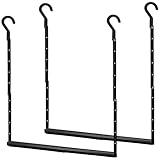
If your physical closet footprint is limited, you do not necessarily need to tear down walls to get the space you need. Many modern closets utilize vertical space-saving solutions, such as adjustable double hanging rods. High-quality metal hanging extenders can instantly double your hanging capacity for a very modest investment, typically ranging from $20 to $32, depending on the width and build quality.
As an Amazon Associate we earn from qualifying purchases at no extra cost to you. Product prices and availability are accurate as of the date shown and are subject to change.



Standard Sizes
To accurately calculate how much closet rod hanging space you need, you must understand how much physical space different garments occupy. A heavy wool winter coat requires significantly more linear space than a silk blouse. The table below outlines standard spacing requirements for common wardrobe items, including measurements in both inches and centimeters.
| Garment Type | Recommended Space Per Item (Inches) | Recommended Space Per Item (Centimeters) | Average Items Per Foot (12 inches / 30.5 cm) |
|---|---|---|---|
| T-Shirts & Blouses | 1.0″ to 1.25″ | 2.5 cm to 3.2 cm | 10 to 12 items |
| Button-Down Shirts | 1.25″ to 1.5″ | 3.2 cm to 3.8 cm | 8 to 10 items |
| Pants & Jeans (Folded over hanger) | 1.5″ to 2.0″ | 3.8 cm to 5.1 cm | 6 to 8 items |
| Suits, Blazers & Jackets | 2.0″ to 2.5″ | 5.1 cm to 6.4 cm | 5 to 6 items |
| Dresses & Long Skirts | 1.5″ to 2.0″ | 3.8 cm to 5.1 cm | 6 to 8 items |
| Heavy Winter Coats | 3.0″ to 4.0″ | 7.6 cm to 10.2 cm | 3 to 4 items |
How to Measure Your Space
Calculating your ideal closet rod setup requires a systematic approach. Follow these five steps to determine exactly how much rod space you need to build or buy:
- Audit Your Current Wardrobe: Go through your closet and count the number of items that absolutely must be hung up. Separate them into categories: shirts, pants, dresses, suits, and heavy coats.
- Calculate Linear Inches: Multiply the number of items in each category by the recommended space per item listed in the standard sizes table above. For example, if you have 30 button-down shirts, you will need 45 inches of rod space (30 items multiplied by 1.5 inches).
- Add a 10% “Breathing Room” Buffer: Never pack a closet rod completely tight. Overpacked rods cause clothes to wrinkle, make it difficult to browse your wardrobe, and can cause standard hangers to tangle. Multiply your total calculated inches by 1.10 to allow for proper airflow.
- Measure Your Physical Closet Width: Use a standard tape measure to determine the usable horizontal wall-to-wall distance of your current closet. Keep in mind that corner spaces in L-shaped closets often have “dead space” where hangers overlap.
- Optimize Vertically: If your calculated horizontal requirement exceeds your physical closet width, look upward. If your ceiling height is at least 8 feet (96 inches), you can install a double rod system. An adjustable hanging extender, such as the Simple Houseware Adjustable Closet Hanging Rod (priced around $19.87) or a heavy-duty STORAGE MANIAC 2-Pack Black Adjustable Rod system (priced around $31.99), suspends directly from your existing rod to immediately create a secondary hanging tier for shirts and folded pants.
By Room or Use Case
The amount of closet rod space you need varies drastically depending on who is using the closet and where it is located in the home. As we look ahead to design trends in 2026, smart home organization heavily emphasizes tailoring storage to specific spatial use cases.
Master Bedroom Closet
The master bedroom closet is the most demanding space in the house. For a single adult, aim for 5 to 8 feet (60 to 96 inches) of total hanging space. If the closet is shared between two partners, you will need at least 10 to 16 feet (120 to 192 inches) of total rod space. To make this manageable within standard walk-in or reach-in footprints, divide the space into “double hang” zones (two rods stacked vertically for shirts and pants) and “single hang” zones (one high rod for long dresses, coats, and jumpsuits).
Guest Bedroom Closet
Guest closets are typically underutilized or serve as overflow storage. For actual guest use, 3 feet (36 inches) of hanging space is more than enough. You can keep this area highly versatile by installing a temporary or semi-permanent hanging rod extender, such as the Supforce Hanging Closet Rod with Side Hooks (priced around $28.99). This allows you to scale down the hanging space for guests while utilizing the side hooks for bags, hats, or umbrellas when the room is vacant.
Entryway & Mudroom Coat Closet
Entryway closets are dedicated to bulky outerwear. Because winter coats require 3 to 4 inches of space per item, a standard 3-foot (36-inch) rod in a coat closet will only hold about 9 to 12 heavy coats. If you have a large family, you will need to supplement this space with wall-mounted hooks or off-season coat storage in another room.
Kids’ Closets
Children’s clothing is short, meaning you can easily fit three tiers of hanging rods in a standard closet if you use adjustable systems. Kids grow quickly, so their storage needs to adapt. Using adjustable double rod packs, like the STORAGE MANIAC Hanging Closet Rod 2-Pack in Chrome (priced around $28.49), allows you to lower the hanging bar so toddlers can reach their own clothes, and then raise or remove it as they grow into adult-sized garments.
Common Sizing Mistakes
Avoid these frequent design and organization pitfalls when planning your closet rod layout:
- Ignoring Weight Limits: A standard wooden or thin-walled metal closet rod can sag or fail if it spans more than 4 feet (48 inches) without a center support bracket. Ensure you install a support bracket every 32 to 36 inches, especially if you are hanging heavy coats or suits.
- Forgetting Hanger Depth: Standard adult hangers are 17 to 19 inches wide. If your closet depth is less than 24 inches (22 inches is the absolute minimum), your clothes will rub against the back wall and the front closet doors, causing friction damage and preventing doors from closing smoothly.
- Improper Vertical Spacing: For a double hanging rod setup, the top rod should be installed at approximately 80 to 84 inches from the floor, and the bottom rod should be at 40 inches. Installing them too close together will cause the top garments to drape over the bottom rod, creating clutter.
- Not Planning for Long Hang Items: If you hang long dresses, trench coats, or evening gowns on a standard double-hung system, they will bunch up on the floor. Always reserve at least 12 to 18 inches of horizontal rod space with a vertical clearance of 60 to 66 inches for long garments.
FAQ
How many hangers fit on a 36-inch closet rod?
On a standard 36-inch (3-foot) closet rod, you can comfortably fit about 28 to 36 t-shirts or button-down shirts. If you are hanging thicker items like suits or heavy wool jackets, you will only be able to fit about 14 to 18 blazers, or 9 to 12 heavy winter coats.
What is the ideal depth for a closet with a hanging rod?
The ideal depth for a standard reach-in or walk-in closet is 24 inches (61 cm). This depth ensures that standard 17-to-19-inch hangers, along with the sleeves of suits and coats, do not brush against the back wall or get caught in sliding, bi-fold, or hinged closet doors.
Can I double my closet hanging space without drilling?
Yes. You can easily double your hanging space without drilling or permanent installation by using an adjustable, hook-on hanging closet extender. These units feature heavy-duty straps or metal chains that loop over your existing closet rod, suspending a second horizontal bar below. High-quality double-rod adjusters typically cost between $20 and $32.
How much weight can a standard closet rod hold?
A standard heavy-duty steel closet rod supported by brackets every 3 feet can comfortably support 40 to 60 pounds per linear foot. Wooden dowel rods (usually 1-5/16 inches in diameter) can hold similar weight but are more prone to bowing over time if not supported by center brackets.