Key takeaways
- Creating Stacks That Are Too Tall: It is tempting to space shelves 16 to 18 inches apart to fit more clothes per shelf. However, stacks of folded clothes that exceed 12 inches in height almost always lean, slide, and fall over, leading to a messy closet and wrinkled clothes. Keep your stacks under 10 inches tall.
- Using Fixed Shelving Throughout: Our wardrobes change. If you install fixed wooden shelves, you lose the ability to adapt your closet for winter sweaters versus summer t-shirts. Always try to incorporate adjustable shelf pins or track systems.
- Forgetting About Shelf Depth: Shelf depth and shelf height go hand-in-hand. If your shelves are deep (16 to 18 inches) but the vertical spacing is narrow (under 10 inches), it becomes very difficult to reach items stored in the back row. For deep shelves, increase the vertical gap slightly to 12 inches to allow your hands to navigate the depth.
- Ignoring Ergonomics: Placing shelves with narrow 8-inch gaps at the very bottom of your closet forces you to squat and struggle to see what is inside. Keep narrow shelf gaps at eye level, and use wider gaps or pull-out baskets near the floor.
What's inside
The Short Answer
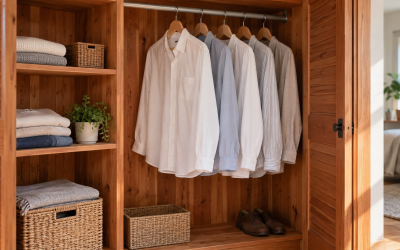
The standard distance between closet shelves for folded clothes is 10 to 12 inches (25 to 30 cm). This spacing is widely considered the ergonomic sweet spot for home storage. A 10-to-12-inch gap allows you to comfortably stack four to six folded t-shirts, sweaters, or pairs of jeans without the stack becoming unstable, tipping over, or crushing the garments at the bottom.
If you are storing exceptionally bulky items, such as heavy winter knits, hoodies, or thick denim, you should increase this spacing to 12 to 15 inches (30 to 38 cm). Conversely, for lightweight activewear, children’s clothing, or undergarments, a tighter spacing of 8 to 10 inches (20 to 25 cm) prevents wasted vertical space. The key is to leave at least 2 to 3 inches of clearance between the top of your clothing stack and the shelf above it so you can easily slide your hands in to retrieve or put away items.
As an Amazon Associate we earn from qualifying purchases at no extra cost to you. Product prices and availability are accurate as of the date shown and are subject to change.


Standard Sizes
When planning a custom closet or adjusting a modular shelving system, a one-size-fits-all approach can lead to disorganized piles or wasted vertical gaps. Different fabrics and fold styles require different vertical clearances. Below is a detailed breakdown of the ideal shelf distances and stack heights for various clothing categories:
| Garment/Item Type | Recommended Shelf Distance (Inches) | Recommended Shelf Distance (cm) | Ideal Stack Height (Items per Stack) |
|---|---|---|---|
| T-Shirts, Polos, & Activewear | 8″ – 10″ | 20 – 25 cm | 6 – 8 shirts |
| Sweaters, Hoodies, & Cardigans | 12″ – 15″ | 30 – 38 cm | 3 – 4 sweaters |
| Jeans & Heavy Trousers | 10″ – 12″ | 25 – 30 cm | 4 – 5 pairs |
| Pajamas & Loungewear | 8″ – 10″ | 20 – 25 cm | 5 – 6 sets |
| Undergarments & Socks (in Bins) | 6″ – 8″ | 15 – 20 cm | N/A (Single layer of bins) |
| Bed Linens & Bath Towels | 12″ – 16″ | 30 – 41 cm | 3 – 4 sets / 4 – 6 towels |
If your current closet features fixed, wide shelves that you cannot easily adjust, you can retrofit your space using aftermarket organizers to achieve these target heights. For example, the Yociyoga 4-Tier Stackable Closet Organizers and Storage Shelves (a patented, foldable metal wire system priced around $31.99) can sit on a wide shelf to instantly divide a large 16-inch opening into highly functional, smaller compartments.
How to Measure Your Space
To design an efficient closet layout, you must measure your physical space and account for the actual footprint of your wardrobe. Follow these steps to determine the perfect shelf placement:
- Measure Your Total Vertical Wall Space: Use a steel measuring tape to find the height of your closet wall from the floor to the ceiling. Note any obstructions like baseboards, crown molding, or access panels.
- Identify Your “Prime Real Estate” Zone: The most comfortable zone to reach without bending down or standing on a stool is between 30 inches and 72 inches from the floor. Reserve this vertical window for your daily-wear folded clothes, placing the shelves at standard 10-to-12-inch intervals here.
- Account for Shelf Thickness: Do not just measure the gaps between the shelves; remember to factor in the actual thickness of the shelving material. Solid wood or MDF shelves are typically 3/4 inch to 1 inch thick, while wire shelving is much thinner (about 1/4 inch). Neglecting this thickness can result in your final shelf gap being smaller than planned.
- Measure Your Folded Clothes: Take a typical stack of five t-shirts and five of your thickest sweaters from your current wardrobe. Measure the height of these stacks. This gives you a personalized baseline for how much vertical clearance you actually need.
- Calculate the Number of Shelves: Divide your available vertical space by your desired shelf interval (including shelf thickness) to determine how many shelves you can realistically fit. For example, a 48-inch vertical section can comfortably hold four shelves spaced 11 inches apart (assuming 1-inch thick shelves).
By Room or Use Case
Closet configurations should adapt to the specific needs of the room and the person using the space. Here is how to apply standard shelving distances across different areas of the home:
Master Closet
In a master closet, versatility is key. As we look at modern closet design trends heading into 2026, adjustable track systems remain the gold standard because they allow you to customize heights as your wardrobe changes through the seasons. For folded clothes, aim for a mix of 10-inch gaps for t-shirts and knitwear, and 14-inch gaps for seasonal sweaters and handbags. Incorporating shelf dividers can also help keep tall stacks of denim perfectly upright.
Kids’ and Nursery Closets
Children’s clothes are significantly smaller and lighter than adult garments. In a nursery or kid’s closet, a standard 10-to-12-inch shelf gap often results in wasted vertical space, or forces you to stack clothes dangerously high. Instead, opt for tighter shelf spacing of 6 to 8 inches. Lightweight, hanging organizers are highly effective here because they scale down the storage. The VERONLY Hanging Closet Organizer with Bamboo Shelves (priced at $15.99) provides sturdy, reinforced fabric shelves that are perfectly sized for small baby clothes, onesies, and swaddles without bowing under the weight.
Linen Closet
Linen closets require much larger spacing than standard clothing closets. Heavy bath towels, bulky comforters, and sheet sets need breathing room to prevent musty odors. Set your linen shelves 12 to 16 inches apart. If you are storing extra-thick down comforters or guest pillows on the very top shelf, allocate at least 18 to 20 inches of vertical clearance.
Small or Rental Closets
If you live in a rental property with basic wire shelving or a single high wooden shelf, drilling holes to install custom built-ins is often out of the question. You can maximize your vertical space using temporary hanging systems. A simple 3-shelf unit like the YOUDENOVA Hanging Closet Organizer (priced at $12.98) hangs directly from your existing closet rod, giving you instant, pre-spaced 8-to-10-inch compartments for folded sweaters. For deeper closets, a sturdier option like the 4″ Extra Deeper Foldable Hanging Closet Organizer with 5 S Hooks (priced at $38.99) utilizes deep metal wire baskets to prevent your folded clothes from spilling off the sides.
Common Sizing Mistakes
Avoid these frequent design pitfalls to ensure your closet remains highly functional over time:
- Creating Stacks That Are Too Tall: It is tempting to space shelves 16 to 18 inches apart to fit more clothes per shelf. However, stacks of folded clothes that exceed 12 inches in height almost always lean, slide, and fall over, leading to a messy closet and wrinkled clothes. Keep your stacks under 10 inches tall.
- Using Fixed Shelving Throughout: Our wardrobes change. If you install fixed wooden shelves, you lose the ability to adapt your closet for winter sweaters versus summer t-shirts. Always try to incorporate adjustable shelf pins or track systems.
- Forgetting About Shelf Depth: Shelf depth and shelf height go hand-in-hand. If your shelves are deep (16 to 18 inches) but the vertical spacing is narrow (under 10 inches), it becomes very difficult to reach items stored in the back row. For deep shelves, increase the vertical gap slightly to 12 inches to allow your hands to navigate the depth.
- Ignoring Ergonomics: Placing shelves with narrow 8-inch gaps at the very bottom of your closet forces you to squat and struggle to see what is inside. Keep narrow shelf gaps at eye level, and use wider gaps or pull-out baskets near the floor.
FAQ
What is the standard depth for closet shelves?
The standard depth for closet shelves holding folded clothes is 12 to 14 inches (30 to 35 cm). This depth perfectly matches the folded footprint of standard adult shirts and pants. Shelves shallower than 12 inches may cause sleeves or pant legs to hang off the edge, while shelves deeper than 16 inches often lead to clothes getting lost in the back, unless you use pull-out drawers or bins.
How high should the top shelf in a closet be?
The standard height for the highest shelf in a reach-in or walk-in closet is 84 inches (213 cm) from the floor. This height leaves enough vertical clearance below it for standard hanging rods (typically mounted at 80 inches) and places the shelf within reach for a person of average height using a small step stool. This top shelf is ideal for seasonal storage, luggage, or extra bedding.
Are wire shelves better than solid wood shelves for folded clothes?
Both materials have pros and cons. Wire shelves are highly affordable, lightweight, and promote excellent airflow, which keeps clothes smelling fresh. However, thin wire grates can leave unsightly indentation marks on delicate knits and lightweight t-shirts. Solid wood or MDF shelves provide a perfectly flat, stable surface that prevents clothes from snagging, though they are more expensive and heavier to install.
How do you prevent folded clothes from falling over on wide shelves?
If you have wide shelves with no natural physical barriers, you can prevent stacks from toppling by using acrylic or metal shelf dividers, fabric storage bins, or stackable wire baskets. Keeping your stack heights under 8 to 10 inches also naturally lowers the center of gravity, preventing the clothes from sliding or leaning.