Key takeaways
- Depth: Standard clothing hangers require at least 21 inches of depth to hang straight without brushing against the closet doors. Most wooden closet organizer towers are designed with a depth of 12 inches, 14 inches, or 16 inches. A 12-inch deep tower is excellent for tight reach-in closets because it keeps shelves shallow and accessible, but your hanging rods must be offset or extended forward. A 14-inch to 16-inch depth is the industry sweet spot, allowing sweaters and shoes to sit comfortably without hanging over the edge.
- Hanging Clearances: For double-hanging rods (shirts, jackets, folded pants), you need a minimum vertical clearance of 80 inches. This allows for two levels of hanging space, each measuring roughly 38 to 40 inches from the rod to the floor or lower shelf. For single-hanging items like long dresses, coats, or jumpsuits, you require a vertical drop of 60 to 70 inches.
- Width Tolerances: If you are buying an expandable system that spans from 6 to 15 feet, never design your layout to the absolute maximum limit. Wood and metal rods lose structural integrity when fully extended. If a kit says it extends up to 15 feet, it is best used at 12 or 13 feet to ensure the hanging rods do not bow under a full load of heavy winter coats.
What's inside
- Decide These 3 Things First
- Size and Fit: The Golden Rules of Closet Dimensions
- Material Composition: Solid, Veneer, or Laminate?
- Construction and Hardware Quality
- Modularity and Adaptability
- Price Tiers: What You Get for Your Money
- Assembly, Delivery, and Wall Anchoring
- Spec Checklist
- Red Flags to Avoid When Shopping
- FAQ
- Related Guides
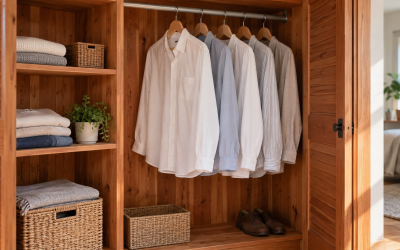
Most homeowners approach buying a closet organizer backward. They fall in love with a gorgeous photo of a pristine, white-painted wooden walk-in on social media, measure only the back wall, and hit “buy.” It is only during assembly that the harsh realities set in: the drawers block the closet door from opening, the cheap paper laminate starts peeling under the humidity of a master bathroom-adjacent closet, and the shelves begin to sag under the weight of heavy winter sweaters.
- Decide These 3 Things First
- Size and Fit: The Golden Rules of Closet Dimensions
- Material Composition: Solid, Veneer, or Laminate?
- Construction and Hardware Quality
- Modularity and Adaptability
- Price Tiers: What You Get for Your Money
- Assembly, Delivery, and Wall Anchoring
- Spec Checklist
- Red Flags to Avoid When Shopping
- FAQ
- Related Guides
A wooden closet organizer is a significant investment, both financially and in terms of installation labor. Whether you are dealing with a compact reach-in or a spacious walk-in, choosing the wrong materials or configuration will lead to bowed shelves, jammed drawers, and wasted space. To help you avoid these costly mistakes, this guide cuts through the marketing jargon to show you what actually matters when shopping for a wooden closet organizer in 2026.
As an Amazon Associate we earn from qualifying purchases at no extra cost to you. Product prices and availability are accurate as of the date shown and are subject to change.


Decide These 3 Things First
Before comparing finishes or counting shoe cubbies, you must make three fundamental decisions that will instantly filter out 80% of the options on the market.
1. Freestanding vs. Wall-Suspended
Freestanding systems sit directly on the floor and are anchored to the wall at the top for safety. They are highly stable, can handle immense weight, and work well in rental properties or homes with older plaster walls where finding sturdy studs is difficult. Wall-suspended systems hang from a heavy-duty steel top rail mounted directly into your wall studs. They keep the floor completely clear, making it easier to vacuum and store shoes underneath, but they require precise, secure installation into structural framing.
2. Solid Wood/Plywood vs. Engineered Wood
This choice dictates both your budget and the system’s lifespan. Solid wood (like pine, cedar, or hardwood) and high-grade birch plywood are incredibly durable and hold screws tightly, but they are expensive. Engineered wood (such as Medium-Density Fiberboard, or MDF, and particleboard) is flat, uniform, and cost-effective. However, low-density particleboard is prone to sagging and swelling in humid environments. If you choose engineered wood, ensure it has a high-density core and a durable melamine or wood veneer coating rather than a cheap paper foil wrap.
3. Fixed Kits vs. Modular/Adjustable Systems
A fixed kit has pre-determined shelf heights and rod placements. While often cheaper and easier to install, it leaves zero room for error or future changes. A modular system uses panels pre-drilled with holes (typically spaced at the industry-standard 32mm interval), allowing you to move shelves, swap out hanging rods, or add drawers as your wardrobe evolves over the years.
Size and Fit: The Golden Rules of Closet Dimensions
The single biggest mistake buyers make is failing to account for the physical footprint of their clothing. Your closet organizer must fit your space, but it also must fit your garments. Here are the critical dimensions you must measure:
- Depth: Standard clothing hangers require at least 21 inches of depth to hang straight without brushing against the closet doors. Most wooden closet organizer towers are designed with a depth of 12 inches, 14 inches, or 16 inches. A 12-inch deep tower is excellent for tight reach-in closets because it keeps shelves shallow and accessible, but your hanging rods must be offset or extended forward. A 14-inch to 16-inch depth is the industry sweet spot, allowing sweaters and shoes to sit comfortably without hanging over the edge.
- Hanging Clearances: For double-hanging rods (shirts, jackets, folded pants), you need a minimum vertical clearance of 80 inches. This allows for two levels of hanging space, each measuring roughly 38 to 40 inches from the rod to the floor or lower shelf. For single-hanging items like long dresses, coats, or jumpsuits, you require a vertical drop of 60 to 70 inches.
- Width Tolerances: If you are buying an expandable system that spans from 6 to 15 feet, never design your layout to the absolute maximum limit. Wood and metal rods lose structural integrity when fully extended. If a kit says it extends up to 15 feet, it is best used at 12 or 13 feet to ensure the hanging rods do not bow under a full load of heavy winter coats.
Material Composition: Solid, Veneer, or Laminate?
The term “wooden” is used loosely in the furniture industry. To get what you pay for, you must understand the four primary material tiers:
- Solid Hardwood or Cedar: The gold standard. Solid cedar is naturally aromatic, repels insects, and resists moisture. Solid hardwoods like birch or maple offer unmatched strength. Expect a solid wood shelf to support 75 to 100 pounds per linear foot without bowing.
- Furniture-Grade Plywood: Made from thin layers of wood glued together in alternating grain directions. Plywood is incredibly strong, resists warping from humidity, and holds screws better than any engineered wood. It is usually finished with a real wood veneer.
- MDF with Melamine: Medium-Density Fiberboard is denser and heavier than particleboard. When sealed with a high-pressure melamine laminate, it is highly scratch-resistant, easy to wipe clean, and structurally sound. A 3/4-inch thick MDF shelf can comfortably support 40 to 50 pounds.
- Particleboard with Paper Foil: Found in ultra-budget organizers. This material is highly susceptible to moisture damage. If the paper foil scratches or peels, the exposed particleboard core will absorb humidity from nearby bathrooms and swell, crumble, or sag under weights as low as 15 to 20 pounds.
Construction and Hardware Quality
A wooden organizer is only as good as the hardware holding it together. When reviewing product specifications, pay close attention to the joinery and moving parts:
- Drawer Glides: Avoid friction-fit wood-on-wood drawers or cheap plastic roller tracks. Look for full-extension, ball-bearing metal drawer glides. Premium systems feature soft-close mechanisms that prevent drawers from slamming and shaking the entire organizer tower.
- Connection Systems: High-quality flat-pack wooden organizers use heavy-duty steel cam-lock systems, dowels, and pocket screws. Avoid systems that rely solely on thin wood screws driven directly into raw particleboard, as these will strip out easily during assembly or if you ever try to move the unit.
- Hanging Rods: While the frame is wood, the hanging rods should be metal. Look for heavy-gauge steel or anodized aluminum rods with a wall thickness of at least 1.2mm (around 18-gauge). Avoid thin-walled steel or plastic-coated rods, which will bend under a standard load of denim or heavy jackets.
Modularity and Adaptability
Your wardrobe in five years will not look the same as your wardrobe today. A great wooden organizer adapts to those changes. Look for towers that feature full-height line boring—a vertical column of pre-drilled holes spaced 32mm apart. This allows you to easily raise or lower shelves, convert a hanging section into a stack of drawers, or add shoe cubbies without drilling new holes and risking splitting the wood.
Furthermore, check if the manufacturer sells individual components. Budget brands often sell complete, static kits but do not offer extra shelves, drawers, or rods separately. If you buy a kit and realize you need two more shelves, you might be out of luck. Mid-range and premium brands sell individual add-ons, allowing you to customize your layout over time.
Price Tiers: What You Get for Your Money
Understanding what you get at different price points prevents overpaying or setting unrealistic expectations for cheap units.
- Budget ($15 to $100): In this tier, you will find small, specialized wooden organizers rather than full closet systems. This includes stackable 3-tier to 4-tier bamboo shoe racks, small wooden countertop shelves, or basic metal-and-wood hybrid modular shelves. These units are excellent for filling specific gaps in a walk-in or organizing small entryways, but they do not provide integrated hanging rods or drawer systems.
- Mid-Range ($100 to $350): This is the most popular category for DIY home improvement. In this price range, you can purchase complete, freestanding or wall-mounted engineered wood systems with built-in drawers, adjustable shelves, and expandable hanging rods. Materials are typically laminated MDF or particleboard. Systems in this range are functional, sturdy when anchored properly, and offer a built-in look on a budget.
- Premium ($350 to $1,500+): At this level, you are buying furniture-grade plywood, solid wood, or thick, high-density MDF finished with genuine wood veneers. These systems feature soft-close drawers, solid metal hardware, integrated LED lighting channels, backing panels that cover your drywall, and extensive modular customization options. They look and feel like high-end, professionally installed custom closets.
Assembly, Delivery, and Wall Anchoring
Do not underestimate the logistics of buying a wooden closet organizer. Solid wood and high-density MDF are incredibly heavy. A full closet kit can arrive in multiple flat-pack boxes weighing anywhere from 50 to over 150 pounds total.
Ensure you have a clear, flat workspace to assemble the components. For installation, a stud finder, a bubble level, and a power drill are mandatory. If you are installing a wall-mounted system, the suspension rail must be screwed directly into your wall studs with heavy-duty lag screws. For freestanding systems, never skip installing the tip-over restraint kits. A loaded wooden tower is top-heavy; pulling open a fully loaded drawer can cause the entire unit to tip forward if it is not secured to a stud.
Spec Checklist
Use this quick reference table to compare specifications across different price tiers before making your final purchase:
| Feature | Budget Tier ($15 – $100) | Mid-Range Tier ($100 – $350) | Premium Tier ($350 – $1,500+) |
|---|---|---|---|
| Primary Materials | Bamboo, thin pine, lightweight MDF, metal frames | Laminated MDF, high-density particleboard | Solid hardwood, birch plywood, real wood veneer |
| Average Shelf Depth | 11 to 12 inches | 12 to 14 inches | 14 to 16+ inches |
| Weight Capacity per Shelf | 15 to 25 lbs | 35 to 50 lbs | 75 to 100+ lbs |
| Drawer Hardware | N/A (or basic wood-on-wood slides) | Standard ball-bearing metal glides | Full-extension, soft-close undermount glides |
| Modularity | Fixed or stackable only | Semi-adjustable (pre-drilled sections) | Fully modular (full line boring, interchangeable parts) |
| Hanging Rods | N/A (or lightweight aluminum) | Expandable chrome or steel rods | Heavy-gauge custom-cut steel or brass rods |
Red Flags to Avoid When Shopping
When browsing online reviews or examining a display model in a store, watch out for these warning signs of poor quality:
- Unfinished Back Edges: Pull out a drawer or look at the back of a shelf panel. If the edges of the engineered wood are left raw and exposed, the manufacturer cut corners. These raw edges will absorb moisture from the air, leading to swelling and mold growth.
- Paper-Thin Drawer Bottoms: Many budget and mid-range units use a flimsy, 3mm-thick piece of hardboard or cardboard for the drawer bottom, held in place by a shallow groove. If you load these drawers with heavy jeans or sweaters, the bottom will eventually bow and pop out of its track. Look for drawer bottoms that are at least 1/4-inch thick and reinforced with support wood blocks.
- Rods Longer Than 40 Inches Without Support: If a system features a hanging rod that spans more than 40 inches without a center support bracket or an intermediate vertical panel, it will sag. Metal rods loaded with clothes require structural support every 36 to 40 inches.
- Non-Standard Hardware: Avoid systems that use proprietary, non-standard shelf pins or drawer glides. If a plastic peg breaks five years from now and the manufacturer has gone out of business, you will have a difficult time finding replacement hardware at your local home improvement store. Look for systems that use standard 5mm shelf pins.
FAQ
Should I choose wall-mounted or freestanding wooden organizers?
If you have older plaster-and-lath walls, metal studs, or live in a rental property where drilling heavy lag screws is prohibited, go with a freestanding system. They distribute their weight onto the floor and only require simple drywall anchors at the top to prevent tipping. If you want a clean, modern aesthetic, have standard wood studs, and want to keep your closet floor completely clear for easy cleaning and shoe storage, choose a wall-suspended system.
How do I prevent wooden closet shelves from sagging?
First, respect the weight limits of your specific material. Do not load cheap particleboard shelves with heavy stacks of books or jeans. Second, ensure your shelves have adequate support. For spans wider than 30 inches, shelves should be supported by a center vertical divider, or reinforced along the back edge with a wood cleat. If you have existing shelves that are beginning to bow, you can flip them over to let gravity work in reverse, or add a metal stiffener channel to the front edge.
Is bamboo a good material for closet organizers?
Yes, bamboo is an excellent material, particularly for budget and mid-range closet accessories like shoe racks and drawer dividers. It is highly sustainable, naturally water-resistant, and has a tensile strength comparable to steel. However, because bamboo is made of laminated grass strips rather than solid timber logs, it is rarely used for full-scale, heavy-duty wardrobe towers or hanging wall systems.
How deep should my wooden closet organizer be?
For most standard wardrobes, a depth of 14 inches is the ideal balance. It is deep enough to prevent folded sweaters, jeans, and shoes from hanging over the front edge, yet shallow enough to fit comfortably inside a standard 24-inch deep reach-in closet without obstructing the movement of hanging clothes on the adjacent rods. Only opt for 16-inch (or deeper) systems if you have a spacious walk-in closet or plan to store bulky bedding and storage boxes.