Key takeaways
- A true leaf blower and vacuum cordless tool has to do three jobs well: blow, vacuum, and mulch. That means reading CFM and MPH as separate figures and judging the vacuum workflow and bag, not just picking the highest airflow…
A true leaf blower and vacuum cordless tool has to do three jobs well: blow, vacuum, and mulch. That means reading CFM and MPH as separate figures and judging the vacuum workflow and bag, not just picking the highest airflow number printed on the box.
How to Choose a Cordless Blower-Vacuum
Judge a cordless blower-vacuum on confirmed dual function first, then its CFM and MPH as distinct figures, its mulch ratio, and its battery and bag. The vacuum and mulching side is the whole point of this category, so weigh how well a tool collects and shreds leaves, not just how hard it blows them.
Confirm the Vacuum Function
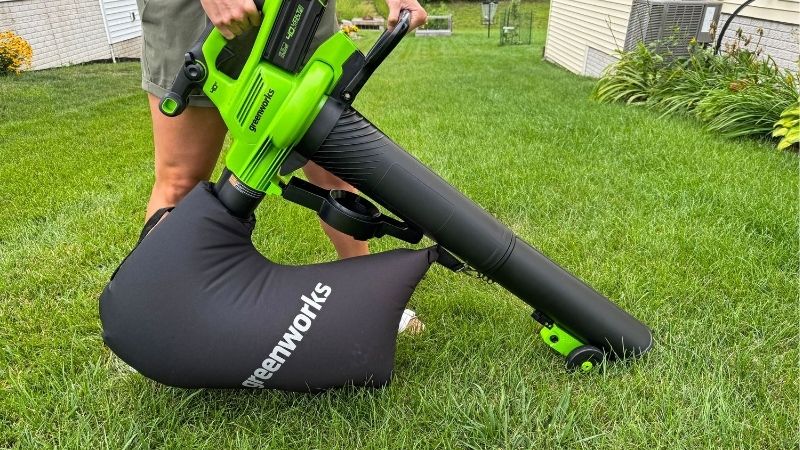
The first check is that the tool genuinely vacuums and mulches, not just blows, since many cordless blowers do only one job. All four here confirm dual function: the EGO LV5005, WORX WG583, Greenworks BL40L02, and RYOBI RY404150 each blow and vacuum with mulching, which is what the keyword actually calls for.
A blower-only tool is cheaper but leaves you raking and bagging by hand, so confirming the vacuum and mulch function is what separates these from a simple blower. If a listing is vague about collection, treat it as blow-only until proven otherwise, because converting between modes and bagging is the workflow you are buying.
Check how the tool switches between blow and vacuum modes, since some require swapping tubes or attaching a bag, which affects how quickly you can move through a yard. The smoother the mode change, the more you will actually use both functions rather than defaulting to blowing piles you then collect some other way.
CFM and MPH Together
Airflow is described by two different figures that do different jobs, so read both. CFM is the volume of air moved, which matters for shifting big piles and for vacuuming, while MPH is the air speed, which matters for dislodging stuck debris; a tool can be high in one and modest in the other.
The spread here shows why: EGO lists 500 CFM at 210 MPH, Greenworks 505 CFM at 230 MPH, WORX 340 CFM at 210 MPH, and RYOBI 600 CFM at 100 MPH, all manufacturer-stated. The RYOBI moves the most air by volume but at a much lower speed, which suits vacuuming and mulching more than blasting wet, packed leaves.
Do not treat a high CFM as if it were also high MPH, since they are separate mechanisms: volume carries leaves away and speed breaks them loose. Match the balance to your yard, favoring higher MPH for stuck or damp debris and higher CFM for clearing and vacuuming large volumes of dry leaves.
Mulch Ratio and Impeller
The mulch ratio tells you how much the tool shreds collected leaves, which decides how often you empty the bag. RYOBI lists a 20:1 mulch ratio, EGO lists 16:1, and WORX and Greenworks list 12:1, all manufacturer-stated, meaning the higher-ratio tools pack far more shredded leaves into each bagful before you stop.
A higher mulch ratio like RYOBI’s 20:1 reduces the number of trips to the compost or bin, since twenty bags of loose leaves compress toward one bag of mulch. For a large, leafy yard that is a real time saver, while a smaller yard may not notice the difference between 12:1 and 20:1 as much.
Mulching quality depends on the impeller, and feeding stones or sticks can damage it, so the ratio assumes you vacuum appropriate debris. Keep hard objects out of the intake to protect the impeller, and treat the mulch ratio as a figure for dry leaves rather than a promise for every kind of yard waste.
Battery, Bag, and Weight
Battery, bag size, and weight shape how long and how comfortably you can work. EGO includes a 6Ah battery and lists runtime up to 90 minutes on low or 15 on high with a 40-liter bag, while WORX runs on a 2-by-20V 4Ah pack with a one-bushel bag and Greenworks lists 30 minutes of runtime.
Importantly, battery amp-hours do not equal runtime: a higher-Ah pack stores more energy, but how long it lasts depends on the mode and load, which is why EGO states very different figures for low and high power. Do not infer runtime from Ah alone; use the maker’s stated runtime at a stated mode instead.
Bag size affects how often you empty, and weight affects fatigue over a long session, so weigh both against your yard. A larger bag and a comfortable weight matter for big jobs, while a lighter tool suits quick cleanups; match the battery platform, too, if you already own compatible tools from the same brand.
Best Cordless Blower-Vacuum Combos
Each pick below leads with its CFM and MPH as separate figures, its mulch ratio, and its battery and runtime where stated, so you can match it to your yard. Remember runtime depends on mode, not just battery size, and check the current price at the retailer before you buy any of these tools.
| Product | Best For | Key Spec | Watch Out For |
|---|---|---|---|
| EGO LV5005 | Best overall combo | 500 CFM/210 MPH; 16:1 mulch; 40 L bag; 90 min low/15 high | High-power runtime is short |
| RYOBI RY404150 | Best mulching and volume | 600 CFM/100 MPH; 20:1 mulch; 2×40V 4Ah kit | Lowest MPH for stuck debris |
| Greenworks BL40L02 | Best airflow value | 505 CFM/230 MPH; 12:1 mulch; 30 min runtime | Lower mulch ratio; fuller bag |
| WORX WG583 | Best lighter-duty combo | 340 CFM/210 MPH; 12:1 mulch; 2×20V 4Ah; 1 bushel | Lowest CFM for big piles |
EGO LV5005
The EGO LV5005 is the balanced overall pick, listing 500 CFM at 210 MPH, a 16:1 mulch ratio, a 40-liter bag, and runtime up to 90 minutes on low or 15 on high with an included 6Ah battery. That mix of strong airflow, solid mulching, and a large collection bag handles most suburban yards well.
The included battery and generous bag reduce the two usual friction points of cordless tools, while the 16:1 mulch ratio keeps bag trips reasonable. For a typical suburban yard that needs real blow-and-vacuum capability without jumping to a specialist tool, the EGO covers all three jobs competently out of the box.
The caveat is that runtime drops sharply at full power, from up to 90 minutes on low to about 15 on high, so plan the mode to the task. Keep a spare battery for big jobs on high, feed only appropriate debris to protect the impeller, and check the current price at the retailer before buying.
RYOBI RY404150
The RYOBI RY404150 is the mulching and volume specialist, listing 600 CFM at 100 MPH, the highest 20:1 mulch ratio here, and shipping as a kit with two 40V 4Ah batteries. The combination of high air volume and aggressive mulching makes it the pick for collecting and shredding large quantities of dry leaves.
That 20:1 ratio means far fewer trips to empty the bag, which is a real advantage on a big, leafy property, and the high CFM moves and vacuums volume effectively. For a yard where the main job is hauling and shredding leaves rather than blasting them off pavement, it is the standout choice.
The trade-off is its low 100 MPH air speed, the weakest here, so it struggles more with stuck or damp debris that higher-MPH tools dislodge. Use it as the collector it is, pair it with raking for packed leaves if needed, and check the current price at the retailer before buying this high-volume kit.
Greenworks BL40L02
The Greenworks BL40L02 is the airflow value pick, listing 505 CFM at 230 MPH, the highest air speed here, with a 12:1 mulch ratio and 30 minutes of stated runtime on its 40V platform. The strong CFM-and-MPH combination makes it effective at both moving piles and dislodging stuck debris.
Leading on MPH means it handles damp or packed leaves better than the lower-speed options, and the high CFM still moves good volume, so it is a capable all-rounder for clearing. For a yard with a mix of loose and stuck debris, the balanced high airflow is its clear selling point among these tools.
The trade-off is the lower 12:1 mulch ratio, which fills the bag faster than the EGO or RYOBI, and a stated 30-minute runtime that suits medium jobs. Expect more emptying trips on big leaf loads, confirm the runtime fits your yard, and check the current price at the retailer before deciding.
WORX WG583
The WORX WG583 is the lighter-duty combo, listing 340 CFM at 210 MPH, a 12:1 mulch ratio, and a one-bushel bag on a 2-by-20V 4Ah platform. Its more modest airflow suits smaller yards and quicker cleanups where a heavier, higher-output tool would be more than the job actually requires.
Running on the common 20V battery platform makes it attractive if you already own compatible WORX tools, letting batteries do double duty. For a compact property or lighter seasonal cleanup, its lower output is a sensible match rather than a shortcoming, and the bushel bag handles reasonable loads for that scale.
The limitation is its 340 CFM, the lowest here, so it struggles with large piles compared with the 500-plus CFM tools. Match it to a smaller yard, lean on the 210 MPH speed for stuck bits, and and check the current price at the retailer before buying this lighter-duty combo for your yard.
Blower Versus Vacuum Mode
Getting the most from a combo tool means using each mode for what it does best. Knowing when to blow piles, when to vacuum dry leaves, what to keep out of the intake, and how to manage the bag turns a dual-function tool into a genuinely faster way to clear a leafy yard, season after season.
Blow Piles First
Use blow mode to gather scattered leaves into piles before you vacuum, since blowing is far faster for covering ground. A higher-MPH tool like the Greenworks at 230 MPH dislodges leaves stuck to grass or pavement, while high CFM pushes loose leaves into a pile you can then collect efficiently.
Blowing into a corner or onto a tarp consolidates the work, so the vacuum step handles a concentrated pile rather than a whole lawn. This two-step approach plays to each mode’s strength, using the blower’s reach and speed to do the gathering and reserving the vacuum for collection and mulching.
Work with the wind rather than against it, and aim for the edges of a pile to keep it together. Spending a few minutes blowing efficiently before switching to vacuum saves time overall, since vacuuming a tidy pile is far quicker than chasing individual leaves across an open yard with the collection tube.
Vacuum Dry Leaves
Vacuum mode works best on dry leaves, which feed smoothly through the impeller and mulch cleanly into the bag. Wet or matted leaves clog the intake and mulch poorly, so time your vacuuming for dry conditions where the mulch ratio, like RYOBI’s 20:1, actually delivers the bag savings it promises.
Feed the vacuum steadily rather than plunging it into a thick pile, letting the airflow draw leaves in without jamming the tube. A high-CFM tool like the RYOBI pulls volume well, but even the best vacuum bogs down if you overwhelm the intake, so a measured pace keeps leaves flowing and mulching consistently.
Dry conditions also protect the tool, since wet debris strains the motor and fouls the bag. Save vacuuming for a dry day after you have blown the leaves into piles, and the collection-and-mulch step goes quickly, which is where the combo tool earns its keep over a plain blower and a rake.
Avoid Stones and Hard Debris
Keep stones, sticks, and hard objects out of the vacuum intake, since they can damage the impeller that does the mulching. The mulch ratios here assume leaves and soft yard waste, so vacuuming gravel or acorns risks chipping or jamming the impeller and voiding the benefit the tool is built around.
Before vacuuming near beds, driveways, or gravel, clear or avoid hard debris, and watch what the intake draws in as you work. A moment of care protects an expensive component, since impeller damage is one of the most common and avoidable failures on a blower-vacuum used carelessly around hard material.
If your yard mixes leaves with gravel or mulch beds, blow those areas clear rather than vacuuming them, and vacuum only the lawn and clean surfaces. Matching the mode to the surface keeps the impeller intact and the mulch ratio meaningful, which is central to getting long life from the vacuum function.
Empty the Bag
Managing the bag is part of the workflow, so empty it before it is completely packed, since an overfull bag cuts airflow and mulching performance. Bag size and mulch ratio together set the cadence: a 40-liter bag at 16:1 like the EGO goes longer between empties than a one-bushel bag at 12:1.
A higher mulch ratio means the bag holds far more shredded material before filling, which is why RYOBI’s 20:1 reduces trips most on a leafy yard. Plan your emptying stops near the compost or bin so the breaks are quick, and the collection step keeps its pace rather than stalling on full-bag trips across the yard.
Shredded leaves also make excellent mulch or compost, so emptying the bag can feed your garden rather than just filling bags. Using the mulched output rather than discarding it is a quiet bonus of a blower-vacuum, turning the leaf blower and vacuum cordless tool into part of the yard’s cycle rather than just a cleanup device.
Final Thoughts
The best leaf blower and vacuum cordless tool matches its CFM, MPH, and mulch ratio to your yard, read as separate figures rather than one headline number. Compare the EGO, RYOBI, Greenworks, and WORX on airflow, mulching, and stated runtime at a given mode, remember amp-hours are not runtime, protect the impeller, and check the current price.