Key takeaways
- The ryobi 1800 psi pressure washer people search for is the RY141802, an electric unit rated 1800 PSI at 1.2 GPM. This guide audits its real numbers — pressure, flow and the 120-volt, 13-amp load it draws — and explains…
The ryobi 1800 psi pressure washer people search for is the RY141802, an electric unit rated 1800 PSI at 1.2 GPM. This guide audits its real numbers — pressure, flow and the 120-volt, 13-amp load it draws — and explains where an 1800 PSI electric washer fits and what to match in any alternative.
As an Amazon Associate we earn from qualifying purchases.
By KK Home Furnishings Editorial Team
How to Choose an 1800 PSI Electric Washer
An 1800 PSI electric washer is a light-duty tool for cars, patios, outdoor furniture and grime, not driveways or paint prep. The honest spec is pressure and flow together, plus the electrical load it needs. Four things decide the buy: pressure and flow, the electrical draw, hose and cord reach, and safe use.
Read Pressure and Flow Together
Pressure loosens dirt; flow rinses it, and both are modest here. The RYOBI RY141802 is rated 1800 PSI at 1.2 GPM as a PWMA maximum, which suits light cleaning. That 1.2 GPM is the number that sets how fast it rinses, and it is low by design, so this class is for gentler jobs than a gas machine.
Match the pair to the task. At 1800 PSI and 1.2 GPM, this handles a car, patio furniture, bikes and light siding, but it will be slow on a long driveway or heavy mildew. If your list is mostly heavy outdoor grime, a higher-flow machine fits better; for everyday light cleaning, this output is enough on its own.
Resist chasing the pressure number alone. More PSI on a car’s paint or soft trim can mark it, so the right tip and distance matter more than the figure. In this class, the low flow is the real limit on speed, not the pressure, so judge an 1800 PSI washer by what it cleans well, not by the headline number.
Mind the Electrical Load
An electric washer draws real current, and the RY141802 runs on 120 volts at 13 amps, about 1,560 watts of input. That input is electrical power drawn from the outlet — not the cleaning output, which is set by pressure and flow. Confusing the two overstates what the machine does, so keep input and output separate.
Thirteen amps is close to a standard 15-amp circuit’s working limit, so plug it directly into a grounded outlet, not a light extension cord that drops voltage. Avoid sharing the circuit with other heavy loads. The machine ships with a GFCI cord for wet-use safety, which should be plugged straight into the wall outlet.
Voltage drop is the quiet performance killer on electric washers. A long, thin extension cord starves the motor and can trip the breaker, so use the built-in GFCI cord and move the machine, not add cord. If you need more reach, add hose length instead, which does not affect the motor the way a bad cord does.
Check Hose and Cord Reach
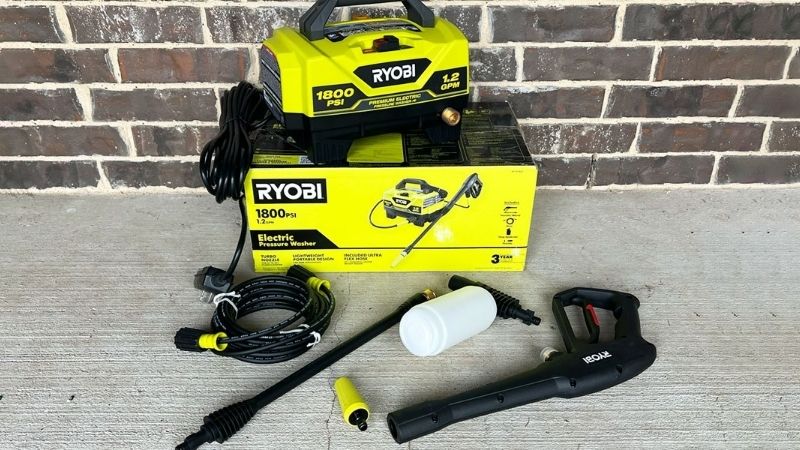
Reach comes from the hose and the cord together. The RY141802 includes a 20-foot pressure hose and a 35-foot GFCI power cord, so your working radius is set by the cord to the outlet plus the hose from the machine. Plan where the nearest grounded outlet is before assuming the washer reaches a far corner.
Think about the layout of the job. A driveway far from an outlet may exceed the cord, and a light 16-pound unit is easy to carry closer rather than stretching the cord. Add hose length for more reach from the machine, but keep the power cord plugged straight into the wall for the full rated draw at the motor.
Hoses and couplers are the consumables. A quarter-inch hose and standard fittings are cheaper to extend and replace than proprietary ones, and the GFCI plug is a safety part to keep intact — never bypass it. Store the hose and cord loosely coiled out of the sun, since UV and kinks shorten the life of both.
Use an Electric Washer Safely
Even at 1800 PSI, the spray can injure, so treat it as a real tool. The stream can break skin and strip soft finishes, so start with a wider tip at a distance and keep the wand away from people, pets and windows. Electric washers are quieter than gas but no gentler at the nozzle, so technique still matters.
Keep electricity and water apart. Use the GFCI cord plugged into a grounded outlet, keep connections off the ground and out of puddles, and never cut or bypass the GFCI. Operate on a dry footing where you can, and stop if the breaker trips rather than forcing it, since that signals an electrical fault to fix.
Match the tip to the surface to avoid damage. A narrow tip concentrates force and can etch wood or mark a car, so use a wider angle on delicate surfaces and test a hidden spot first. In this class the bigger risk is a slow job done impatiently with too narrow a tip, which marks the surface you meant to clean.
RYOBI 1800 PSI: What You Get
The RY141802 is the model behind the search, so here is its full picture and how to weigh a same-class alternative. The table lists its verified specs; because competitors vary, the other rows show what to match rather than invented rival numbers. It leans on manufacturer-stated specs and a tier — confirm the price.
| Product | Best For | Key Spec | Watch Out For |
|---|---|---|---|
| RYOBI RY141802 | Best for the RYOBI 1800 PSI search | 1800 PSI / 1.2 GPM; 120V/13A | Light-duty; slow on big jobs |
| Any 1800 PSI electric washer | Match on flow (GPM) | ~1.2 GPM class here | Low GPM means slow rinsing |
| Any 1800 PSI electric washer | Match on cord and hose | 35 ft cord; 20 ft hose here | Short reach needs repositioning |
| Any 1800 PSI electric washer | Match on weight | 16 lb here | Heavier units are less portable |
RYOBI RY141802: What the 1800 PSI Model Delivers
The RY141802 is a light-duty electric washer rated 1800 PSI at 1.2 GPM, drawing 120 volts at 13 amps, and weighing about 16 pounds. It reads budget tier for an electric washer; prices move, so confirm the current price and that it is the RY141802, since RYOBI uses similar names across its washer line.
It suits cars, patio furniture, bikes, grills and light siding — the everyday cleaning an apartment or small home needs. The light 16-pound body is easy to carry and store, and the electric motor is quiet and starts instantly. Plan the job near a grounded outlet, since the cord reach sets where it can work.
Its limits are the flow and the duty: 1.2 GPM rinses slowly, so big driveways and heavy mildew are tedious, and electric motors are not made for all-day commercial runs. Treat it as a homeowner’s light-duty tool. Keep the GFCI cord intact, store it out of freezing damp, and confirm RYOBI stocks hose and seals.
Matching Flow in an Alternative
If you compare another 1800 PSI electric washer, match it on flow first. Flow, in GPM, sets rinse speed, and this class clusters near the RY141802’s 1.2 GPM. A rival quoting a similar pressure but lower flow will rinse slower; one with meaningfully higher flow may be the better light-duty pick for larger areas.
Confirm the flow is a comparable rating, since makers may quote different standards. A PWMA maximum, as RYOBI uses, is not always the same basis as another brand’s figure, so compare like with like. For most light home jobs the small flow differences in this class matter less than the cord and the weight.
Treat any alternative’s numbers as manufacturer-stated until you confirm them, and do not assume a higher pressure means faster cleaning — flow and technique decide that. The sensible comparison is flow at a comparable standard, plus how each handles the jobs you actually have, not the largest pressure number on the box.
Matching Reach: Cord and Hose
Reach is where electric washers differ in practice. The RY141802 pairs a 35-foot GFCI power cord with a 20-foot hose, so an alternative with a shorter cord or hose will need repositioning more often. Add the cord and hose reach together, and check it against the distance from your outlet to the far corner of the job.
Prefer a machine whose power cord plugs straight into the wall and whose hose uses standard fittings you can extend. Extending the hose is safe; extending the power cord with a thin line starves the motor, so reach should come from hose length and moving the unit, not from a long extension cord that drops voltage.
Check that an alternative keeps its GFCI plug and standard couplers, since those are the safety and serviceability points. A machine with proprietary fittings costs more to keep running. The light weight here, about 16 pounds, is part of the reach story too, since a unit you can easily carry closer needs less cord.
Matching Portability and Duty
Weight and duty round out the comparison. At about 16 pounds, the RY141802 is easy to carry and store, which suits apartments and small sheds; a heavier alternative is harder to move to the job. For light, intermittent use any of this class is fine, but none is built for continuous, all-day commercial cleaning.
Match an alternative on how and where you will store and use it. A compact, light electric washer wins for occasional home jobs and tight storage; if you need more power or longer runs, you are really shopping a higher tier, not another 1800 PSI unit. Decide by the jobs and the storage, not the brand badge alone.
Whatever you compare, confirm the maker sells wear parts — hose, seals, and the GFCI cord — since those are what keep any electric washer going. Store it drained and out of freezing damp, as trapped water can crack a pump. A serviceable, well-stored light-duty washer outlasts a slightly cheaper one you cannot repair.
Frequently Asked Questions
Buyers of an 1800 PSI electric washer ask the same practical things: whether it is powerful enough, what it can clean, whether the wattage is the output, and whether it needs a special outlet. The answers below use the RY141802’s verified numbers rather than marketing shorthand about raw power.
Is 1800 PSI Enough for Home Use?
For light cleaning, yes. 1800 PSI at about 1.2 GPM handles cars, patio furniture, bikes, grills and light siding well. It is not enough for fast driveway cleaning or heavy paint prep, where flow especially falls short. So the answer depends on your list: light and frequent, yes; heavy and large, step up a class.
The limit you will feel is flow, not pressure. At 1.2 GPM, big flat areas rinse slowly, which is tedious rather than impossible. For most apartment and small-home jobs that is a fair trade for a light, quiet, plug-in machine, but match the tool to the surfaces you clean most before deciding it is enough.
If your needs are mixed, this covers the frequent light jobs while a rented higher-flow machine handles the occasional driveway. Buying up to a gas unit for rare heavy use often means storing and maintaining more machine than you need, so size to the common task, not the rare one, when money is tight.
What Can an 1800 PSI Washer Clean?
Light to moderate outdoor cleaning. Cars and bikes, patio and garden furniture, grills, bins, fences and light siding all suit 1800 PSI at this flow, using a wider tip on delicate surfaces. Heavy driveway grime, thick mildew and paint prep are beyond its comfort zone, where the low flow makes the job slow.
Use the right tip and distance for each surface. A narrow tip concentrates force and can mark a car or etch wood, so start wide and close in, testing a hidden spot on anything delicate. The machine’s gentleness relative to gas is an advantage on cars and furniture, provided you still control the nozzle.
For anything you are unsure about, test first and keep the spray moving, since even 1800 PSI held in one place can lift finish. If a surface needs more than this class gives, a cleaning solution and a brush often beat forcing the washer, which protects the surface and saves the slow, repeated passes low flow needs.
Is 1,560 Watts the Cleaning Power?
No. The 120-volt, 13-amp draw is about 1,560 watts of electrical input the machine pulls from the outlet, not its cleaning output. Cleaning power comes from pressure and flow — 1800 PSI at 1.2 GPM here — which are separate figures. A higher wattage does not automatically mean more cleaning, so do not equate them.
Input watts mainly matter for the circuit: at 13 amps the machine is a heavy single load, so plug it directly into a grounded outlet and avoid sharing it with other big draws. Judge cleaning ability by pressure and flow and the jobs they suit, and judge the electrical side by the circuit and cord, which are different questions.
This distinction trips up spec comparisons: a rival quoting higher watts is not necessarily cleaning harder. Compare pressure and flow for output, and the amp draw for electrical fit, keeping the two apart. The honest read of an electric washer is its hydraulic rating, with wattage as a wiring and safety consideration.
Does It Need a Special Outlet?
A standard grounded 120-volt household outlet, ideally on its own 15-amp circuit, is enough. At 13 amps the washer is close to a 15-amp circuit’s working limit, so avoid sharing it with other heavy appliances. Plug the GFCI cord straight into the wall rather than through a light extension cord that drops voltage.
The built-in GFCI cord provides the wet-use protection, so never bypass or cut it, and keep plugs out of puddles. If the breaker trips, move to a less-loaded circuit rather than forcing it. No special wiring is needed, just a sound grounded outlet and sensible circuit use, which most garages and patios already have.
For reach, remember to extend the hose, not the power cord, since a long thin extension starves the motor and can trip the breaker. If the nearest outlet is far, carry the light machine closer and run more hose. That keeps the full rated draw at the motor and the GFCI protection intact where it belongs.
Final Thoughts
The ryobi 1800 psi pressure washer, the RY141802, is a light-duty electric tool rated 1800 PSI at 1.2 GPM for cars, patios and furniture, not driveways. Judge it and any alternative by flow and reach, not the pressure number or the wattage, and plug the GFCI cord straight into a grounded outlet rather than a thin extension.