Key takeaways
- The triangle under a staircase is rarely one neat space, so the best storage ideas for under stairs divide it into shallow, medium and tall zones based on real measurements rather than forcing a single large cabinet into an awkward…
The triangle under a staircase is rarely one neat space, so the best storage ideas for under stairs divide it into shallow, medium and tall zones based on real measurements rather than forcing a single large cabinet into an awkward wedge. The eight ideas below start with quick, measured fixes and build toward larger projects.
As an Amazon Associate we earn from qualifying purchases.
By KK Home Furnishings Editorial Team
Quick, Space-Efficient Under-Stair Storage Ideas
The fastest wins under a staircase come from matching off-the-shelf pieces to the part of the void where they actually fit. These four ideas work the low-to-middle height of the wedge, pairing real product dimensions with finishes that keep the result looking intentional rather than like leftover storage shoved into a gap.
| Idea | Space or Size Needed | Cost Tier | Effort and Time |
|---|---|---|---|
| Shallow shoe cabinets | ~7 in deep at low end | Budget | Low; wall-mount |
| Open shelves up the line | ~15.75 in system depth | Budget to mid | Medium; anchored |
| Oak-effect shelving | ~15.75 in deep | Budget to mid | Medium |
| Mesh baskets | ~6 in tall baskets | Budget | Low; add to rail |
| Mixed open-and-closed wall | Full measured void | Mid | High; planned build |
| Tall coat zone | High end only | Budget to mid | Medium |
| Deep pull-out storage | Deep zone; slide room | Mid to high | High; custom |
| Enclose as a closet | Whole cavity | High | High; code check |
Add Shallow Shoe Cabinets at the Low End
Where the ceiling drops to its lowest, a shallow wall cabinet makes use of space too tight for shelving of any real depth. The IKEA TRONES, at 20.5 inches wide, 7.125 deep and 15.375 tall, is a real example of how little depth this zone needs, tilting out to hold shoes against a wall that could not take a deeper unit at all.
Its clean, white polypropylene-style face keeps the low end looking tidy rather than crammed, and units stack or line up along the stair line. Treat the 7.125-inch depth as an example of what fits a very shallow zone, not a fixed rule, and measure your own clear height at several points along it.
Run Open Shelves Up the Stair Line
As the ceiling rises, open shelving uses the growing height without boxing the space in or darkening it. The IKEA BOAXEL system, at about 31.5 inches wide with a 15.75-inch system depth, mounts to the wall and lets you set shelf heights to follow the rising underside of the stairs rather than a fixed, factory grid.
A white metal finish reads utilitarian and bright, which suits a hallway or mudroom under the stairs, and open shelves keep everyday items in reach. Follow the system’s installation guidance for fixings and spacing, since an anchored rail carries its load through the wall and needs solid fixings to do so safely.
Use Oak-Effect Shelving for a Warmer Finish
If the under-stair area sits in a living space rather than a utility zone, a warmer finish helps it blend into the room. BOAXEL oak-effect shelves, at 31.5 by 15.75 inches with a published shelf load of about 70 pounds, swap the bare metal look for a wood tone while keeping the same adjustable rail system behind them.
The warmer surface pairs well with books, baskets and decor, letting the storage read as part of the room instead of a utility rack. Keep loads within the roughly 70-pound shelf rating and spread weight evenly, since oak-effect particleboard shelves bow over time if one shelf is routinely overloaded.
Add Mesh Baskets for Small Loose Items
Loose items like gloves, chargers and pet supplies disappear on open shelves, which is exactly where baskets earn their place in the mix. A BOAXEL mesh basket, at about 31.5 by 15.75 by 5.875 inches, slots into the same rail system and corrals small things without hiding them completely behind a solid, opaque front.
The open mesh keeps contents visible and lets you see what is inside at a glance, which suits a busy entry tucked under the stairs. Add baskets to the zones you reach into most, and mix them with shelves above so the eye-level space stays open while the everyday clutter drops neatly into the basket layer below.
Bigger-Impact Under-Stair Storage Ideas
The larger projects under a staircase trade quick setup for a more finished, built-in result that reads as part of the house. These four ideas combine materials and, in the last case, cross into construction, so they reward careful measurement and, where the work affects the enclosure, a check against your local building rules.
Build a Mixed Open-and-Closed Storage Wall
Combining open shelves with closed cabinets gives a storage wall that both displays and hides, which suits the varied clutter a home accumulates. Pair an oak-effect shelf run with opaque cabinet fronts, sizing every element to the measured void rather than to a standard width the slope will not accept.
The mix lets you show books and decor up top while concealing less tidy items behind doors below the line. Because no two staircases match, lock each section to your own width, depth and clear height at that exact point, and keep the finishes consistent so the wall reads as one designed piece rather than assorted leftovers.
Create a Tall Coat Zone at the High End
The tall end of the void, nearest the top of the stairs, is the only place a hanging rail fits, so reserve it for coats. BOAXEL rail modules come in sizes such as 23.625 and 31.5 inches, letting you set a rail only where the hanging length actually clears the rising ceiling above it rather than everywhere along the run.
A coat zone here turns otherwise dead vertical height into daily-use storage right by the entry. Measure the clear height before fitting any rail, since a coat needs real vertical room to hang without dragging on the floor, and place the rail only in the section tall enough to take it rather than forcing it under the slope.
Turn the Deep Zone Into Pull-Out Storage
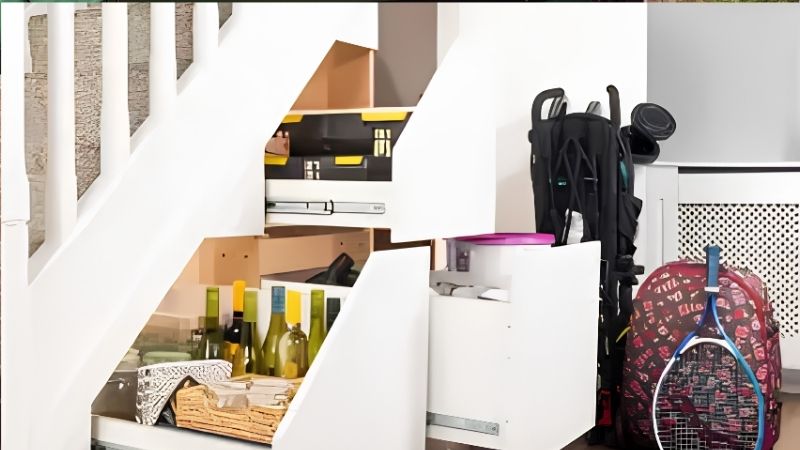
The deepest part of the void swallows items pushed to the back, which is exactly why pull-out drawers suit it so well. Custom drawers sized to the actual depth bring the contents out to you, but the slide clearance they need follows the chosen hardware maker’s specification rather than any universal, made-up allowance on a blog.
Pull-outs make a deep wedge genuinely usable for bulky, infrequently reached items like luggage and seasonal gear. Size the drawers to your measured depth and follow the runner maker’s clearance and load guidance, since undersized slides bind and overloaded ones eventually fail and stick.
Enclose the Cavity as a Closet
The most involved idea closes the void into a proper closet with a door or access panel. Where an under-stair space is enclosed and accessed this way, the 2021 IRC R302.7 references protecting the enclosed side with half-inch gypsum board, though the requirement depends on the edition your area has adopted [ICC, 2021].
That makes enclosing the cavity a building task, not just a decor project, so separate furniture installation from structural work. Before cutting into any framing or enclosing the space, verify local code and bring in a qualified professional, since the protection rules exist for fire safety rather than appearance.
Frequently Asked Questions
Most questions about this space come down to measuring carefully and to knowing where decor ends and construction begins. These answers keep the guidance tied to real dimensions from the ideas above and to the building rules that start to apply once the void is fully enclosed as a room.
How do I measure under-stair storage?
Measure three things: the usable width, the usable depth and the clear height at several points, since the ceiling slopes the whole way. A single measurement will mislead you, so record the height at the low end, the middle and the tall end before choosing any piece or committing to a build.
There is no one-size formula for the volume, because stair geometry, the stringer and how you access the space all change what is usable. Work zone by zone from your own numbers rather than from a generic triangle, and shop each piece to the specific part of the void it will actually occupy in the end.
How shallow can under-stair storage be?
Shallower than most shelving, as the low end of the wedge clearly shows once you measure it. The IKEA TRONES, at 7.125 inches deep, is a real example of a unit built for a very shallow zone, holding shoes neatly where a standard shelf would not physically fit against the wall at all.
Treat that figure as an example rather than a fixed threshold, since your own lowest clear height may differ from it. The point is that the shallowest part of the void still earns its keep with the right shallow-depth piece, rather than being written off as unusable dead space you simply learn to ignore.
Can I build cabinets directly under stairs?
Installing freestanding or wall-mounted furniture is one thing; building into the structure itself is quite another. Placing a shelf system or cabinet against the wall stays firmly within decor, while enclosing the cavity or altering any framing crosses clearly into the territory of construction and building work.
If you enclose and access the space as a closet, the 2021 IRC R302.7 references half-inch gypsum protection, subject to local adoption [ICC, 2021]. For anything touching framing, verify the rules that apply where you live and involve a qualified professional rather than treating it as a casual weekend decor job.
Are open shelves or closed cabinets better?
Neither is universally better; they simply solve two different problems under the stairs. Open shelves give visual access and keep the space feeling light and reachable, while closed cabinets hide clutter and present a calmer, tidier face in a living area where the storage is on constant show.
Choose based on what the space holds and how it reads from the room, and let the material and finish follow the surrounding decor. A mix often works best of all, with open shelving where you want display and closed storage exactly where keeping things tidy and out of sight matters most.
Final Thoughts
The most useful storage ideas for under stairs start from the tape measure, not the shop: shallow units like the TRONES at the low end, adjustable BOAXEL shelving up the stair line, baskets for loose items, a coat rail at the tall end and pull-outs in the deep zone, with enclosure left to a code check and a professional.