A freestanding wardrobe cabinet only solves a storage problem if it actually fits the room, the doors clear nearby furniture, and it is secured to the wall. This guide compares four current units on footprint, door mechanism and hanging layout so you can match one to your space rather than your mood board.
As an Amazon Associate we earn from qualifying purchases.
By KK Home Furnishings Editorial Team
How to Choose a Wardrobe Cabinet
The right wardrobe cabinet balances three things: how much floor it occupies, how its doors open, and how its interior divides between hanging and folded storage. These four range from 30.75 to 46.125 inches wide and 19.625 to 24.5 inches deep, so measuring the wall and the swing space in front of it comes first.
Measure the Floor Footprint
Footprint, not width alone, tells you how much floor a cabinet eats. The IKEA BRIMNES covers about 4.19 square feet, the Article Leif 6.67, the Article Lenia 6.81 and the IKEA KLEPPSTAD 6.93, so the two deeper picks occupy well over half as much floor again as the slim BRIMNES despite similar heights.
Depth drives that difference: the Article units run 24 to 24.5 inches deep to swallow hangers, while the BRIMNES sits at 19.625. In a narrow bedroom, a deeper cabinet can block a path even if it is not especially wide, so map the walkway you want to keep before fixating on the door count or finish.
Note that the widest footprint here, the KLEPPSTAD, is not the least space-efficient in use, because its sliding doors need no front clearance. A deep, wide body that requires no swing room can beat a narrower hinged unit in a cramped layout, so judge the whole package rather than a single dimension.
Allow for Door Swing or Choose Sliding Doors
Hinged doors need open floor in front; sliding doors do not. The BRIMNES, Lenia and Leif all use hinged doors, so you must leave room for them to swing fully, while the KLEPPSTAD’s sliding doors let you place it opposite a bed or desk with almost no front clearance required.
Picture the swing before you buy. A hinged door roughly as wide as half the cabinet will sweep that much floor, which rules it out tight against a corner or a radiator. If the only free wall faces another piece of furniture, a sliding-door wardrobe like the KLEPPSTAD is often the only layout that actually works.
Sliding doors trade a little access for that space saving, since you can only open one half at a time. Hinged soft-close doors, as on the Article picks, feel more premium and expose the full interior at once; just confirm the hinges are adjustable, because misaligned budget doors are a common long-term annoyance.
Compare Hanging Rails, Shelves and Drawers
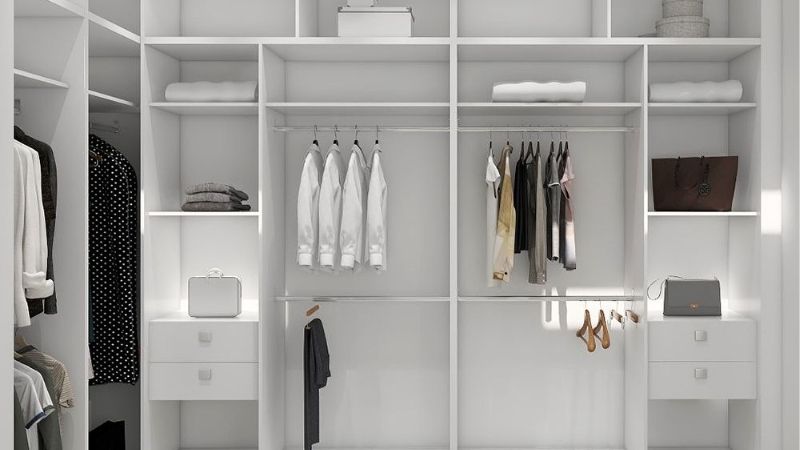
Interiors differ more than exteriors. The Lenia pairs double rails with adjustable shelves, the Leif combines a hanging compartment with soft-close drawers around 34 by 18.75 by 6 inches, the BRIMNES offers a rail plus an inner shelf, and the KLEPPSTAD gives a single rail and a lower shelf for folded items.
Decide what you store most. If you hang suits and dresses, prioritize rail length and the Article double-rail layout; if you fold, the Leif’s drawers or BRIMNES shelf matter more. IKEA estimates the BRIMNES holds about 20 shirts and the KLEPPSTAD 10 to 12, which is a brand estimate, not a cross-brand capacity standard.
Because the two IKEA units quote hanger counts and the Article units do not publish the same metric, do not rank capacity one-to-one across brands. Shelf load figures are likewise not published uniformly, so avoid assuming a heavier-looking cabinet holds more weight; check each product page for the figures that actually matter to you.
Plan Wall Securing Before Assembly
Every tall wardrobe on this list must be anchored, and the manufacturers say so explicitly. BRIMNES ships with a safety fitting, KLEPPSTAD requires wall anchoring, and both Article cabinets instruct you to secure the unit to the wall, since a loaded tall cabinet is a genuine tip-over risk if a child climbs it.
A mandatory federal stability standard based on ASTM F2057-23 (16 CFR 1261) covers many clothing storage units made from September 1, 2023 [CPSC, 2023], so treat anchoring as part of assembly, not an afterthought. Locate a stud or use a rated drywall anchor and fit the bracket before loading any clothes.
Plan for the piece’s weight during setup too: the Leif is listed around 291 pounds, so it needs delivery access and two people to position safely. Lifting a heavy cabinet into place without help is where floors, walls and backs get damaged, so clear the route and recruit a second person before the box arrives.
Top Picks
These four cover the realistic span of freestanding wardrobe cabinet buyers, from a slim IKEA unit to premium hardwood-look Article pieces. Each lists at least two hard specs and a stated wall-securing requirement; pricing runs from budget to premium tiers, so confirm the current price and stock before you order.
| Product | Best For | Key Spec | Watch Out For |
|---|---|---|---|
| Article Lenia | Best Overall | double rails + adjustable shelves | 24.5″ deep |
| IKEA BRIMNES | Narrow footprints | 30.75″ wide; 4.19 sq ft | hinged doors need front clearance |
| IKEA KLEPPSTAD | Tight door-clearance spaces | sliding doors; zero front swing | widest footprint here |
| Article Leif | Hanging + drawers | 2 doors + soft-close drawers | about 291 lb to move |
Article Lenia — Best Overall
The Lenia is the pick for a hardwood-look wardrobe with a flexible interior. It measures 40 inches wide by 24.5 deep by 73 high, pairs double hanging rails with adjustable shelves, and includes anti-tip hardware, with an interior cabinet around 38.5 by 21.5 by 62 inches. It sits firmly in the premium tier.
Those double rails suit a shared or two-season wardrobe, and the soft-close hinged doors open the whole interior at once. It arrives largely built rather than flat-packed, so you skip hours of assembly, but you do need clear delivery access and swing room in front for the hinged doors to open fully.
The trade-off is depth and price: at 24.5 inches deep it is the deepest unit here and the most expensive, so it can crowd a narrow room. As with any wardrobe, anchor it to the wall on setup, and keep the included hardware, since adjustable-shelf pins and anti-tip brackets are awkward to source later.
IKEA BRIMNES — Best for Narrow Footprints
The BRIMNES is the answer when floor space is scarce. At 30.75 inches wide, 19.625 deep and 74.75 high it covers only about 4.19 square feet, comes with a safety fitting for wall securing, and offers a rail plus inner shelf, with IKEA estimating roughly 20 shirts of hanging. It sits in the budget-to-mid tier.
Its slim body slides into a corner or alcove where wider wardrobes will not go, making it a strong pick for small or shared bedrooms. The two hinged doors still need front clearance to open, so leave swing room; the flat-pack assembly is straightforward but, as usual, takes an evening and a methodical approach.
The limits are capacity and material: one rail and a single shelf fill up fast, and the particleboard core dislikes damp. Fit the included wall restraint during assembly, and remember the shirt estimate is IKEA’s own figure, so do not expect it to translate directly to how your own, bulkier clothes actually pack in.
IKEA KLEPPSTAD — Best for Tight Door-Clearance Spaces
KLEPPSTAD exists for rooms where a swinging door simply will not fit. Its sliding doors need zero front clearance across a 46.125-inch-wide, 21.625-deep, 69.25-high body, with a rail and lower shelf inside, and IKEA requires it to be anchored to the wall. Pricing lands in the budget-to-mid tier.
Being able to park it opposite a bed or desk is its real advantage, since sliding panels open without sweeping the floor. Despite having the largest footprint here at about 6.93 square feet, it can be the most practical choice in a cramped layout precisely because it reclaims the swing space hinged doors would waste.
The compromises are access and capacity: you can only open one half at a time, and IKEA estimates just 10 to 12 shirts of hanging. Sliding-door tracks also collect dust and can drag over time, so keep them clean, and do not read its wide footprint as making it the smallest wardrobe on the list.
Article Leif — Best for Hanging Plus Drawers
The Leif suits buyers who want to hang and fold in one cabinet. It runs 40 inches wide by 24 deep by 75.25 high, combining a hanging compartment with soft-close drawers around 34 by 18.75 by 6 inches, and must be secured to the wall. Like the Lenia, it sits in the premium tier.
The built-in drawers remove the need for a separate dresser, which saves floor in a bedroom where every piece competes for space. It arrives assembled, so setup is quick, but at roughly 291 pounds it is heavy: arrange delivery into the room and a second person, because manhandling it alone risks the floor and the frame.
The drawbacks are weight, depth and cost. At 24 inches deep and premium-priced it is a commitment, and moving it later is a two-person job. Soft-close drawer runners are reliable but not immortal, so avoid overloading them, and anchor the cabinet on day one rather than trusting its mass to keep it upright.
Frequently Asked Questions
Shoppers tend to circle the same practical questions once they start measuring. The answers below use the published dimensions of these four units and avoid absolute rules, so you can test them against the exact wardrobe and wall you are working with before you place an order.
Do hinged or sliding wardrobe doors need more clearance?
Hinged doors need open floor in front; sliding doors need almost none. Three of these units are hinged and one, the KLEPPSTAD, slides, which is the practical difference when a wardrobe has to sit opposite a bed, desk or radiator with little room to spare.
The reason is simple geometry: a hinged door sweeps an arc as wide as the door itself, so a cabinet with a two-foot door needs roughly that much clear floor to open fully. Sliding panels move within the cabinet’s own width, trading full-width access for the ability to tuck into tight spots.
If your layout is open, hinged soft-close doors feel nicer and show the whole interior at once. If it is cramped, measure the swing before buying and lean toward sliding; a door that cannot open fully makes a wardrobe frustrating to live with, however good its storage looks on paper.
How deep should a freestanding wardrobe be?
For hanging clothes, most freestanding wardrobes run roughly 20 to 24 inches deep, and this shortlist spans 19.625 to 24.5. A depth near 22 to 24 inches lets a shirt or jacket hang square on the rail without the door pressing against the shoulders.
Shallower bodies like the 19.625-inch BRIMNES save floor but can force clothes to hang slightly angled or squash fronts. That is fine for a child’s room or light use, and worth it when space is tight, but heavier coats will feel cramped, so match the depth to what you actually plan to hang.
Before deciding, measure your room and the longest clear path to the wall, then weigh depth against footprint. When floor is scarce, a shallower wardrobe that keeps the walkway open usually beats a deep one that technically holds more but blocks the route past it every single day.
How many shirts fit in a wardrobe cabinet?
IKEA estimates the BRIMNES holds about 20 shirts and the KLEPPSTAD 10 to 12, but those are the manufacturer’s own figures and not a universal standard. The Article units do not publish the same metric, so there is no fair one-to-one capacity number across these brands.
Real capacity depends on your garments and how you hang them. Bulky coats and padded jackets take far more rail than thin shirts, and folded piles on a shelf vary with height. Treat any quoted shirt count as a rough indicator of a single rail’s length, not a promise about your specific wardrobe.
To estimate for yourself, measure the usable rail length and allow roughly an inch of rail per shirt or two for a coat. That gives a far more reliable figure than a marketing count, and it lets you compare units with different interiors fairly instead of trusting numbers measured in different ways.
Should a wardrobe be anchored to the wall?
Yes. Every tall wardrobe here requires wall securing, and the manufacturers state it directly. A loaded cabinet is top-heavy, and a mandatory federal stability standard based on ASTM F2057-23 (16 CFR 1261) now applies to many such clothing storage units [CPSC, 2023].
Anchoring stops the body from rotating forward if someone pulls on an open door or a child climbs the shelves, which a freestanding cabinet cannot resist on its own once it is full. BRIMNES includes a fitting, KLEPPSTAD requires anchoring, and both Article units instruct it, so plan for the step on every one.
Fix the bracket into a stud or a rated drywall anchor during assembly, following the manual rather than improvising. If you rent and drilling is restricted, ask about approved anchors before buying, because an unsecured wardrobe is exactly the hazard the stability rule was written to prevent in homes with children.
Final Thoughts
The right wardrobe cabinet is the one whose footprint and door style suit your room and whose interior matches what you store. Measure the wall and swing space first, choose sliding doors when clearance is tight, and anchor whichever unit you pick. On that basis the Lenia leads, with the BRIMNES, KLEPPSTAD and Leif each solving a specific problem.